Explain the Basics
EVs, chargers, batteries, solar, kW, kWh, rate schedules, range, and backup power all become easier when they have characters and stories.
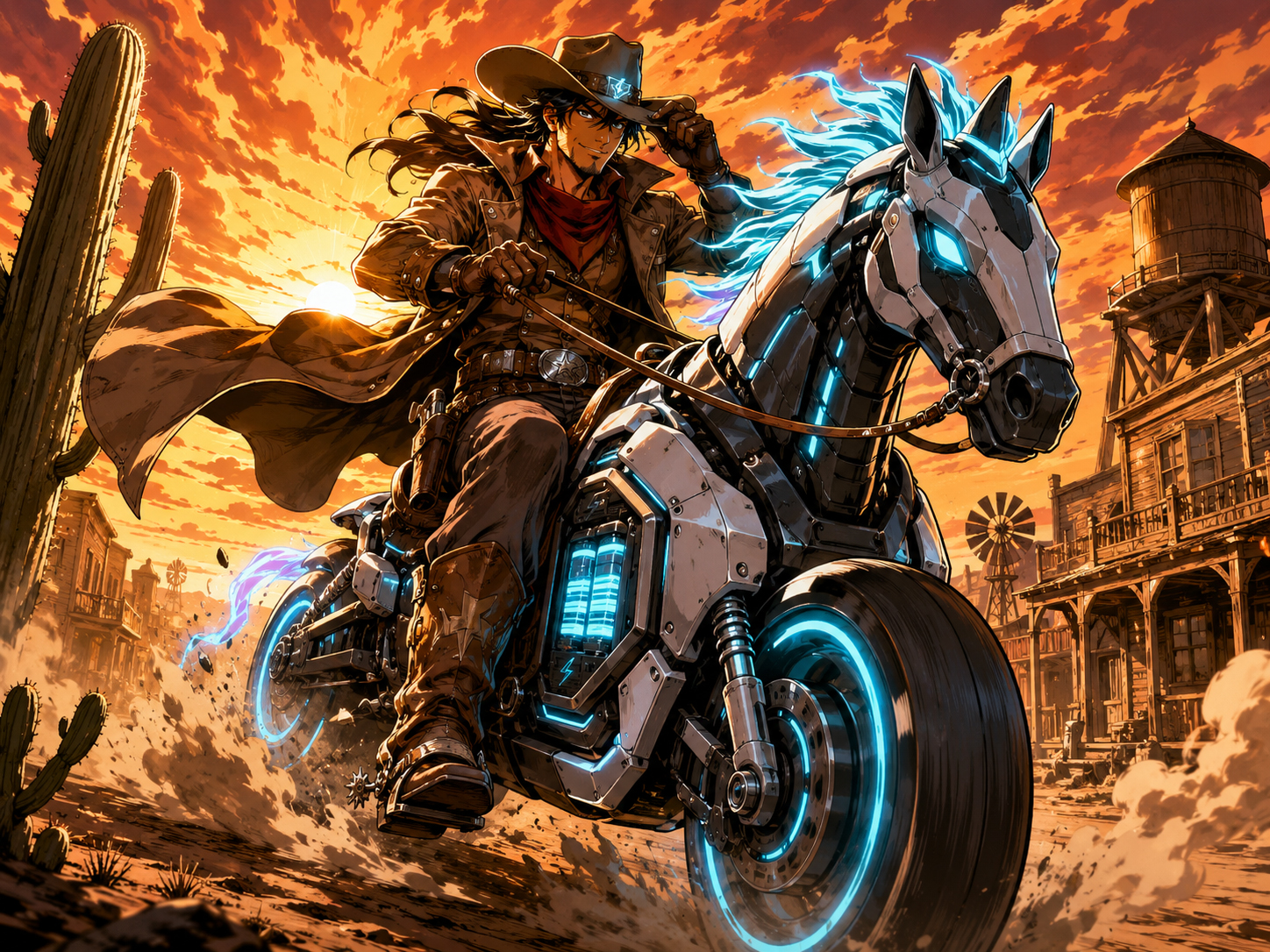
A wild west manga comedy about cowboys, electric steeds, solar corrals, battery saloons, peak-rate villains, and the new meaning of horsepower.
EV Cowboy began with one simple, ridiculous, useful image: a cowboy trading his horse for a futuristic electric steed. From that image came a whole frontier town of characters, arguments, breakdowns, charging posts, solar canopies, batteries, and one villain who waits until sunset with a rate schedule.
The site is comedy first, but the comedy has a job. It turns difficult energy topics into memorable scenes. A charger becomes a hitching post with wires. Solar panels become the new hayfield. Batteries become the barn. Peak rates become a villain. kW and kWh become Sheriff Kilowatt’s favorite chalkboard emergency.
The point is not to make EV charging silly. The point is to make the planning easier to understand and harder to forget.
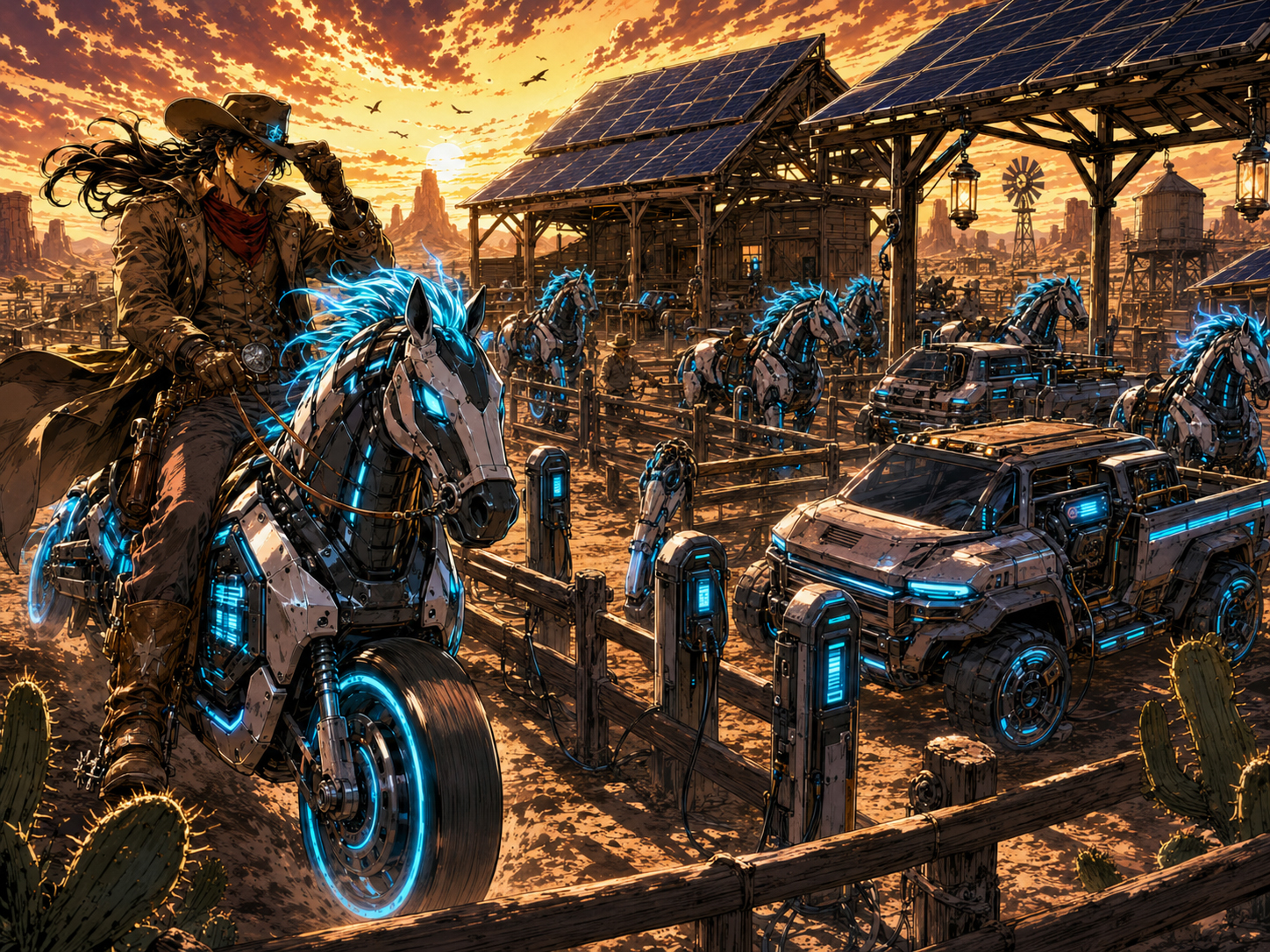
EV Cowboy uses manga storytelling to explain the practical side of electric vehicles, solar power, battery storage, rate timing, charging infrastructure, kW, kWh, and energy planning.
EVs, chargers, batteries, solar, kW, kWh, rate schedules, range, and backup power all become easier when they have characters and stories.
The Utility Baron, Battery Belle, Sheriff Kilowatt, and Solar Sensei help readers remember ideas that ordinary technical pages make forgettable.
The site is funny, but EV chargers, batteries, solar systems, service panels, and backup equipment are real systems that require professional work.
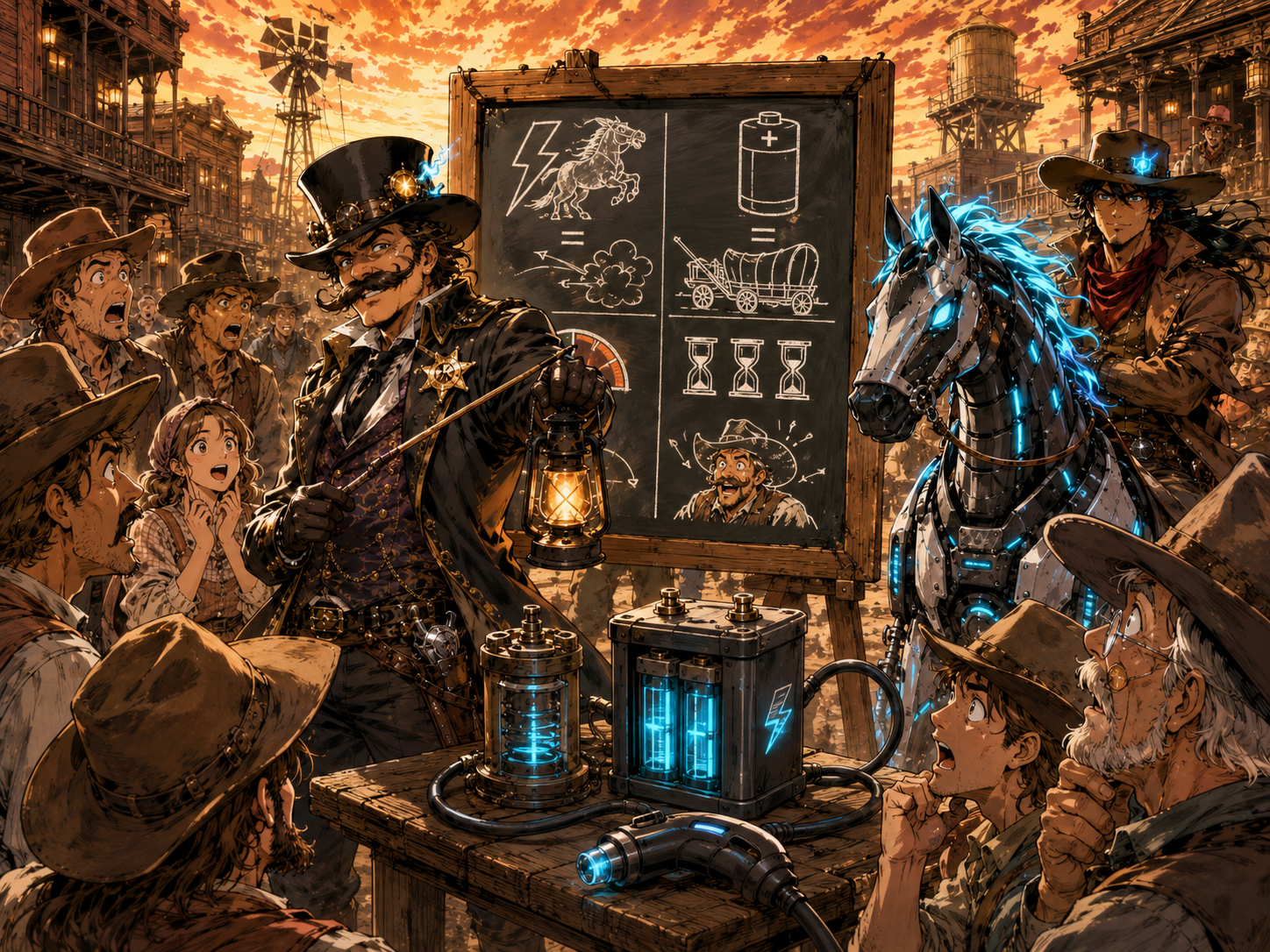
Manga is perfect for energy education because reactions matter. A confused cowboy staring at a charging cable can teach more than a dry paragraph. A villain with a peak-rate pistol makes time-of-use billing instantly memorable.
EV Cowboy uses exaggerated characters to show real mistakes before they happen: buying a charger before checking the panel, ignoring rate schedules, confusing power and energy, assuming batteries are endless, or treating solar like decoration instead of infrastructure.
The characters turn energy planning into frontier drama.
He rides the silent steed and learns that the new frontier rewards preparation, charging discipline, and a good hat.
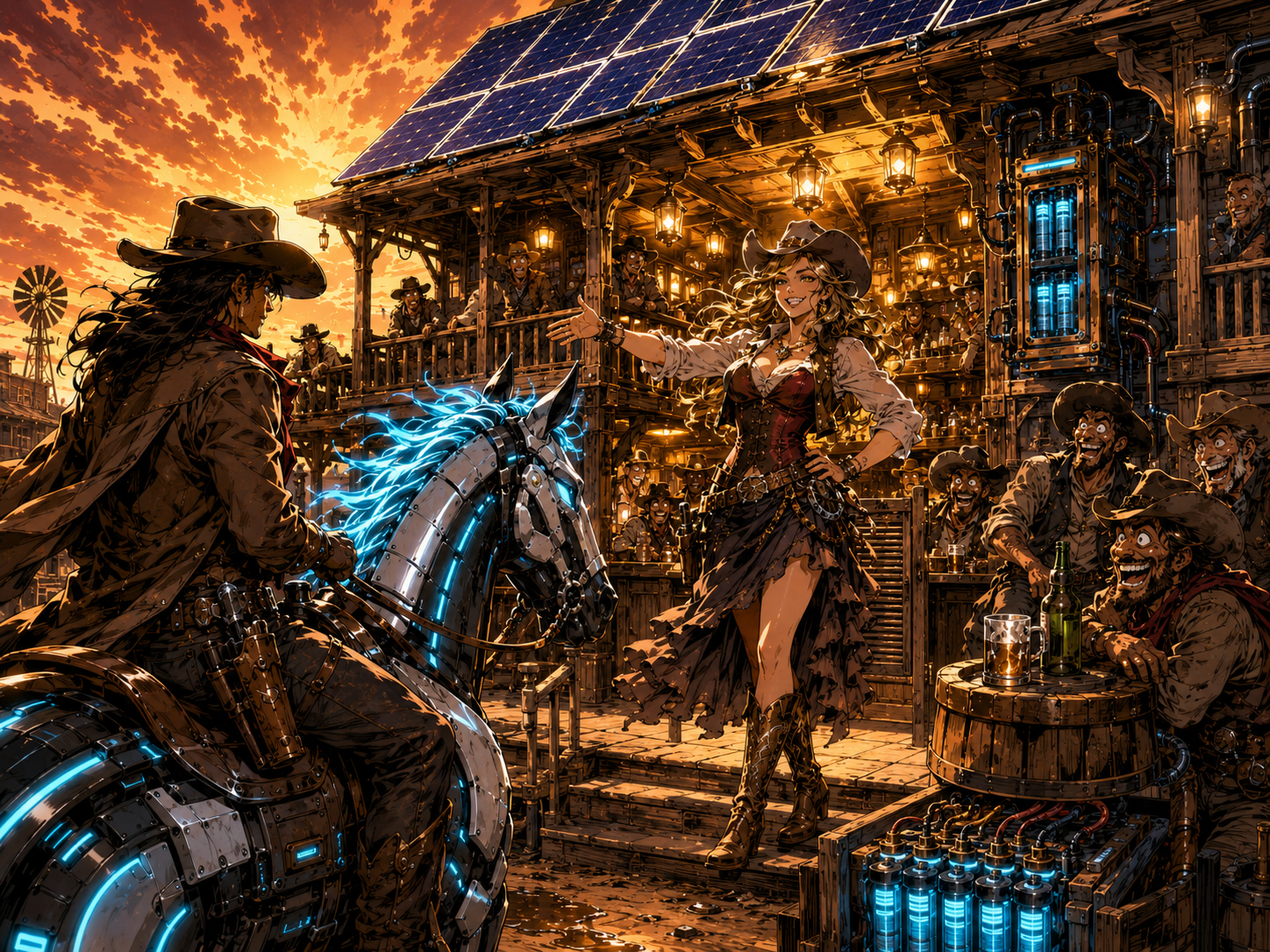
She stores sunshine, keeps the lights on, and understands that backup power starts with choosing the right loads.
He protects the town from bad wiring, overloaded assumptions, and anyone who says kW and kWh are the same thing.

He loves confusion, sunset charging, mysterious bills, and customers who never read the rate schedule.
The site covers the everyday questions people face when transportation becomes electric.
| Topic | EV Cowboy Version | Real Lesson |
|---|---|---|
| EV charging | The new hitching post has wires. | Chargers require proper circuits, capacity review, installation, and timing. |
| Solar charging | The ranch grows its own fuel. | Solar can support EV charging when production, parking, rates, and equipment are planned together. |
| Battery storage | Battery Belle stores the sunshine. | Batteries can shift energy and support backup loads, but they have limits and require careful design. |
| Peak rates | The Utility Baron rides in at sunset. | Charging cost can depend on time-of-use rates and load timing. |
| kW and kWh | Sheriff Kilowatt brings the chalkboard. | Power and energy are different, and confusing them causes bad planning. |
| Safety | Not a horse. Not a toy. | EV chargers, solar, batteries, and backup systems require qualified professionals and code-compliant work. |
EV Cowboy is brought to you by ABC Solar Incorporated as part of a larger effort to make solar, battery, EV charging, and clean-energy planning easier to understand.
ABC Solar works in the real world of solar power, battery systems, electrical service planning, EV charging, and practical energy projects. EV Cowboy is the storytelling side: a memorable, humorous way to help people see why planning matters before equipment is installed.
EV Cowboy should be entertaining enough to read for fun and practical enough to make people ask better questions before starting an EV charging, solar, or battery project.
Site-specific electrical and utility questions require real review. The site explains concepts, not final designs.
Improvised electrical work, overloaded circuits, and mystery charging setups do not belong on the frontier.
If a rate schedule is going to cause trouble, it deserves a mustache, a cape, and a peak-rate pistol.
EV Cowboy is not electrical advice, engineering advice, vehicle advice, route advice, financial advice, utility-rate advice, permit instruction, fire-code guidance, or installation instruction.
EV chargers, solar arrays, batteries, inverters, service upgrades, backup-power systems, transfer equipment, load-management systems, wiring, conduit, breakers, and connected equipment must be designed, permitted, installed, inspected, operated, and maintained according to applicable electrical codes, fire codes, building codes, manufacturer instructions, utility requirements, rate schedules, and local authority rules.
The best place to start is the first question the town asks: what exactly is this glowing horse with a charging port?