The Quiet Trail
Lower-cost periods can be the best time to charge when the vehicle is parked and the owner’s schedule allows it.

The Utility Baron rides in at sunset with a peak-rate pistol. EV Cowboy answers with solar, batteries, smart charging, and one very calm steed.
In the EV Cowboy universe, the Utility Baron does not need a six-shooter. He has something scarier: a rate schedule nobody bothered to read.
Peak rates are the comedy villain because they arrive right when people are tired, hungry, and ready to plug everything in. The electric steed comes home. The air conditioner is running. Dinner is cooking. The house is alive. Then the Utility Baron smiles.
The lesson is simple: electricity can cost different amounts at different times. EV charging adds a meaningful new load, so the time of charging can matter almost as much as the charger itself.
A kWh is energy. A rate schedule decides what that energy costs. The same EV can be cheap or expensive to feed depending on when it charges.
Lower-cost periods can be the best time to charge when the vehicle is parked and the owner’s schedule allows it.
Higher-cost periods can make heavy loads expensive. EV charging during peak windows may turn a calm bill into a saloon fight.
Timers, charger settings, vehicle apps, load controls, solar production, and batteries can help move charging to better times.
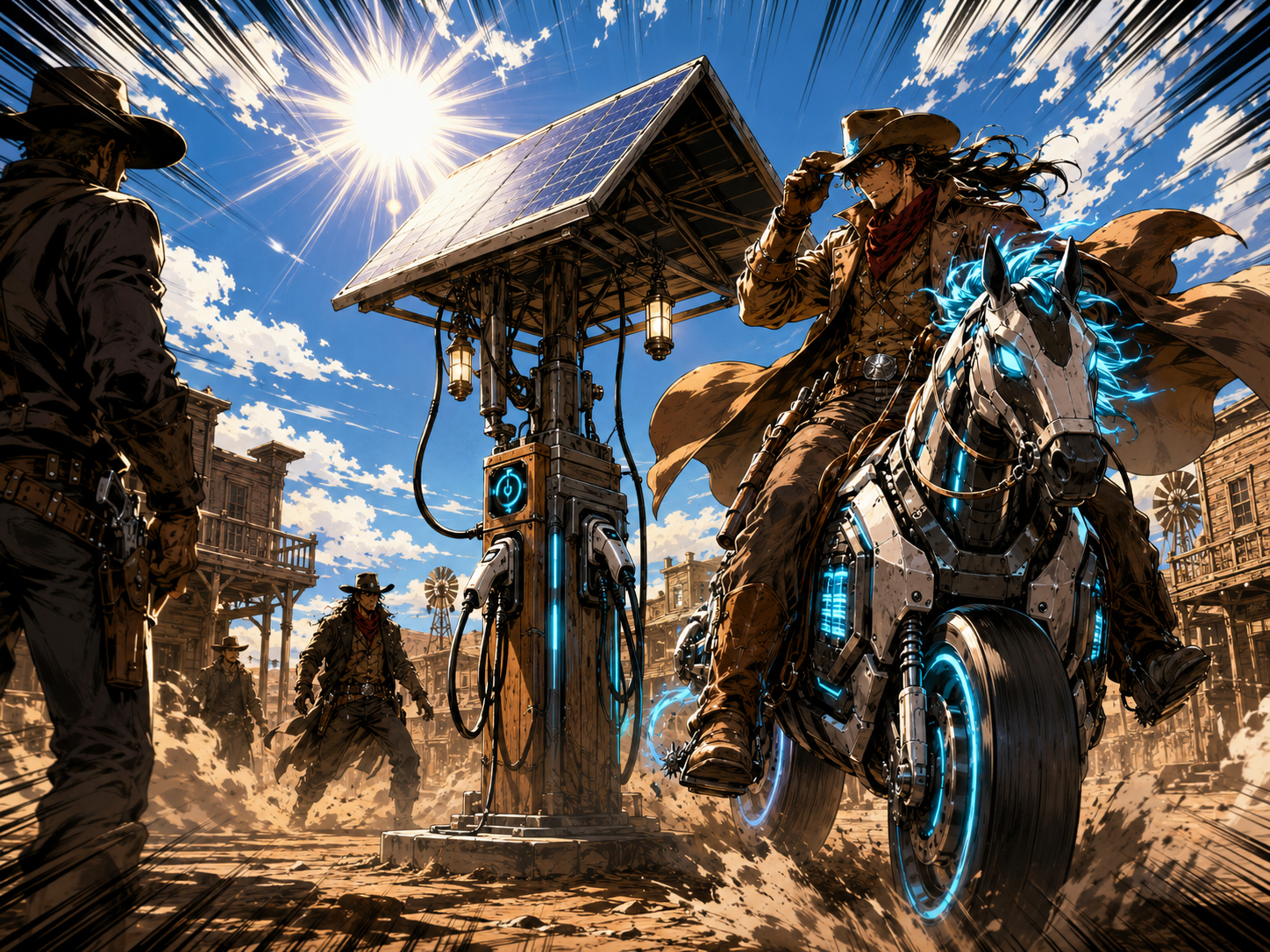
Many EV owners come home, plug in, and assume the vehicle must start charging immediately. Sometimes that is true. Often, it is not.
If the vehicle will sit overnight, a scheduled charge can refill the battery during lower-cost hours. The best schedule depends on the utility rate, the vehicle’s needed range, the charger size, the home’s electrical capacity, and whether solar or batteries are part of the system.
The answer is not one gadget. It is a plan that matches daily life, vehicle needs, utility rules, and energy equipment.
| Problem | What the Utility Baron Wants | EV Cowboy Countermove |
|---|---|---|
| EV comes home at peak time | Immediate charging during expensive hours. | Use vehicle or charger scheduling when the battery can wait. |
| Solar produces while the EV is away | Export the sunshine, then buy power back later. | Consider batteries, workplace charging, daytime charging, or rate-aware scheduling. |
| Large evening home loads | Stack EV charging on top of air conditioning, cooking, and household use. | Stagger loads, manage charging current, or delay charging to lower-load periods. |
| Confusing bill | Keep the rider guessing about cost. | Read the rate schedule, track kWh use, and understand peak windows. |
| Backup battery gets drained | Let one big load empty the barn. | Reserve batteries for selected loads unless EV charging was specifically designed into the backup plan. |
Battery Belle knows the Baron’s schedule. When the sun is high, she stores energy. When the town gets expensive, she uses the stored power carefully.
In real systems, batteries may help reduce peak usage, increase solar self-consumption, support backup loads, and provide more control over when energy is used. The right design depends on the home, business, utility rate, battery size, inverter capacity, and actual loads.

The Utility Baron does not need to be smarter than the whole town. He only needs everyone to ignore timing.
Convenience is powerful, but it can be expensive. A scheduled charge may be just as convenient if the vehicle is parked overnight.
Solar production and EV parking schedules must be considered together. If the vehicle is away all day, the strategy changes.
A large charger can create a large load. The best charger is the one that safely meets the actual charging need.
Some locations may face demand charges, capacity issues, or service limitations. Managed charging can matter.
Batteries should have a purpose. Backup loads, peak shifting, and EV charging must be prioritized honestly.
The rate schedule is the map. Riding without the map is how the cowboy ends up paying saloon prices for trail water.
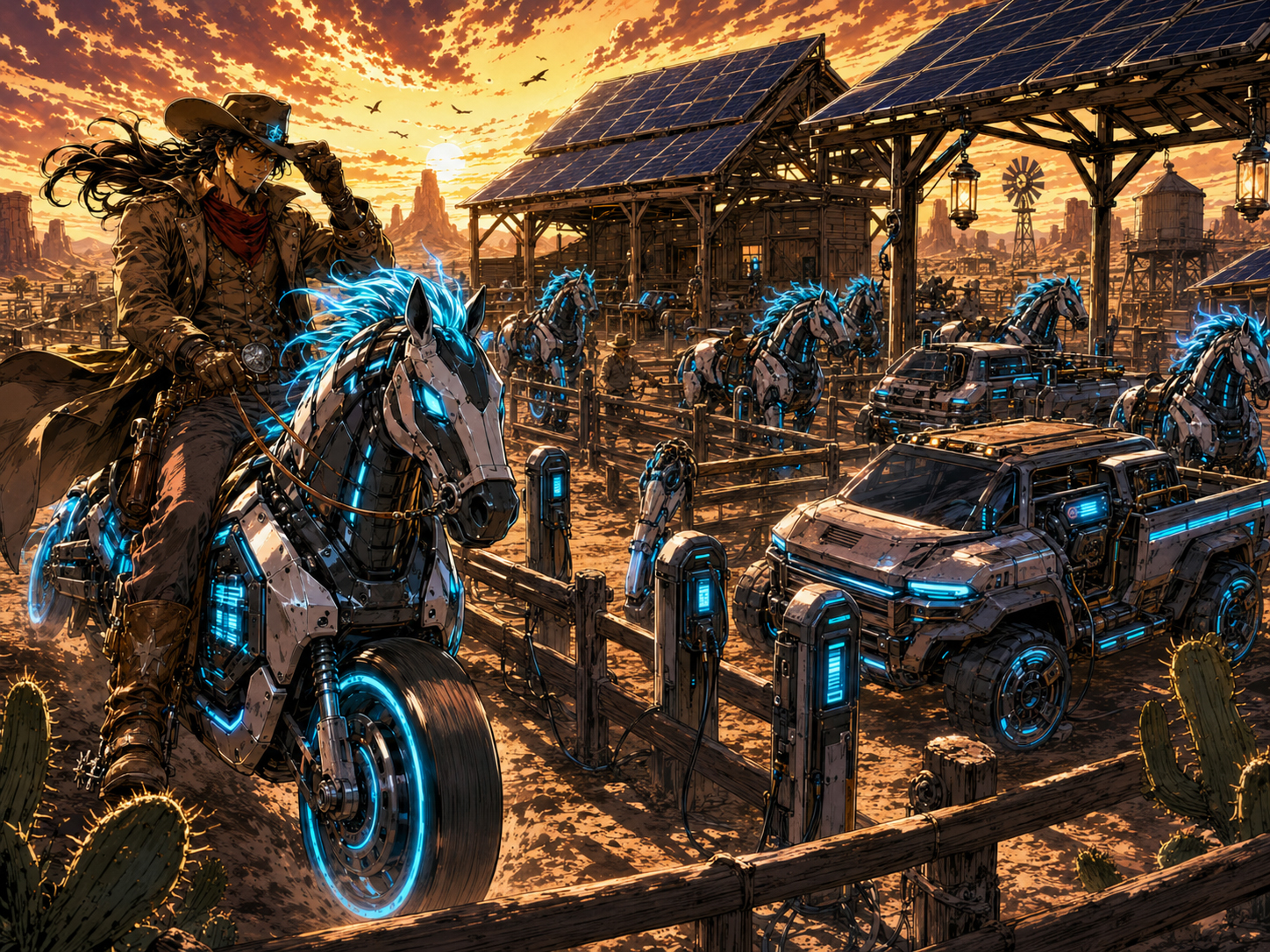
The solar charging ranch works best when the design understands the local rate schedule. Panels, batteries, chargers, load controls, and usage habits should work together instead of fighting each other.
A home might schedule charging overnight. A business might use solar canopies for daytime fleet charging. A ranch might stagger multiple vehicles. A battery system might protect evening loads. The best plan is site-specific.
At sunset, the Utility Baron steps into the street. His coat is black, his mustache is enormous, and his peak-rate pistol glows like a bad idea.
EV Cowboy plugs in the steed but does not start charging. Battery Belle smiles from the saloon porch. Sheriff Kilowatt flips the chalkboard around and points to the schedule. The Baron fires once into the dust, but the town has already moved the load.
To fight peak rates, the town must know its numbers: charger power, battery energy, solar production, daily miles, charging window, and rate schedule.
Guessing is how cowboys get ambushed. Measuring is how they ride home laughing.

EV Cowboy is a manga comedy and educational site. It is not a utility-rate analysis, financial advice, engineering document, wiring design, permit set, or substitute for licensed professionals.
EV charging systems, solar arrays, batteries, service upgrades, load-management equipment, backup-power systems, and electrical circuits must be designed, permitted, installed, inspected, and operated according to applicable electrical codes, fire codes, manufacturer instructions, utility requirements, rate schedules, and local authority rules.
Once the cowboy understands peak rates, the next lesson is range, public charging, route planning, and how not to strand a silent steed in the desert.