The Slow Canteen
Level 1 charging usually means plugging into a standard household outlet. It can be useful for light driving, but it is slow and may not keep up with daily needs.
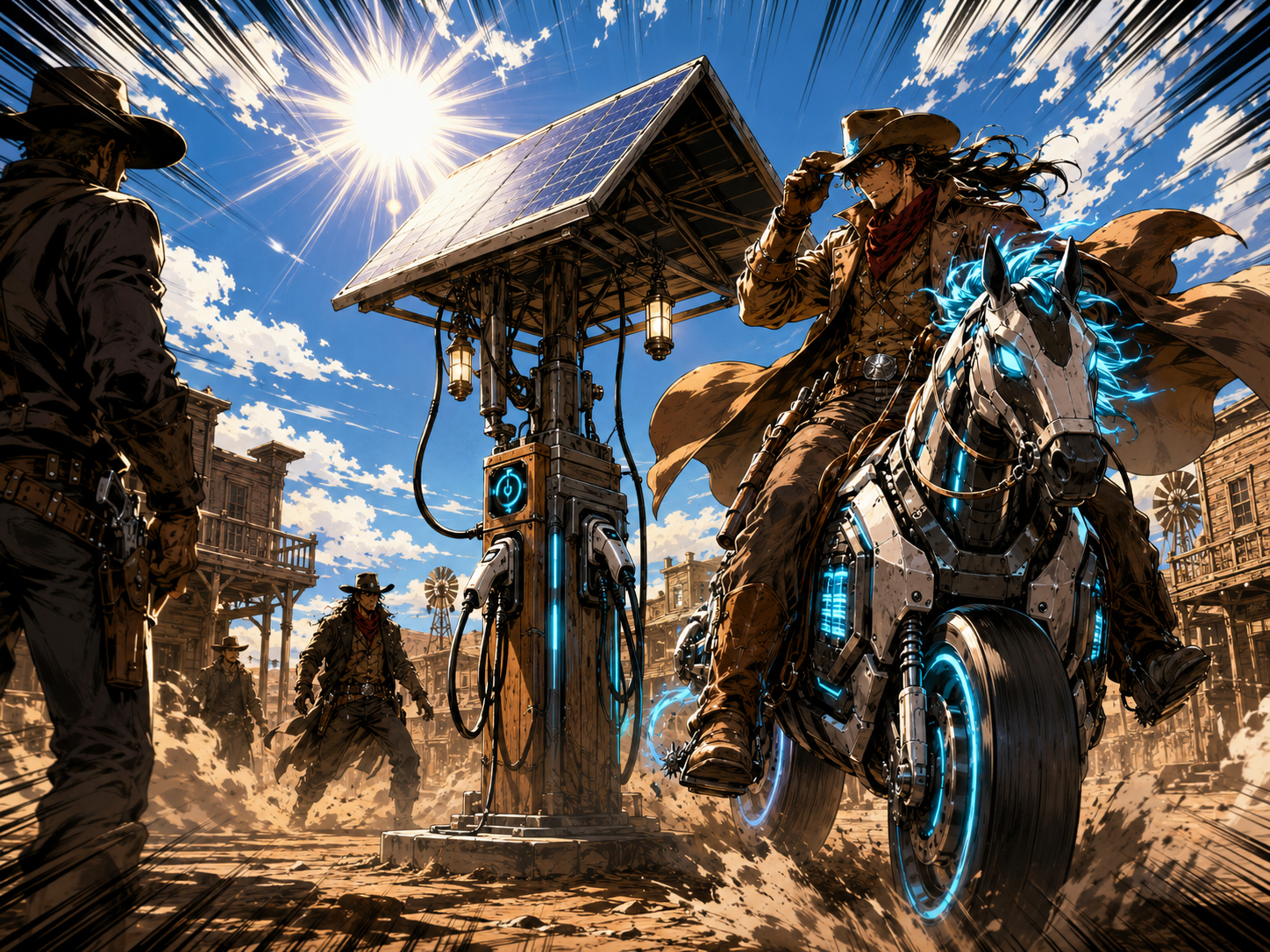
The new hitching post has wires. Before the electric steed comes home, the ranch needs a safe charging plan.
In the EV Cowboy universe, home charging is the moment the old hitching post becomes an electrical system. The cowboy does not just ask where to park the steed. He asks whether the panel, circuit, charger, rate schedule, and daily driving routine all make sense together.
A home EV charger can be simple when the electrical service has capacity, the location is straightforward, and the driving pattern is predictable. It can become more complicated when the panel is full, the charger is far away, the service is small, the home has large electrical loads, or the owner wants solar and battery backup included.
That is why Sheriff Kilowatt starts with planning. The charger is the visible part. Behind it are breakers, wires, conduit, load calculations, permits, utility rules, and safety requirements.

EV charging is often described by level. The names are simple. The planning can be serious.
Level 1 charging usually means plugging into a standard household outlet. It can be useful for light driving, but it is slow and may not keep up with daily needs.
Level 2 charging uses a dedicated higher-power circuit and is the common home-charging upgrade for many EV owners. It usually requires professional electrical installation.
DC fast charging is more common for public charging and fleet situations. At home, the practical conversation is usually Level 1 versus Level 2.
Many people think the question is only, “Which charger should I buy?” The better question is: “What can my home safely support, and what charging speed do I actually need?”
A charger may be adjustable, but the circuit, breaker, wire size, installation method, panel capacity, and local code requirements must be correct. Bigger is not automatically better if the home electrical system is not ready for it.
A proper charging plan starts with the home, the vehicle, and the daily trail.
Daily miles help determine how much energy must be replaced overnight. A commuter, a rideshare driver, and a ranch truck do not all need the same charging plan.
Garage, driveway, carport, alley, side yard, and detached structure locations can all change wire routing, conduit, trenching, charger placement, and cost.
A home with limited service capacity may need load management, a service upgrade, or a different charger setting. The panel is the barn door. It must be wide enough for the new steed.
Air conditioning, electric heat, electric range, pool equipment, hot tub, heat pump, and other large loads all matter when evaluating EV charging capacity.
Existing solar can change the economics and timing of charging. New solar can be planned around both home use and expected vehicle energy needs.
Backup goals can affect panel design, battery selection, critical-load circuits, transfer equipment, and whether the EV charger should be backed up or excluded.
The joke works because the old cowboy problems never disappeared. They became electrical problems.
| Old Ranch Question | EV Charging Version | Why It Matters |
|---|---|---|
| Where do we tie the horse? | Where will the vehicle park and plug in? | Charger location affects wiring route, weather exposure, convenience, and cost. |
| How much hay is needed? | How many kWh does the vehicle need daily? | Daily energy use determines whether slow charging is enough or Level 2 makes sense. |
| Is the barn strong enough? | Can the electrical panel support the load? | Panel and service capacity must be checked before adding a high-power charger. |
| When do we feed the horses? | When should the EV charge? | Charging time can affect utility cost, solar use, and peak-rate exposure. |
| What happens during a storm? | What happens during an outage? | Backup design must be planned; not every charger belongs on backup circuits. |
Yes, solar can help power EV charging. But the details matter. Solar panels produce power during daylight. Many EVs are parked at home in the evening. That timing mismatch is where charging schedules, battery storage, and utility rates become important.
A good plan looks at annual driving energy, daily charging habits, available roof or canopy space, utility billing rules, and whether the vehicle is actually home while the sun is strong.
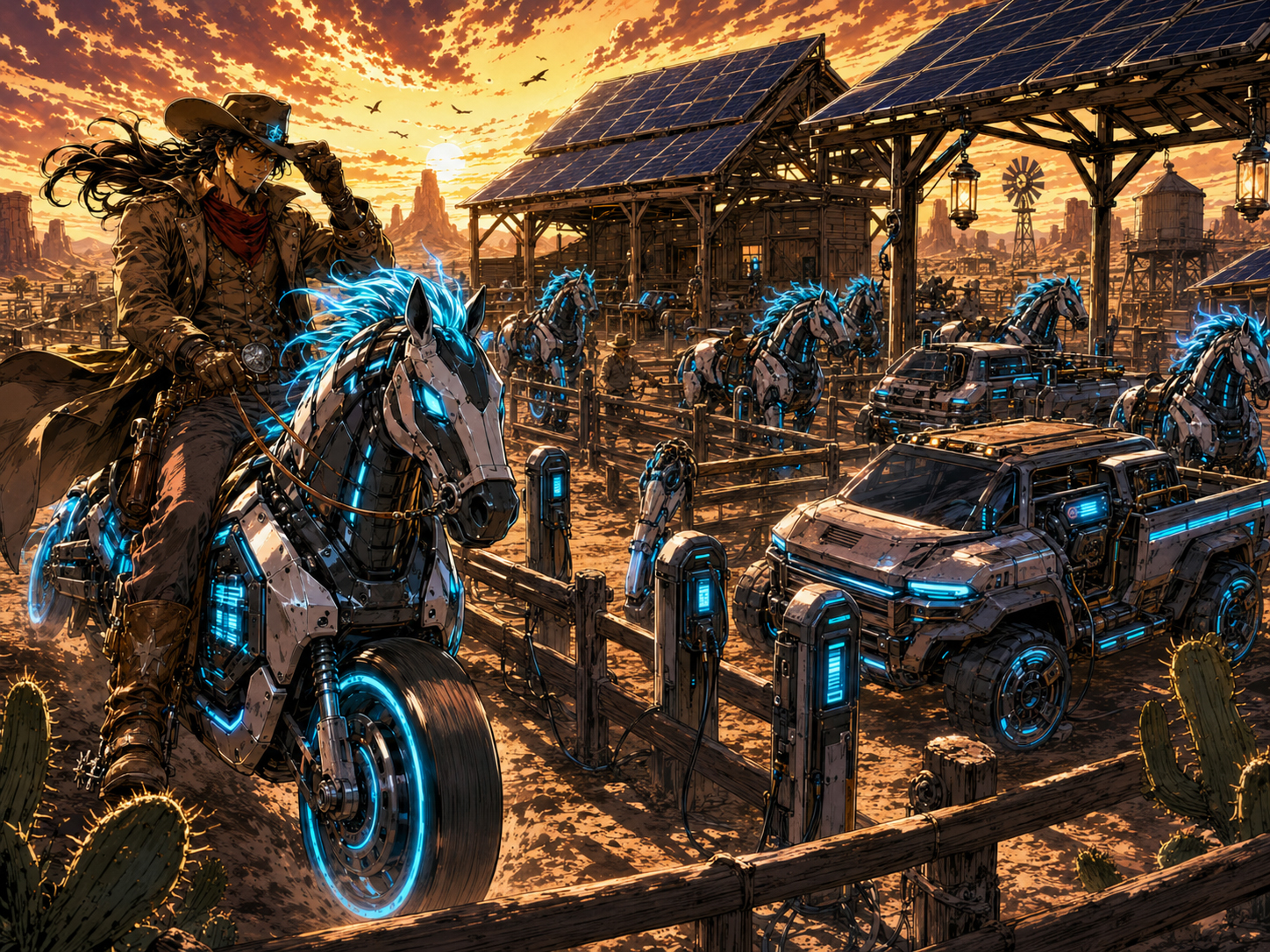

Charging cost depends on the electricity rate. Some utility plans make electricity more expensive during certain hours. That is why the Utility Baron loves evening charging confusion.
Smart charging can help by scheduling the vehicle to charge during lower-cost periods when practical. Solar and batteries may also change the strategy, depending on the home and utility program.
The fastest way to make an EV charging project silly is to skip the boring questions.
The charger box is not the whole system. The home electrical capacity should be reviewed before committing to an installation plan.
Existing outlets may not be appropriate for continuous EV charging use. Dedicated circuits and proper equipment may be required.
Long wire runs, trenching, finished walls, detached garages, and difficult routing can affect project cost and design.
Charging at the wrong time can make the electric steed more expensive to feed than expected.
Solar helps most when system size, timing, rates, and daily vehicle use are planned together.
Backup design needs careful load selection. A large EV charger may not belong on a battery-backed critical-load panel.
Battery backup can be wonderful, but it is not a cartoon spell. Batteries have limits. Loads have sizes. Chargers can be demanding. A home backup system must decide what gets powered and what waits.
For many homes, the best backup plan focuses on critical loads first: refrigeration, lights, communications, selected outlets, medical needs, garage door, internet equipment, or other important circuits. Large EV charging during an outage may require a much larger system and careful design.

A clean project usually follows a clean trail.
Estimate daily miles, parking location, charging window, and whether Level 1 or Level 2 is practical.
Check existing loads, available capacity, breaker space, utility service, and any need for load management or upgrades.
Match the equipment to the vehicle, circuit, environment, installation method, and owner’s charging routine.
Plan whether solar production, time-of-use rates, battery storage, or scheduled charging can improve the economics.
Use licensed professionals, proper permits, code-compliant wiring, manufacturer instructions, inspections, and utility requirements.
EV Cowboy is a manga comedy and educational site. It is not a wiring design, electrical instruction, permit set, engineering document, or substitute for licensed professionals.
EV charging equipment, circuits, breakers, wire, conduit, solar systems, batteries, service upgrades, transfer equipment, and backup-power systems must be designed, permitted, installed, inspected, and operated according to applicable electrical codes, fire codes, manufacturer instructions, utility requirements, and local authority rules.
Once the charger is planned, the next frontier is solar: can the ranch harvest enough sunlight to help feed the steed?