The Vehicle
The car, truck, motorcycle, scooter, or manga cyber-horse that uses electricity instead of gasoline.
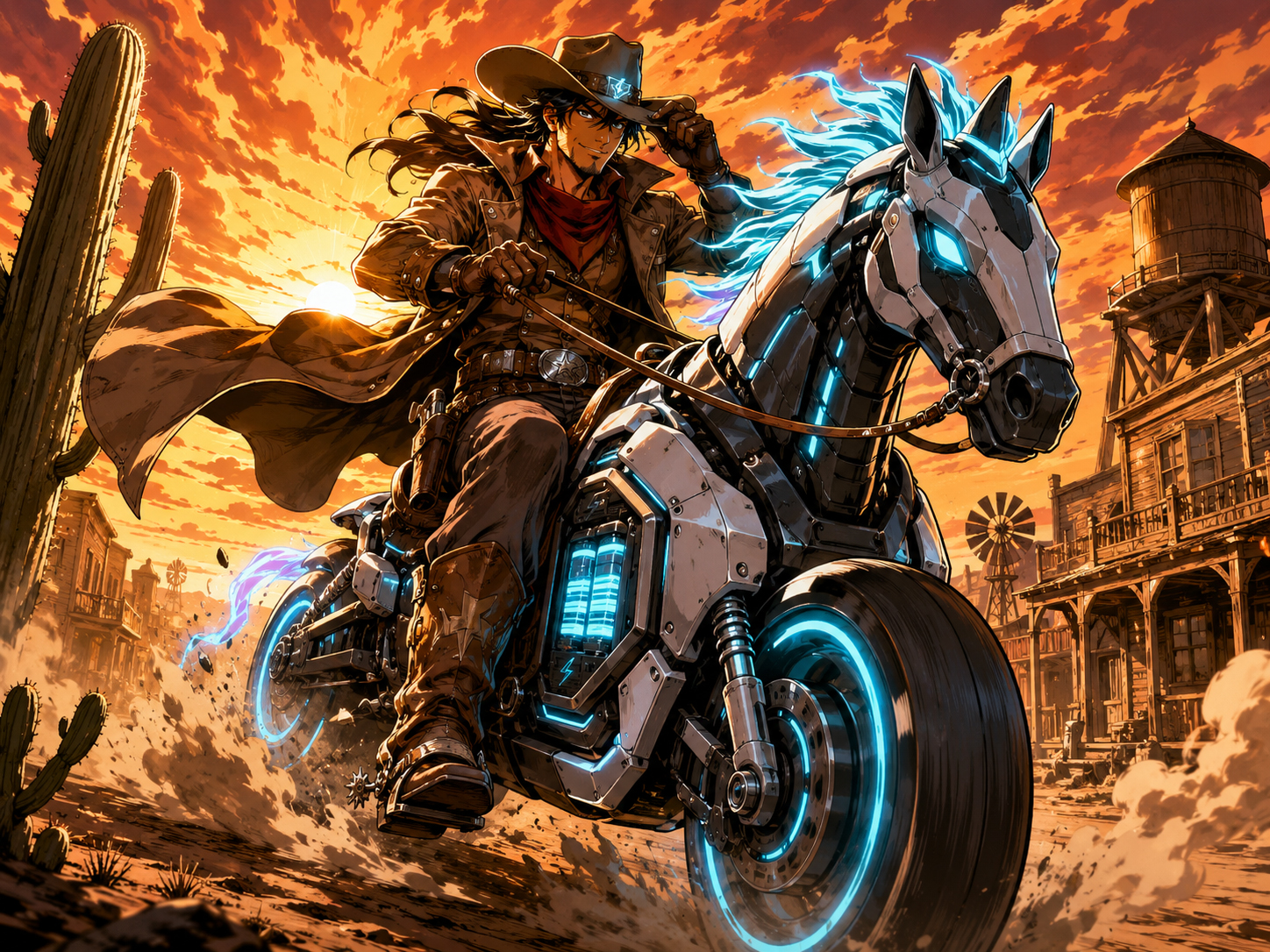
It is the cowboy horse of the electric future: part vehicle, part manga legend, part practical lesson about charging, batteries, solar, and kWh.
In the EV Cowboy universe, an EV steed is what happens when the old frontier idea of a horse gets dragged, laughing and sparking, into the electric age.
A regular horse needs hay, water, rest, a stable, and a good rider. An EV steed needs electricity, charging time, safe wiring, battery management, and a rider who understands range before crossing the desert.
That is the manga comedy. The cowboy has not stopped being a cowboy. He still needs courage, judgment, planning, and a good trail. But the new animal under him is powered by electrons instead of oats.
The shiny vehicle is only the visible part. The whole system matters.
The car, truck, motorcycle, scooter, or manga cyber-horse that uses electricity instead of gasoline.
The onboard energy tank. Instead of gallons, the EV Cowboy thinks in kilowatt-hours.
The safe, properly installed equipment that refills the steed with electricity.
Grid power, solar power, battery storage, or a planned combination that keeps the trail practical.
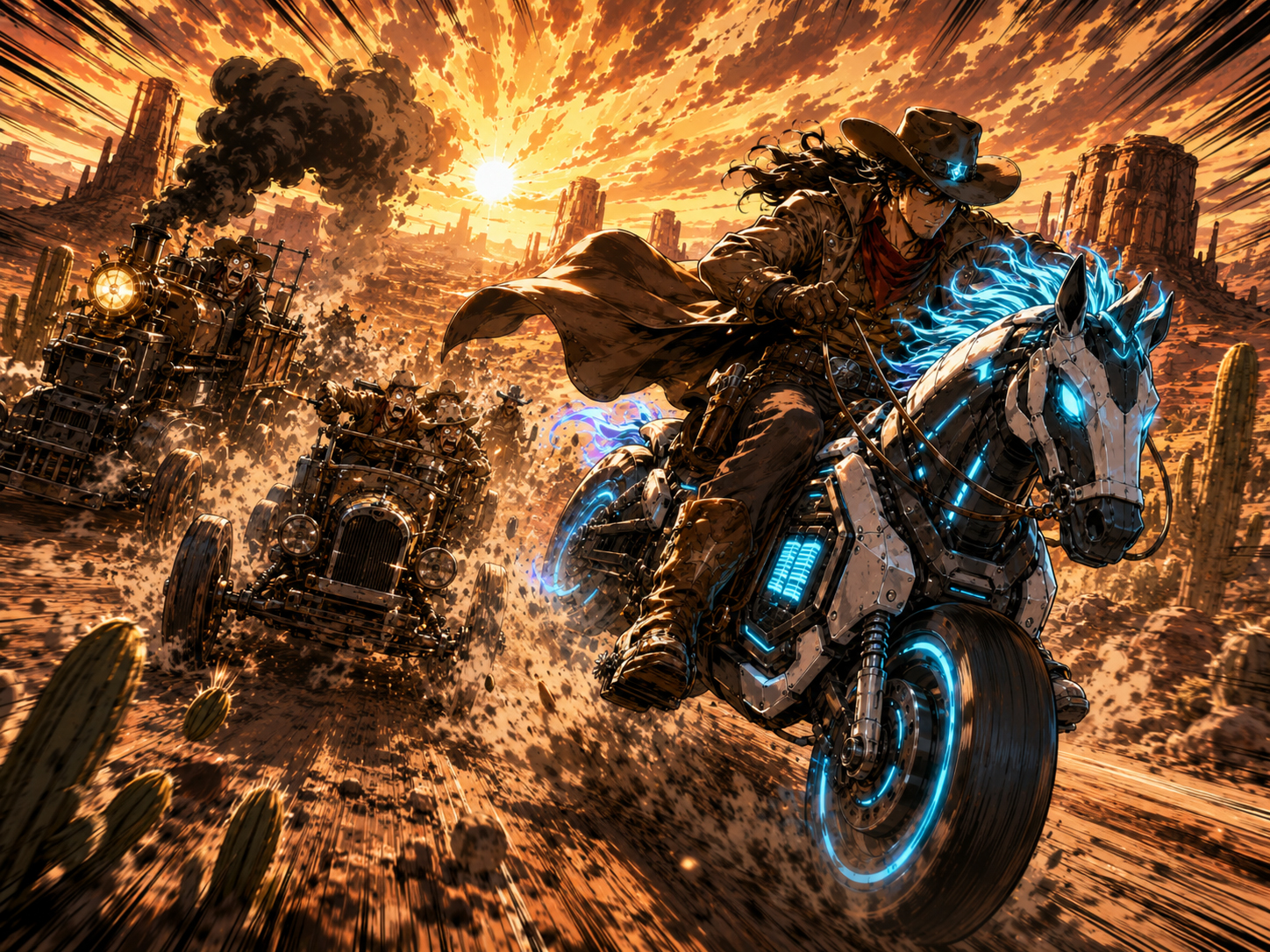
The EV steed is a funny symbol for a serious shift: transportation is moving from fuel burned in engines to electricity stored in batteries.
The old gasoline cowboy thinks power means noise. He hears pistons, exhaust, rattles, smoke, and dramatic mechanical suffering. The EV Cowboy knows the future can be fast without sounding like a boiler explosion.
Electric drive changes the feeling of motion. The vehicle does not need to build drama before it moves. It can deliver strong response quickly, smoothly, and quietly.
The old cowboy problems did not disappear. They became electrical planning questions.
| Frontier Question | Old Horse / Gasoline World | EV Steed World |
|---|---|---|
| What feeds it? | Hay, water, or gasoline. | Electricity measured in kWh. |
| Where does it refuel? | Stable, trough, fuel station, or fuel wagon. | Home charger, solar ranch, public charger, fleet depot, or workplace charger. |
| What limits the trip? | Animal fatigue, fuel tank, mechanical condition, and available stops. | Battery state of charge, route distance, terrain, weather, charger access, and charging time. |
| What does the rider learn? | Feed, tack, shoes, fuel, oil, and repairs. | Charging level, circuit size, range, battery size, kW, kWh, rates, and timing. |
| What does the villain exploit? | Scarce fuel, bad roads, and broken machines. | Peak rates, confusing bills, weak infrastructure, and poor planning. |
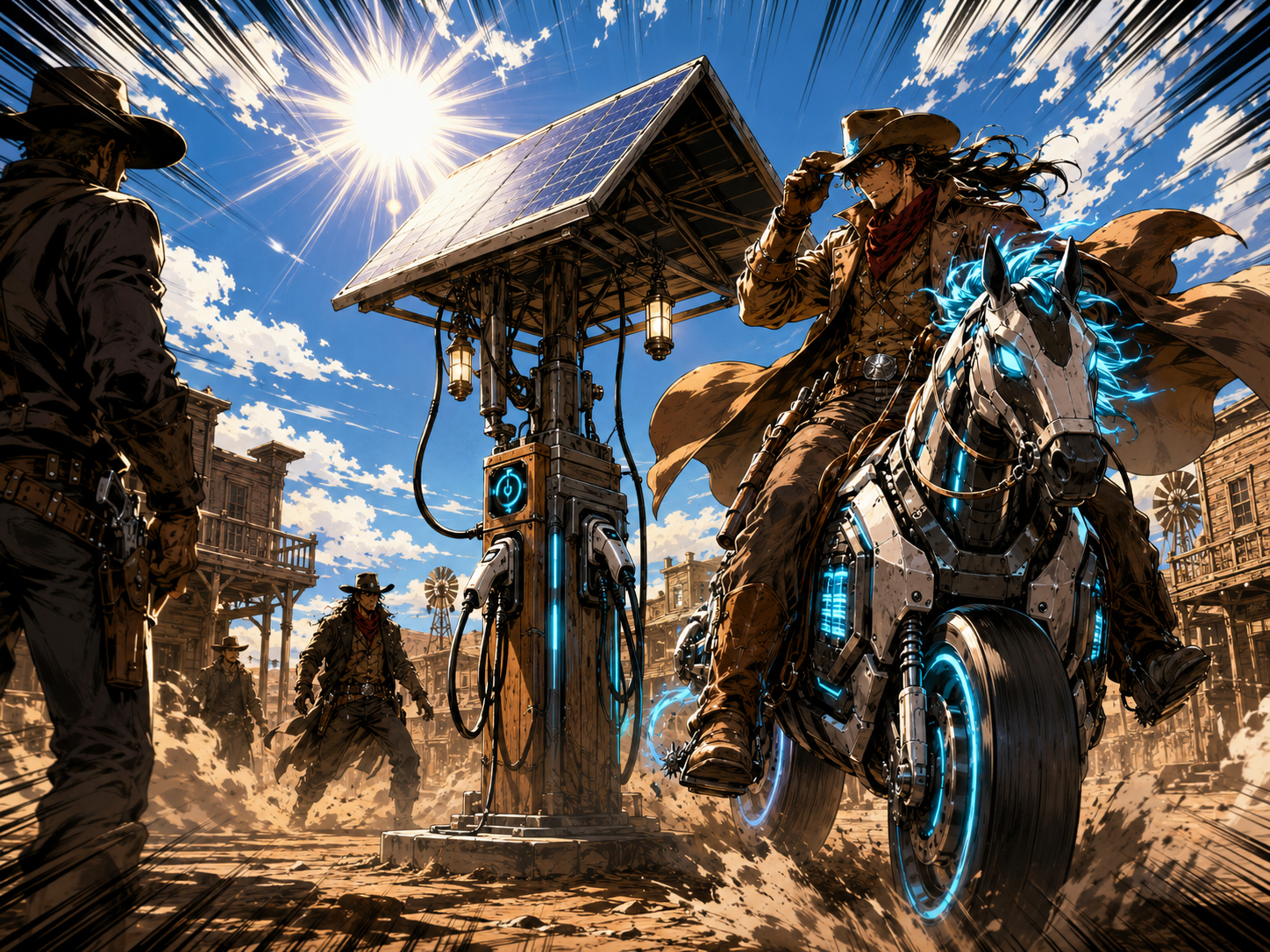
In the old West, a rider needed a place to tie up the horse. In the EV Cowboy world, the rider needs a place to plug in the steed.
That makes the charging post one of the most important props in the whole story. It is funny because it looks like a cowboy hitching post. It is serious because real EV charging requires proper electrical planning.
Charging can involve circuit size, charger output, panel capacity, utility rules, load calculations, and safe installation. A charging post is not just a decoration. It is infrastructure.
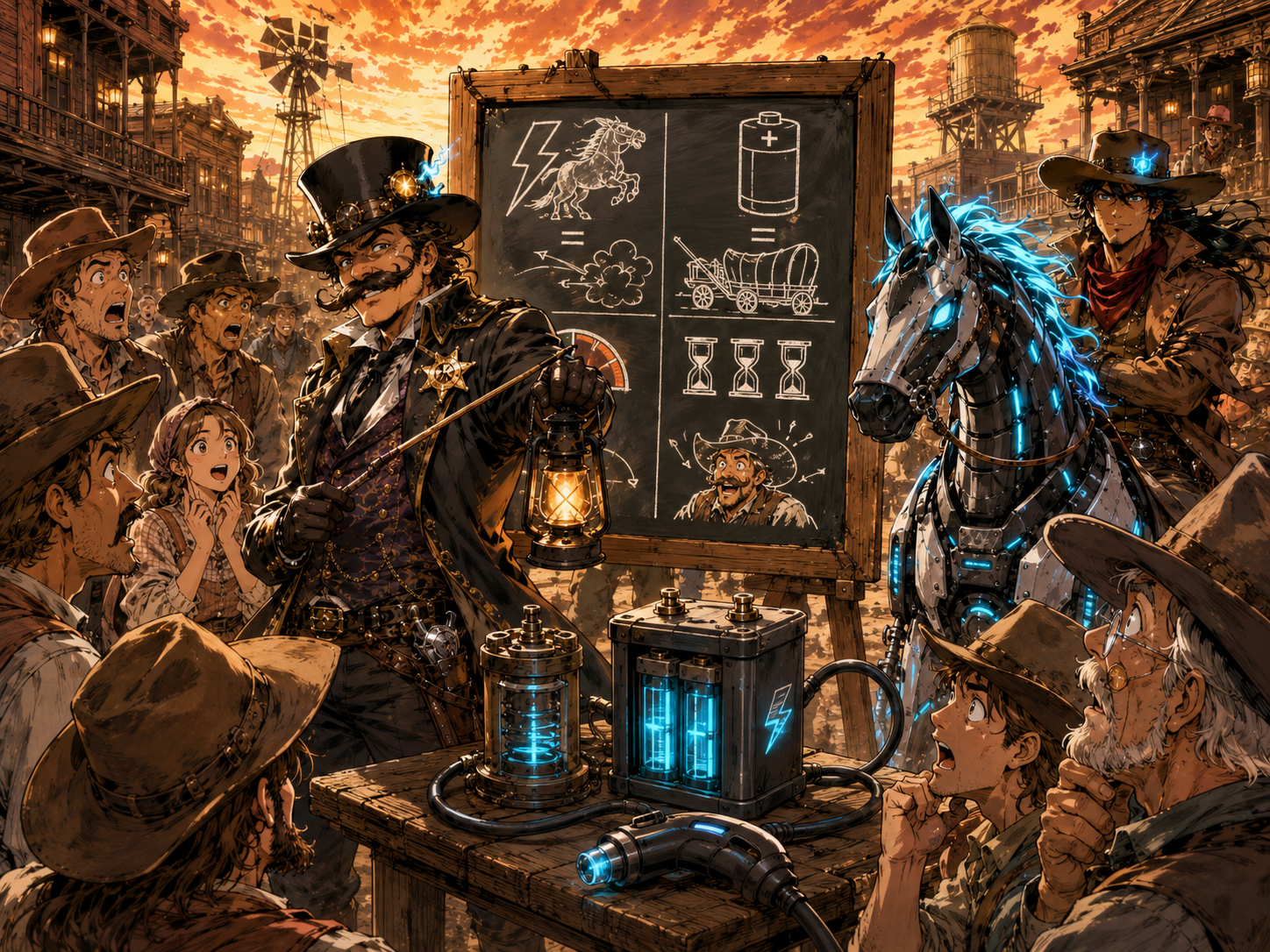
In town-square language, kW is how fast the steed can drink electricity. kWh is how much energy went into the canteen.
That difference matters when planning chargers, batteries, solar, and driving range. The Utility Baron loves confusion. Sheriff Kilowatt loves a clear chalkboard.
The EV Cowboy story becomes more powerful when the charging corral is fed by solar. A rooftop, barn, carport, ranch canopy, or business parking lot can become part of the new energy trail.
Solar does not automatically solve every EV charging question. Timing matters. Utility rates matter. Battery storage may matter. But the idea is beautiful: the same sun that baked the old desert trail can now help power the ride.
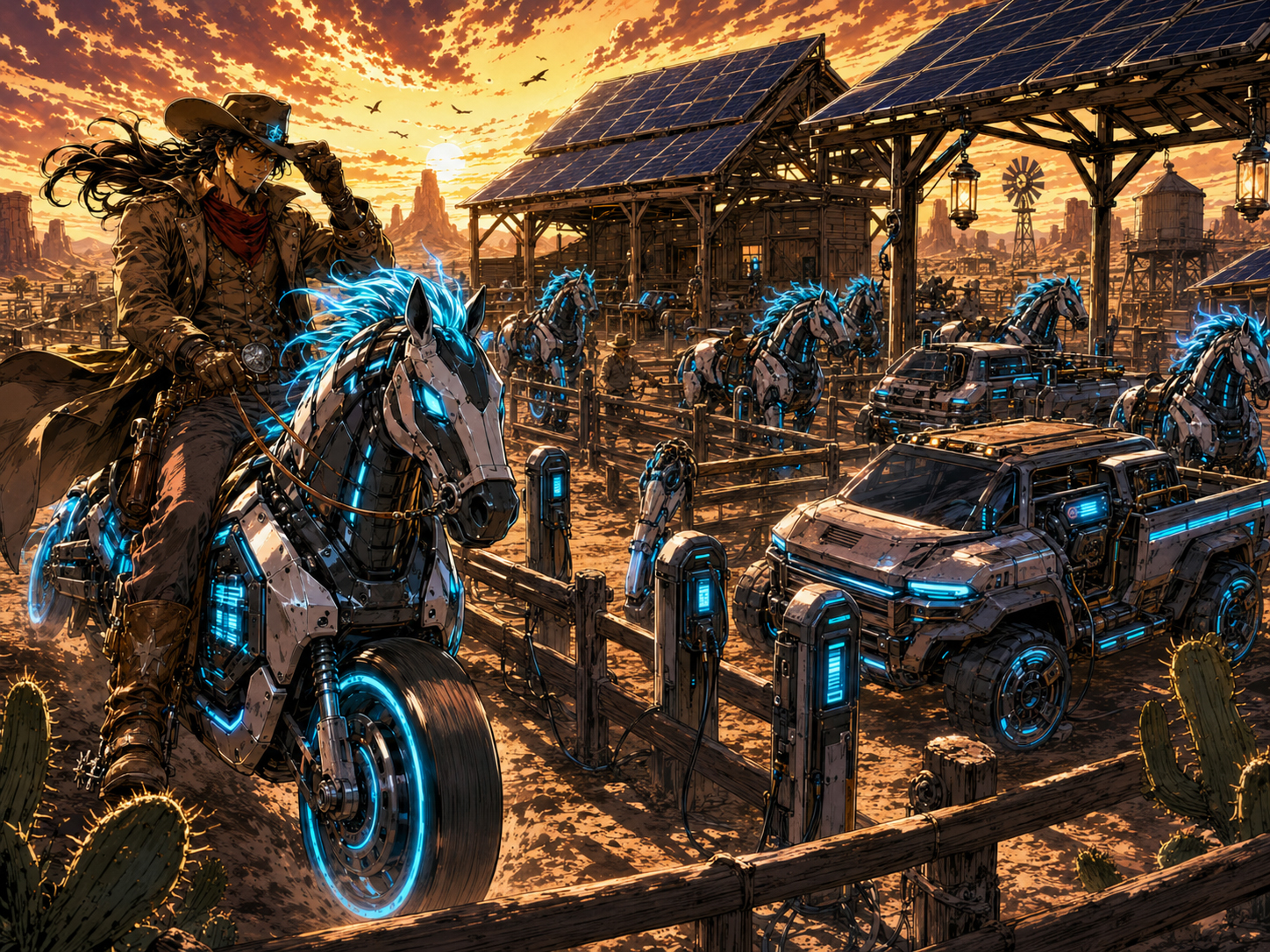
“EV steed” makes the electric future feel human, funny, and memorable.
Cowboys named their horses, trusted them, cared for them, and understood their limits. That is a useful way to think about EVs. You learn the range. You learn the route. You learn how it behaves.
The EV steed is connected to chargers, circuits, solar panels, batteries, and rates. The rider who understands the system rides smarter.
The old stagecoach rattles, smokes, and explodes into repair bills. The EV steed just hums past with blue lightning in its mane.
The old frontier was about land, horses, water, and fuel. The new frontier is about electricity, resilience, clean power, and control.
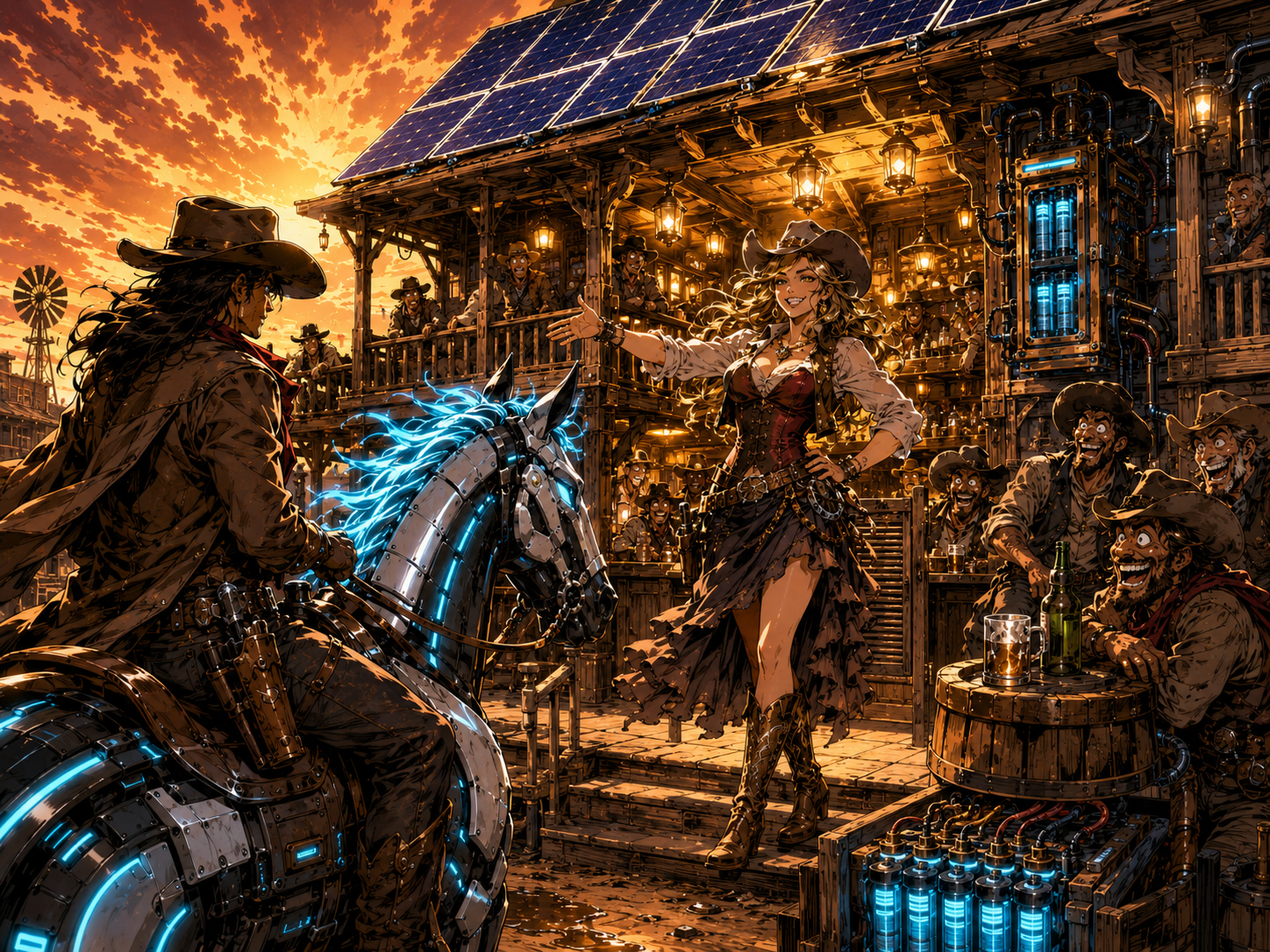
Battery backup can be wonderful, but it is not a cartoon spell. Batteries have limits. Loads have sizes. Chargers can be demanding. A home backup system must decide what gets powered and what waits.
For many homes, the best backup plan focuses on critical loads first: refrigeration, lights, communications, selected outlets, medical needs, garage door, internet equipment, or other important circuits.
The first episode begins with the town waiting for hoofbeats. There are none. Just a faint electric hum, blue light in the dust, and one cowboy riding something that looks impossible until it stops perfectly beside the old hitching rail.
Old Rancher: “That ain’t a horse.”
EV Cowboy: “Never said it was.”
Madame Gasoline: “Then why’s it got a saddle?”
Sheriff Kilowatt: “Because the future has a sense of humor.”
Old Rancher: “What does it eat?”
EV Cowboy: “Kilowatt-hours.”
Town Crowd: “Is that a grain?”
Sheriff Kilowatt: “Meeting. Now.”
EV Cowboy is a manga comedy and educational site. It is not a wiring plan, engineering document, permit set, or substitute for licensed electrical design and installation.
EV charging equipment, solar systems, service-panel upgrades, battery systems, and backup-power systems must be designed, permitted, installed, inspected, and operated according to applicable codes, manufacturer instructions, utility requirements, and local authority rules.
Once the cowboy has an electric steed, the next question is obvious: where does the steed sleep, charge, and get ready for the next ride?