What is an EV steed?
It is the EV Cowboy name for an electric vehicle, especially when imagined as a futuristic horse-like machine. The joke is simple: the new “horse” does not eat hay. It charges.
Meet the EV steed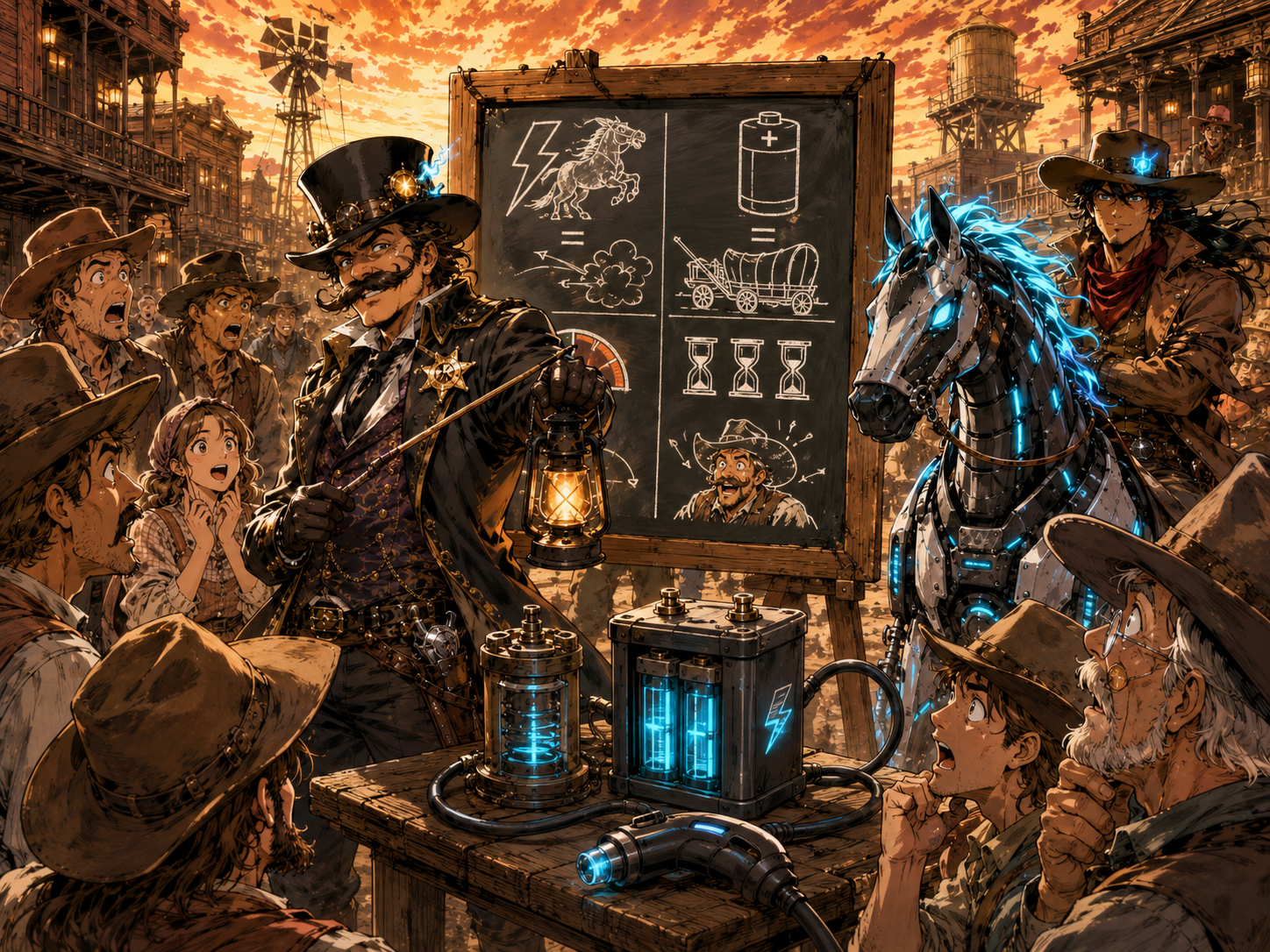
Questions from the dusty electric frontier: EV steeds, charging posts, solar corrals, batteries, peak rates, and why nobody should wire a charger with cowboy confidence alone.
EV Cowboy is a wild west manga comedy about cowboys trading horses for electric steeds. The jokes are frontier-sized, but the lessons are practical: EV charging, solar power, batteries, peak rates, route planning, and safe electrical work.
The site uses cowboy characters to make energy planning easier to remember. EV Cowboy rides the silent steed. Battery Belle stores sunshine. Sheriff Kilowatt explains kW and kWh. The Utility Baron tries to confuse the town at sunset.
Under the comedy is a simple idea: an EV is not just a vehicle. It becomes part of the home, business, ranch, electrical service, rate schedule, solar system, and daily routine.
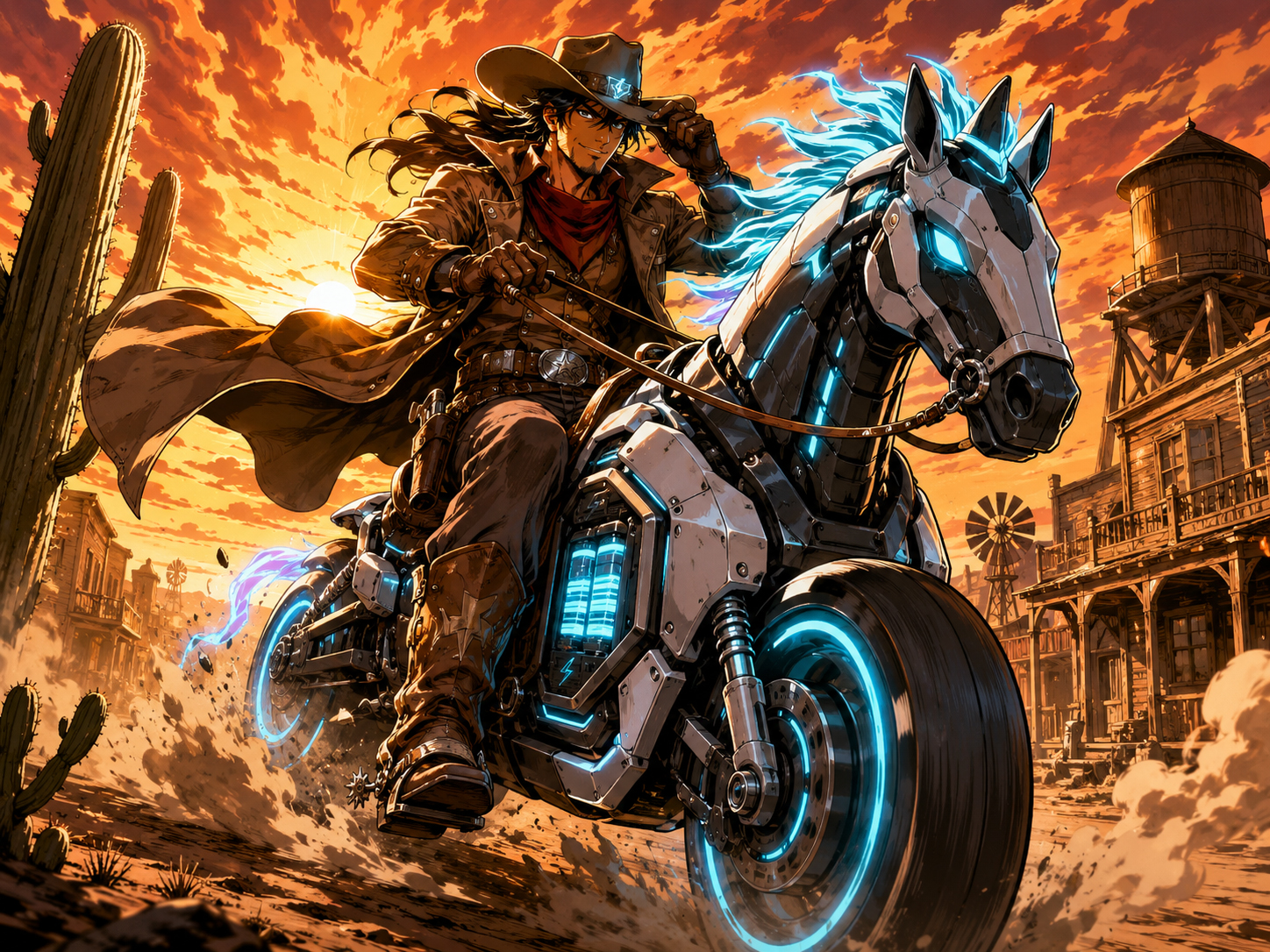
Sheriff Kilowatt begins with the questions every town asks when the first glowing horse rolls in.
It is the EV Cowboy name for an electric vehicle, especially when imagined as a futuristic horse-like machine. The joke is simple: the new “horse” does not eat hay. It charges.
Meet the EV steedYes, but through comedy. The characters are fictional, while the energy lessons are based on real-world issues: chargers, circuits, batteries, solar production, rates, range, and safety.
Cowboys understood their horses: stamina, feeding, route, rest, and care. EV owners need a similar relationship with range, charging, timing, and energy planning.
Yes. The silent steed joke is about old expectations. Gasoline machines often sound powerful. Electric drive can feel strong without the noise, smoke, and vibration.
EV vs. horsepowerCharging is where the manga joke becomes a real electrical project.
| Question | Short Answer | EV Cowboy Translation |
|---|---|---|
| Can I charge at home? | Often yes, but the electrical system must be reviewed. | Check the barn before the steed comes home hungry. |
| Is Level 1 enough? | Sometimes, for light daily driving. It is slow. | The slow canteen may work for short trails. |
| Is Level 2 better? | Usually better for home EV charging, but it needs proper installation. | The real hitching post needs the right circuit. |
| Can I just use any outlet? | No. Existing outlets may not be suitable for continuous EV charging. | Do not feed the steed from a mystery saloon wire. |
| Does charger size matter? | Yes. Bigger chargers require more available electrical capacity. | A bigger trough needs a bigger water line. |
Solar can help power EV charging, but the timing matters. Solar panels produce during the day. Many EVs arrive home in the evening. That is where schedules, batteries, and rate plans become important.
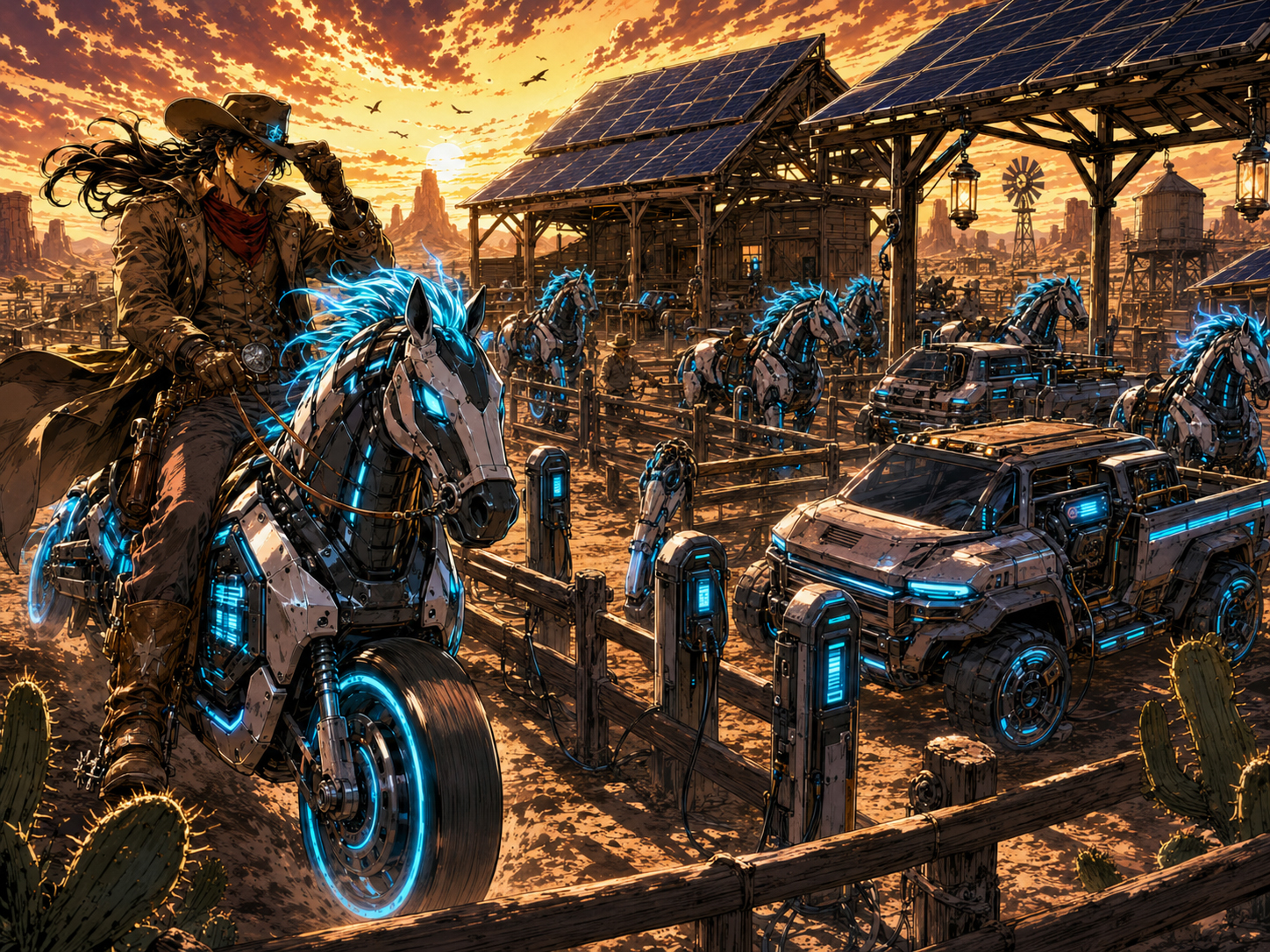
A solar charging ranch is the EV Cowboy idea of a complete plan: solar canopies, roof solar, batteries, charging posts, load planning, and a schedule that understands when vehicles are parked.
Batteries can be powerful tools, but they are not bottomless barrels.
Sometimes, but it must be specifically designed for that purpose. EV charging is a large load and can drain stored energy quickly. Critical home loads may deserve priority.
Often the best backup plan starts with critical loads: refrigeration, lights, communications, selected outlets, medical needs, garage door, internet, and other essentials.
They may help shift energy into higher-cost periods or store solar for later, depending on the system, rates, utility rules, and actual usage.
No. They require proper equipment, spacing, protection, controls, code compliance, manufacturer instructions, permits, and professional design.

Some electric rates are higher during certain time periods. If an EV starts charging during expensive hours, the cost can be higher than expected.
Smart charging can help. Plugging in does not always mean charging immediately. Many vehicles or chargers can be scheduled to charge later, when the rate may be better and the home load may be lower.
Because confusing kW and kWh leads to bad charging conversations.
kW describes the rate of power delivery. A charger may deliver power at a certain kW level. A larger kW number generally means faster delivery, if the vehicle and system support it.
kWh describes energy stored or used over time. EV battery capacity, trip energy use, and utility billing often involve kWh.
Yes, with planning. The long trail rewards preparation, not panic.
Speed, weather, terrain, towing, payload, and climate control can all affect range.
Confirm charger availability, access, compatibility, speed, payment method, and backup options.
A calm road trip keeps enough reserve to handle a busy, broken, blocked, or slow charger.
Sheriff Kilowatt keeps this section nailed to the saloon door.
Do not rely on mystery outlets, damaged outlets, loose connections, random adapters, overloaded circuits, or extension-cord creativity.
EV chargers can be large loads. The service, panel, circuits, breakers, and existing home loads must be reviewed.
Battery systems need correct equipment, clearances, protection, controls, manufacturer instructions, and code compliance.
EV Cowboy is educational comedy. Real projects require qualified professionals, permits, inspections, and local authority approval.
Start with Episode 1 if you want the story. Start with Home EV Charging Basics if you want practical charging education. Start with Not a Horse. Not a Toy. if Sheriff Kilowatt is already staring at your extension cord.

The electric future is not just the vehicle. It is the charger, the wiring, the rate schedule, the solar system, the battery, the route, the building, the user habits, and the plan.
EV Cowboy makes that lesson funny so people remember it. The old cowboy checked the horse’s shoes, water, saddle, trail, and weather. The EV Cowboy checks the charger, kWh, rate window, solar production, battery reserve, and route. Same frontier spirit. Better tools.
EV Cowboy is not electrical advice, engineering advice, vehicle advice, route advice, financial advice, utility-rate advice, permit instruction, fire-code guidance, or installation instruction.
EV chargers, solar arrays, batteries, inverters, service upgrades, backup-power systems, transfer equipment, load-management systems, wiring, conduit, breakers, and connected equipment must be designed, permitted, installed, inspected, operated, and maintained according to applicable electrical codes, fire codes, building codes, manufacturer instructions, utility requirements, rate schedules, and local authority rules.