Dedicated Loads
EV charging can be a large continuous load. Circuit size, breaker rating, wire, conduit, charger setting, and panel capacity all matter.

The electric steed is funny in manga. The charger, battery, solar array, and wires are serious in real life.
EV Cowboy is a wild west manga comedy, but the equipment behind the jokes is not pretend. EV chargers, electrical panels, batteries, solar systems, backup-power equipment, and utility connections must be treated with respect.
A horse can kick. A bad electrical installation can do worse. That is why Sheriff Kilowatt does not allow random wires, guesswork, overloaded circuits, mystery breakers, improvised extension cords, or “my cousin said it was fine” engineering.
The safe trail is simple: use proper equipment, licensed professionals, permits, inspections, manufacturer instructions, utility rules, and applicable electrical and fire codes.
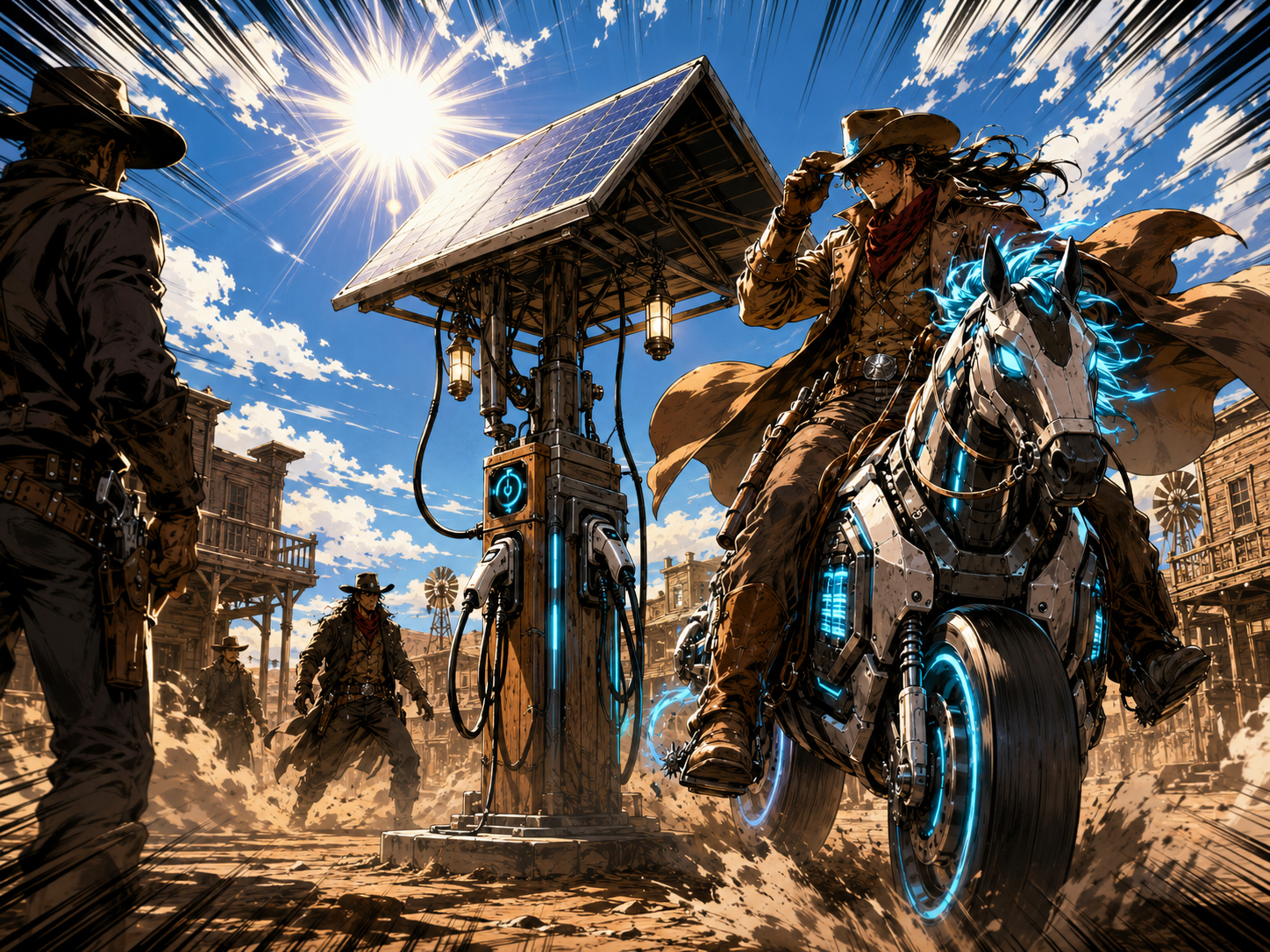
The comedy works because the props are exaggerated. The safety rules do not get exaggerated. They get followed.
EV charging can be a large continuous load. Circuit size, breaker rating, wire, conduit, charger setting, and panel capacity all matter.
Solar arrays involve roof work, structural attachment, DC wiring, inverters, disconnects, rapid shutdown, and utility rules.
Battery systems require correct equipment, spacing, protection, controls, fire-safety awareness, and manufacturer-approved installation.
Backup power must be designed so selected loads are supported safely without overloading equipment or creating unsafe transfer conditions.

Bad installations are never cheaper after they fail. The Utility Baron loves shortcuts because shortcuts create confusion, callbacks, unsafe conditions, failed inspections, and expensive corrections.
Do not treat EV charging like a phone charger. Do not treat batteries like ordinary boxes. Do not treat solar like decorations. These are power systems.
Sheriff Kilowatt wants these questions answered before the charging post goes live.
| Safety Question | Why It Matters | Smart Cowboy Move |
|---|---|---|
| Is the panel capacity adequate? | EV charging adds a significant electrical load. | Have the service and panel evaluated before installation. |
| Is the circuit properly sized? | Breaker, wire, conduit, and charger settings must match. | Use code-compliant design and licensed installation. |
| Is the charger listed and installed correctly? | Improper equipment or installation can create hazards. | Follow manufacturer instructions and local code requirements. |
| Is the location weather-safe? | Outdoor equipment needs appropriate ratings and protection. | Use equipment suitable for the environment and mounting location. |
| Are batteries installed with proper clearances? | Battery systems can have spacing, access, ventilation, and fire-code requirements. | Follow listed system requirements and local fire/electrical rules. |
| Is backup power isolated correctly? | Improper transfer can create dangerous backfeed or equipment damage. | Use approved transfer equipment and professional design. |
In the manga, a cowboy might drag a ridiculous cord across Main Street while the town gasps. In real life, improvised charging can be dangerous.
EV charging should use equipment and circuits suitable for the load and environment. Existing outlets may not be appropriate for repeated continuous charging. Extension cords, adapters, damaged outlets, loose connections, and overloaded circuits can create serious risks.

The permit goblin does not appear because the project is careful. It appears because somebody skipped the careful part.
A charger may require a load calculation, panel review, service review, or load-management approach.
Indoor, outdoor, wet, dusty, sunny, hot, and publicly accessible locations can have different equipment requirements.
Critical loads, EV chargers, air conditioning, pumps, and large appliances must be planned around inverter and battery limits.
Solar, batteries, interconnection, meters, export rules, and service changes may require utility approval.
Listed equipment must be installed according to the instructions that apply to that system and model.
Permits and inspections help verify that the system was built according to required rules.

Battery backup is powerful, but it is not endless. A smart backup plan decides what matters most during an outage: refrigeration, lights, communication, medical needs, selected outlets, garage door, internet, or other priority circuits.
Large loads like EV chargers, hot tubs, ovens, air conditioning, and pumps may need special design, load controls, or exclusion from backup circuits. The right answer depends on system size and customer goals.
The safe cowboy does not shoot from the hip when the topic is electricity.
EV charging, solar savings, battery backup, peak-rate control, fleet charging, or a combination.
Review service size, panel capacity, breaker space, major loads, wire routes, and equipment condition.
Select code-compliant equipment and plan circuits, controls, disconnects, protection, batteries, solar, and chargers.
Follow local authority, utility, fire-code, and manufacturer requirements before energizing the system.
Use licensed professionals, approved materials, proper workmanship, inspections, and documented commissioning.
In the episode, a cowboy tries to charge an electric steed from a mystery outlet behind the saloon. Sparks fly. The crowd cheers. Sheriff Kilowatt does not.
He closes the panel door, points to the chalkboard, and explains that the town is welcome to be funny, but the wiring is going to be serious.
EV Cowboy is not electrical advice, engineering advice, construction instruction, vehicle advice, route advice, permit instruction, fire-code guidance, financial advice, or utility-rate advice.
EV charging equipment, solar arrays, battery systems, inverters, transfer equipment, service upgrades, load-management systems, backup-power systems, breakers, wiring, conduit, and connected equipment must be designed, permitted, installed, inspected, commissioned, operated, and maintained according to applicable electrical codes, fire codes, building codes, manufacturer instructions, utility requirements, rate schedules, and local authority rules.
Always use properly qualified, licensed, and insured professionals. Verify vehicle requirements, equipment ratings, charger compatibility, utility rules, permitting requirements, and site conditions before making decisions.
Safety first. Then comedy. The electric frontier is more fun when the wiring is not part of the joke.