Power: How Fast
kW is the rate of power. A 7.2 kW charger can deliver energy faster than a 1.4 kW outlet, if the vehicle and circuit support it.
In cowboy language: this is how fast the steed can drink.

kW is how fast the steed drinks. kWh is how much energy went into the canteen. The town keeps confusing them. Sheriff Kilowatt is out of patience.
The whole town has been saying “kilowatt” every time anything electric happens. Sheriff Kilowatt finally drags a chalkboard into Main Street and explains the difference before someone tries to charge an EV steed from a lantern.
kW means power. It describes how fast electricity is being delivered or used at a moment. A charger, inverter, motor, or load may be described by its kW level.
kWh means energy. It describes how much electricity is stored or used over time. EV battery capacity, trip energy, home usage, solar production, and utility bills often involve kWh.
The town finally understands when Sheriff Kilowatt stops using fancy words and starts using frontier examples.
kW is the rate of power. A 7.2 kW charger can deliver energy faster than a 1.4 kW outlet, if the vehicle and circuit support it.
In cowboy language: this is how fast the steed can drink.
kWh is the amount of energy. A battery with more kWh can store more energy, but that does not automatically mean it can deliver power faster.
In cowboy language: this is how much water is in the canteen.
Sheriff Kilowatt writes the simplest example he can before the old cowboys start asking if electricity comes in buckets.
| Example | What It Means | EV Cowboy Translation |
|---|---|---|
| 1 kW for 1 hour | Uses 1 kWh of energy. | A small steady drink for one hour fills one canteen unit. |
| 7 kW for 2 hours | Uses about 14 kWh of energy. | The steed drinks faster and longer, so the canteen fills more. |
| 10 kWh battery | Stores 10 kWh of energy. | The barn has 10 units of stored sunshine or grid energy. |
| 10 kW inverter | Can deliver power up to its rated output, subject to system limits. | The barn door can let energy out at a certain speed. |
| 30 kWh EV use | The vehicle consumed 30 kWh for driving. | The steed used 30 canteen units on the trail. |
When people talk about an EV charger, they often talk about power. A charger rated at a higher kW can usually deliver energy faster, but only if the vehicle, circuit, charger setting, wiring, and electrical service support that power level.
That is why the biggest charger is not automatically the best charger. A charger must fit the home, business, panel, service capacity, vehicle, driving pattern, and utility rules.
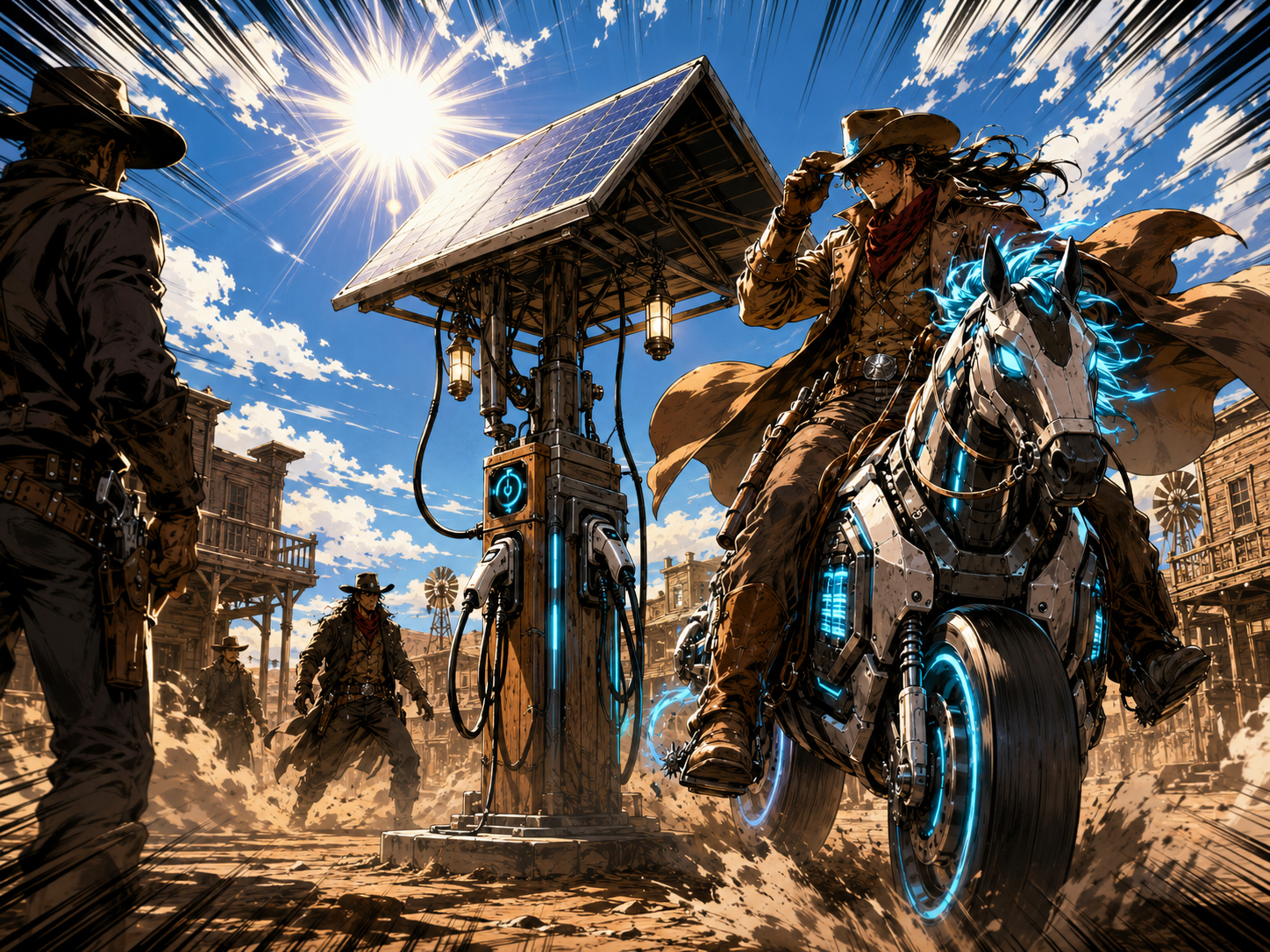

Battery Belle explains it better than anyone: a battery has stored energy, usually discussed in kWh, and it also has power limits, usually discussed in kW.
A battery may have enough energy for many small loads, but a large load can drain it quickly or exceed the inverter’s power rating. That is why backup power must choose loads carefully.
These mistakes make Sheriff Kilowatt reach for chalk, coffee, and sometimes a very small hammer.
A battery’s energy capacity is not the same as its power output. Large loads may still exceed inverter limits or drain stored energy quickly.
A larger charger can require a larger circuit and more service capacity. The right charger is the one that safely fits the need.
Solar production happens when sunlight is available. Nighttime use may need grid power, stored battery energy, or a different charging schedule.
Many EVs and chargers can be scheduled. Plugging in can simply mean the vehicle is ready to charge at the planned time.
A kWh is an energy amount, but the price of that kWh can vary by rate schedule, time of day, utility plan, and other charges.
Bills can include energy charges, time-of-use rates, fixed charges, demand charges, taxes, fees, export credits, or other program details.
Solar panels produce power when the sun is available. Over the day, that production adds up to energy. That is why solar production is often discussed in kWh per day, month, or year.
If the electric steed is parked during solar hours, it may use some of that power directly. If the steed is away during the day, the ranch may need scheduling, batteries, or a different strategy to match production with charging.
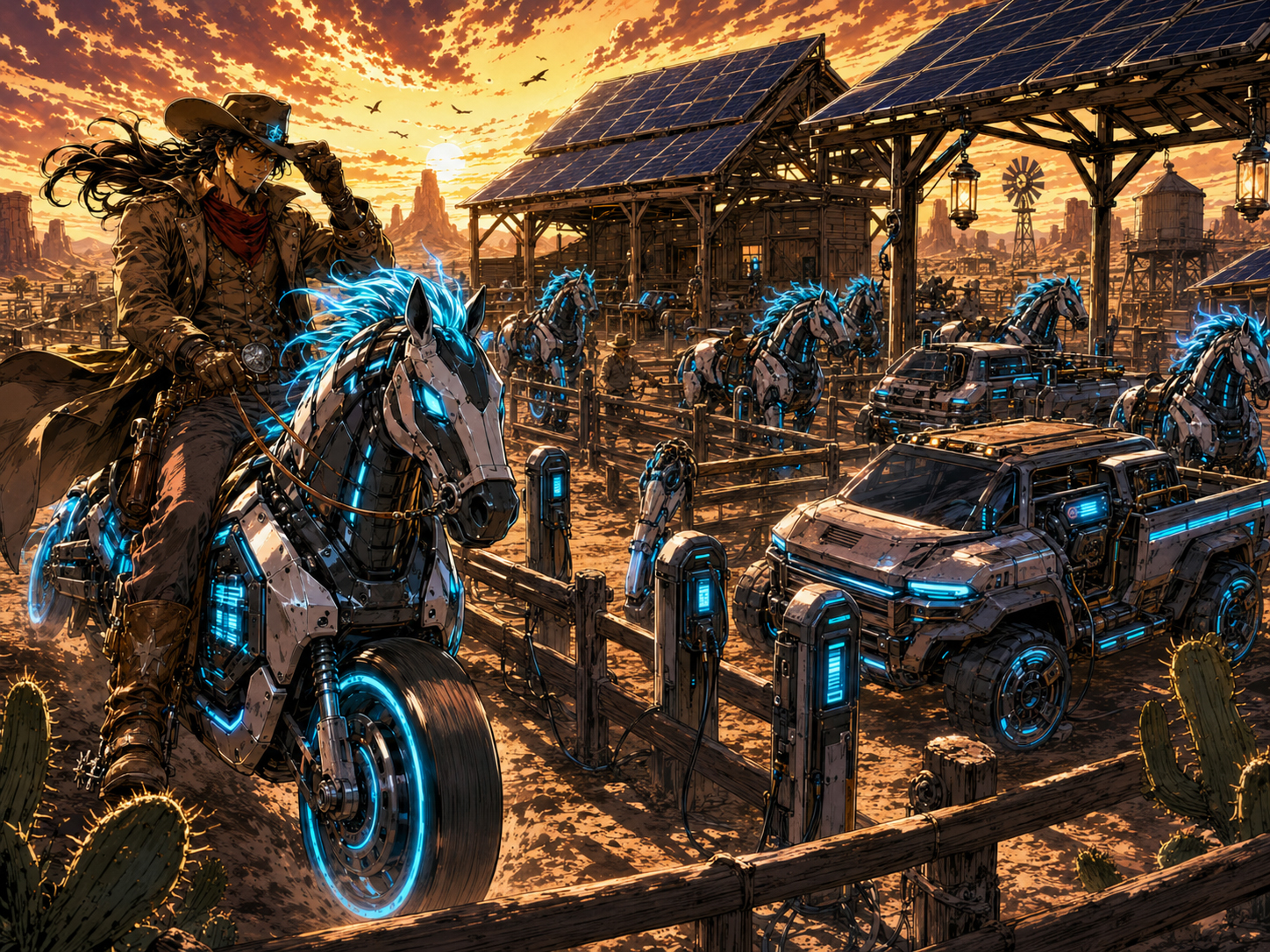
Sheriff Kilowatt explains the units. The Utility Baron tries to confuse the price.

A kWh is a quantity of energy. But what that kWh costs can depend on the utility rate schedule. Some hours may be cheaper. Some may be expensive. Some bills may include other charges.
That is why timing matters for EV charging. If the steed can charge later, the rider may be able to avoid expensive periods, depending on the rate plan and daily schedule.
In the town-square lesson, Sheriff Kilowatt turns energy math into a western showdown.
Old Cowboy: “My charger is 7 kW. Does that mean my battery is 7 kWh?”
Sheriff Kilowatt: “No.”
Old Cowboy: “But both have a k.”
Sheriff Kilowatt: “So does cactus. Sit down.”
Battery Belle: “kW is how fast the saloon pours. kWh is how much root beer is in the barrel.”
EV Cowboy: “Finally, a unit I can ride with.”
Utility Baron: “And I decide what the root beer costs at sunset.”
Sheriff Kilowatt: “That is tomorrow’s lecture.”
Before choosing chargers, solar, or batteries, the town needs real numbers.
Daily driving energy helps determine whether slow charging is enough or whether Level 2 charging makes more sense.
The panel, service, existing loads, and charger circuit must be reviewed before adding a large charging load.
Battery capacity affects how long backup loads may run and how much solar energy can be saved for later.
Inverter output affects which loads can run at the same time during backup operation.
Solar production varies by array size, sun exposure, orientation, weather, season, shade, and equipment.
Rate schedules can change the best time to charge the vehicle or discharge the battery.

An EV road trip is not just a distance question. It is an energy question. Speed, weather, terrain, towing, payload, climate control, and charger availability all affect the ride.
The silent steed wins the race because it was charged, the route was planned, and the rider understood the reserve. That is not magic. That is energy planning.
kW and kWh are small labels with big consequences. They affect chargers, batteries, solar, backup power, bills, and expectations.
The electric frontier gets easier when the town remembers the difference: kW is power, the rate electricity is delivered or used. kWh is energy, the amount stored or used over time. A good EV charging, solar, or battery plan needs both numbers.
EV Cowboy is educational comedy. This page explains general concepts only. It is not electrical advice, engineering guidance, permit instruction, utility-rate advice, vehicle advice, or installation instruction.
EV chargers, solar arrays, batteries, inverters, service upgrades, backup-power systems, transfer equipment, load-management systems, breakers, wiring, conduit, and connected equipment must be designed, installed, permitted, inspected, operated, and maintained according to applicable electrical codes, fire codes, building codes, manufacturer instructions, utility requirements, rate schedules, and local authority rules.
Once the town understands kW and kWh, it can finally talk clearly about chargers, batteries, solar production, backup loads, and peak rates.