Solar Panels
The new hayfield. Panels turn sunlight into electricity that can help serve the building, charge vehicles, or feed batteries.
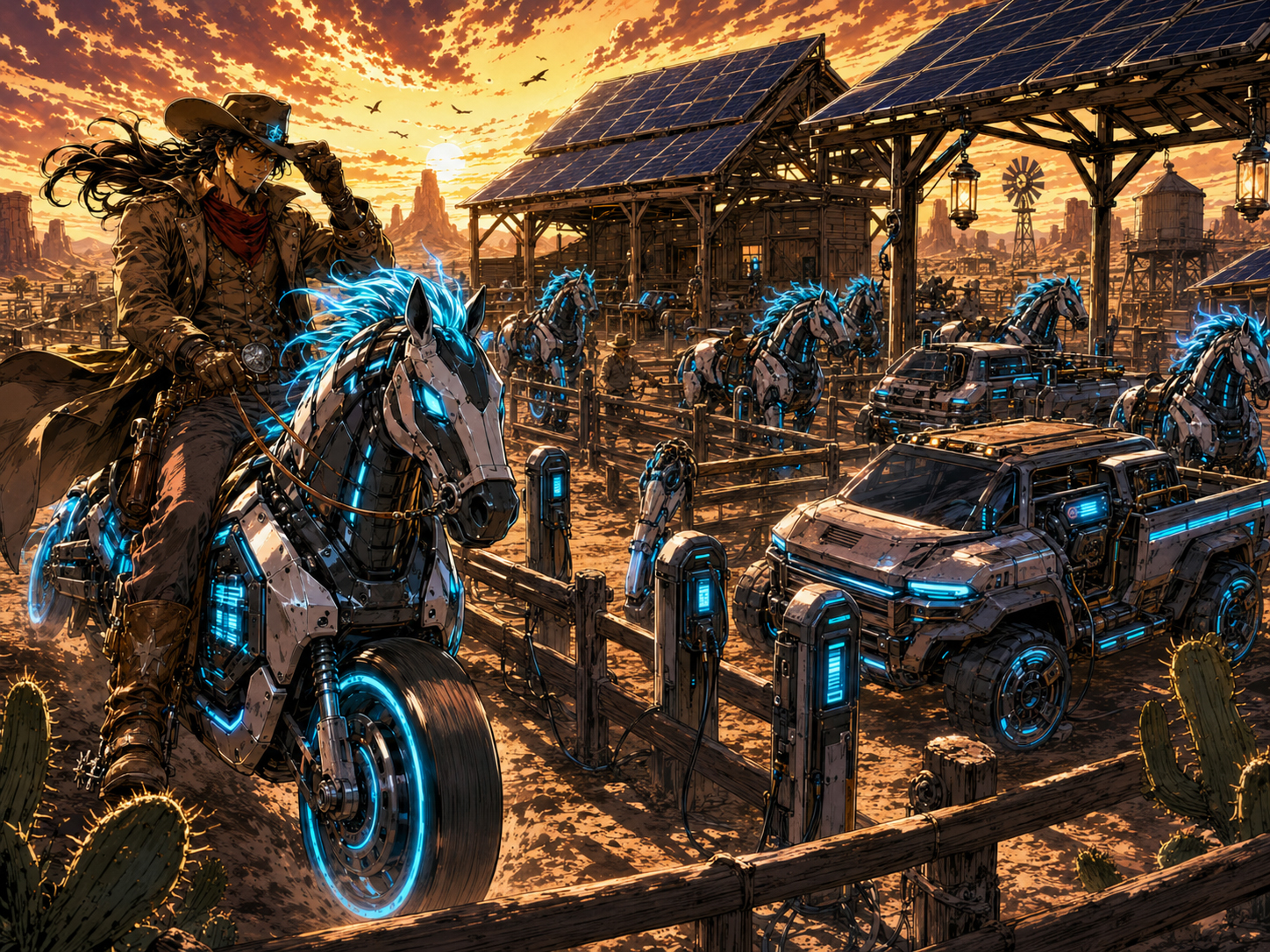
Every corral needs a charger. Every charger needs a plan. Out here, the new feed barn is made of solar panels, batteries, wires, and common sense.
In the EV Cowboy universe, the old ranch stable has been upgraded into a solar charging corral. The cowboys still gather at the fence, the dust still rolls through town, and the hats are still ridiculous. But the steeds no longer eat hay. They drink electricity.
A real EV charging plan starts with a simple truth: an electric vehicle is a new electrical load. That load needs safe wiring, proper charging equipment, available panel capacity, and a schedule that makes sense.
Add solar, and the story gets better. A barn roof, shop roof, carport, ranch canopy, or business parking lot can harvest sunshine during the day. Add batteries, and the ranch can shift some of that power into the evening, when the Utility Baron likes to sneak into town with his peak-rate pistol.
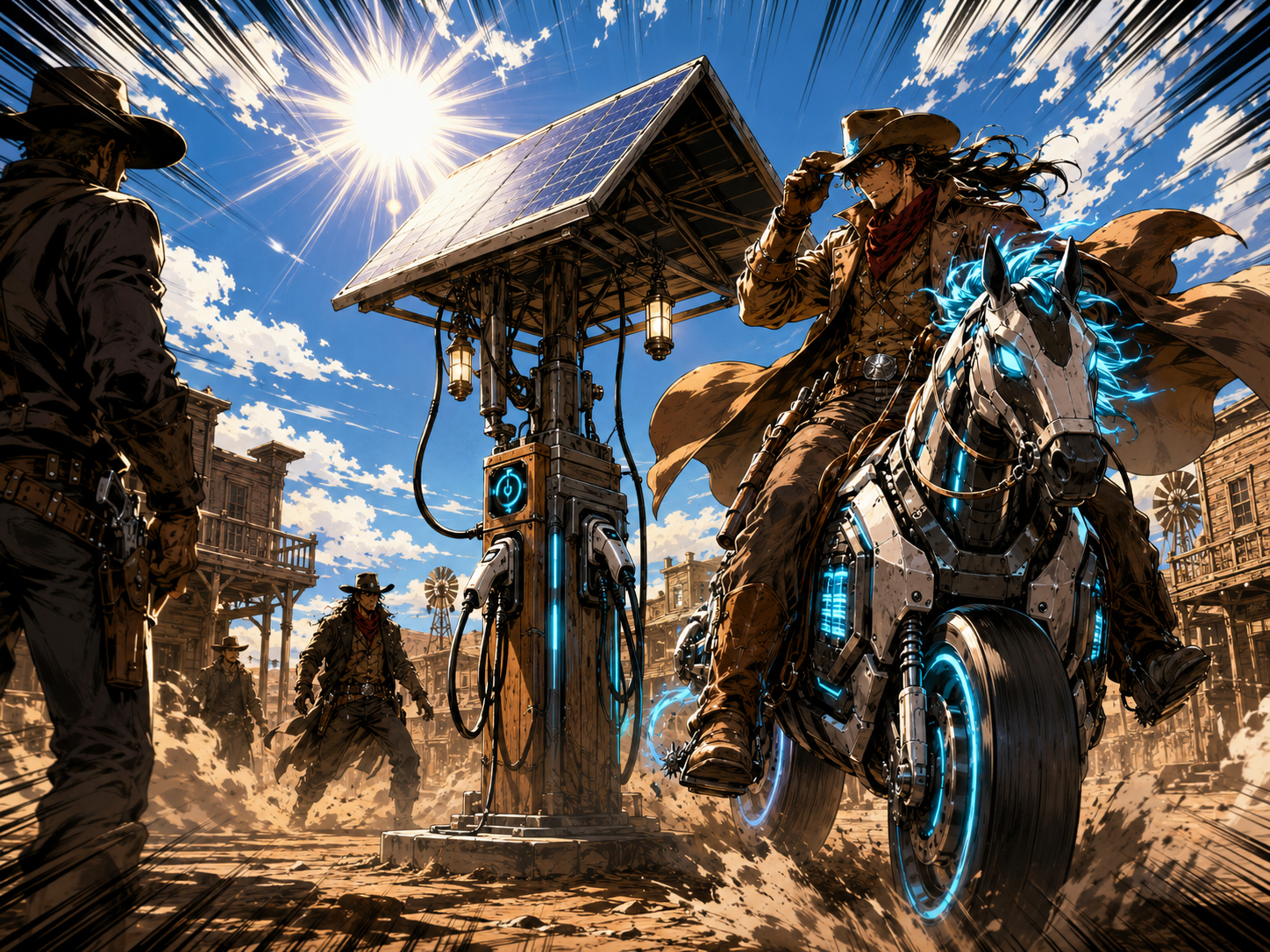
A good solar charging ranch is not one magic gadget. It is a system of equipment, timing, safety, and common sense.
The new hayfield. Panels turn sunlight into electricity that can help serve the building, charge vehicles, or feed batteries.
The new hitching posts. Chargers must be selected and installed for the vehicle, circuit, location, and daily use pattern.
The new feed barn. Batteries can store energy, help shift solar into evening use, and support selected backup loads.
The sheriff’s rulebook. The electrical service, panel capacity, circuit size, utility rules, and usage schedule must all line up.
A solar canopy is the perfect EV Cowboy prop because it does two frontier jobs at once. It gives shade to the riders and generates power for the steeds.
For homes, businesses, ranches, churches, schools, shops, warehouses, and fleet yards, parking areas can become useful energy spaces. The canopy protects vehicles from sun while the roof harvests electricity.
In the manga, the charging corral looks heroic. In the real world, it still needs engineering: structure, wind loading, foundations, wire runs, conduit, electrical protection, permitting, and utility approval.
The charging schedule can matter as much as the charger. The ranch has to know when the steeds are home, when the sun is strong, and when the power is expensive.
| Ranch Situation | EV Cowboy Problem | Smart Energy Idea |
|---|---|---|
| Vehicle home during the day | The steed is available when solar production is strong. | Daytime charging can directly use more solar when the system and controls are designed for it. |
| Vehicle gone during the day | The sun is working while the steed is out on the trail. | Batteries, workplace charging, scheduled charging, or weekend charging may help match energy to use. |
| Evening charging | The Utility Baron loves sunset demand. | Use rates, timers, batteries, and load management to avoid expensive charging when possible. |
| Fleet or ranch vehicles | Many steeds may return at once. | Plan total load, stagger charging, size circuits correctly, and consider managed charging. |
| Backup power goal | The ranch wants lights, refrigeration, communications, or selected loads during outage conditions. | Separate critical loads, batteries, transfer equipment, and code-compliant controls must be planned carefully. |
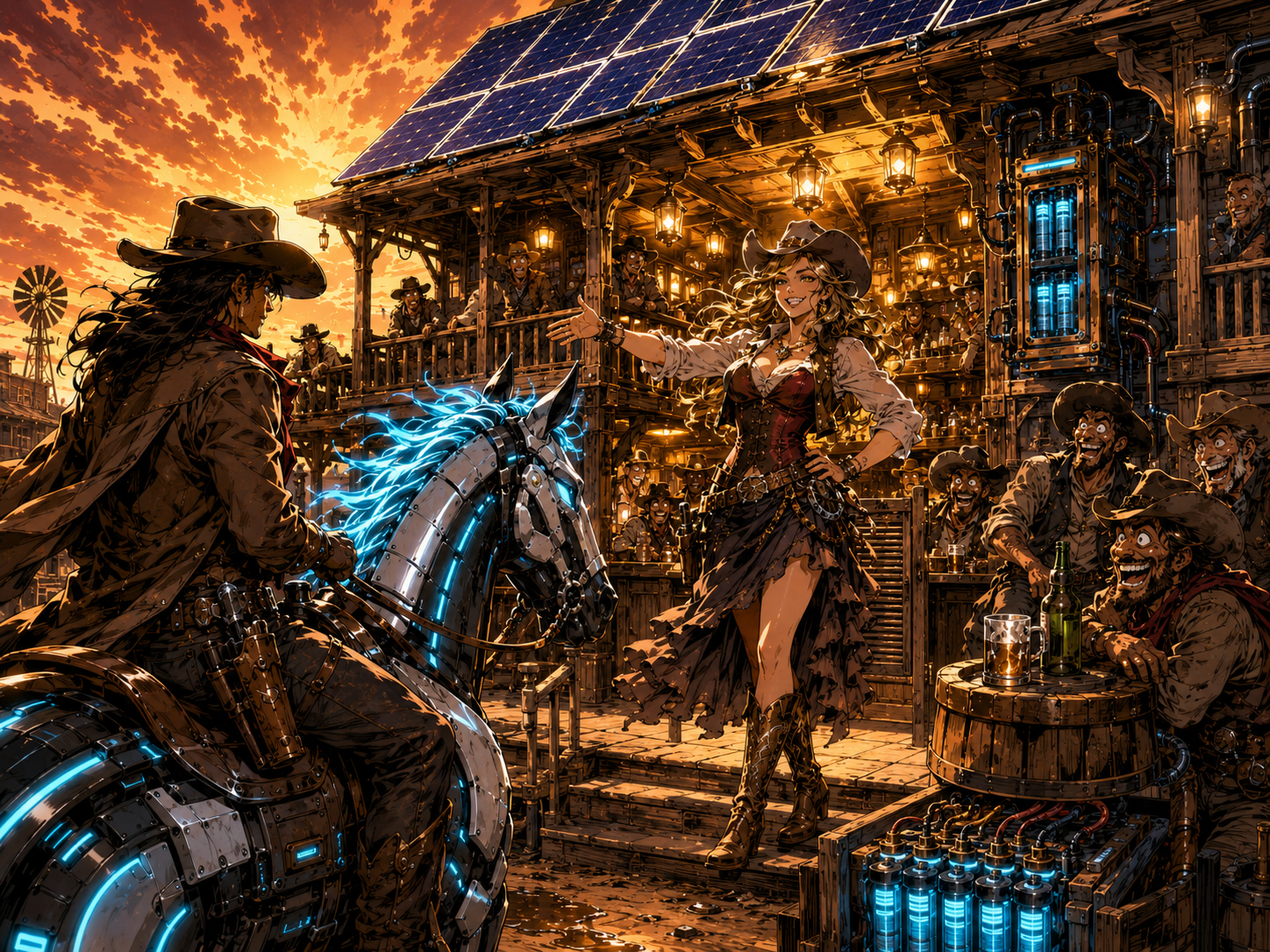
Battery Belle runs the saloon that stays lit when the town goes dark. Her secret is not magic. It is planning. Solar panels make power when the sun is shining. Batteries can help save some of that power for later.
That can matter for EV charging because many vehicles are plugged in at night, after solar production has dropped. A battery can help shift some energy, support backup loads, and reduce exposure to certain peak-rate periods.
Sheriff Kilowatt does not allow random wires in the dust. He asks questions first.
One commuter EV is a different planning problem than a business fleet, ranch yard, apartment property, or public charging location.
Faster charging can require larger circuits and more available electrical capacity. The fastest solution is not always the smartest solution.
Daytime, nighttime, weekday, weekend, and fleet return patterns all affect whether solar, batteries, or managed charging make sense.
The existing electrical service and panel must be evaluated before adding large EV charging loads.
Solar can be a powerful ally, but the production profile needs to match building loads, charging schedules, and utility rules.
Batteries may help with backup, peak rates, and energy shifting, but they add cost, space, code requirements, and design complexity.
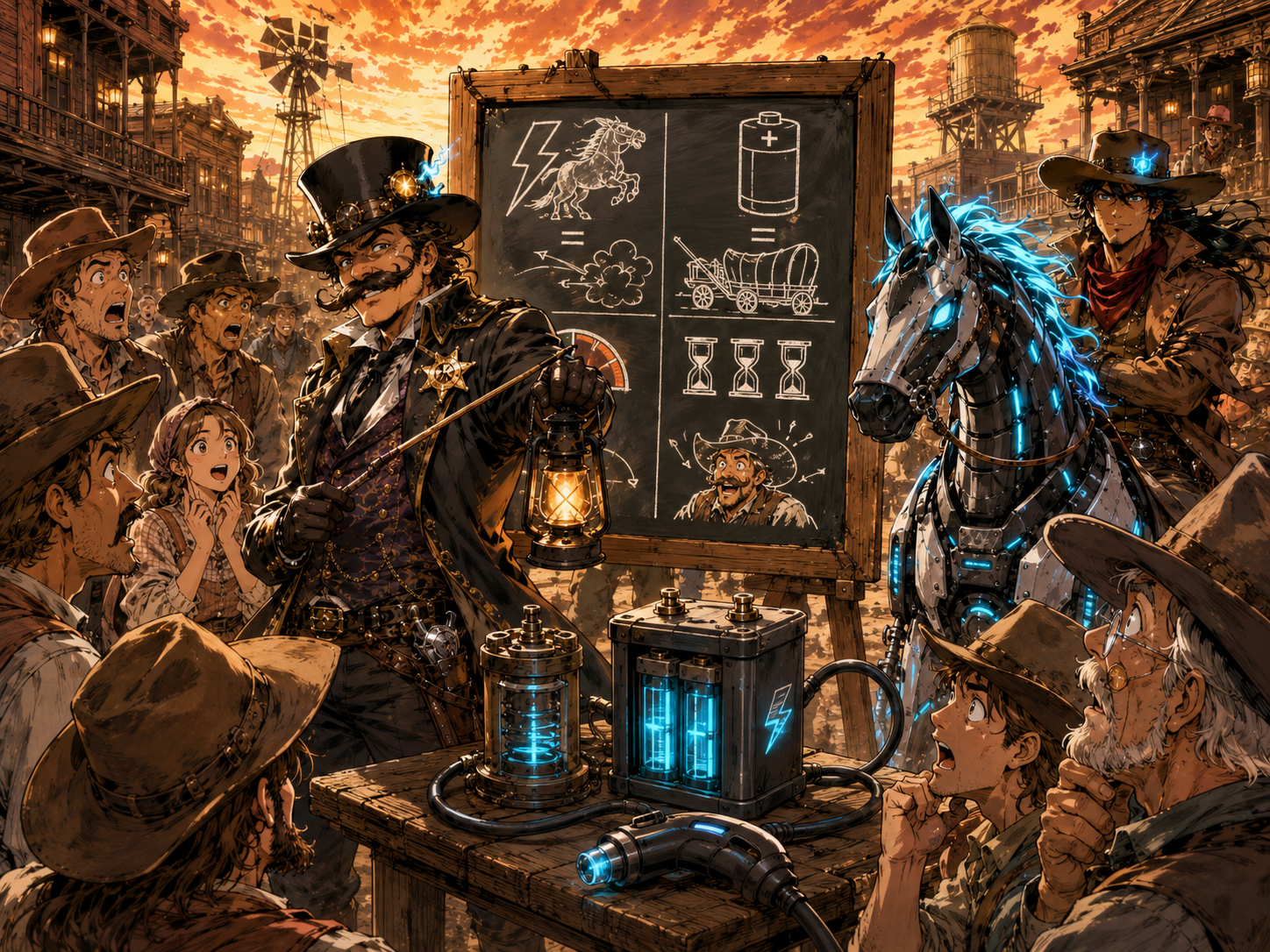
The ranch cannot plan charging if everyone keeps mixing up power and energy. kW describes how fast power is being delivered. kWh describes how much energy is stored or used over time.
A charger may deliver power at a certain kW level. A battery stores energy in kWh. An EV trip consumes energy in kWh. A utility bill often charges for both energy and sometimes demand.
The same charging-corral logic can apply to many real places, from homes to fleets.
A homeowner may need a dedicated EV circuit, charger location, panel review, solar sizing discussion, and rate strategy.
Home charging basicsA business may use solar canopies, Level 2 chargers, managed charging, and batteries to reduce cost and improve resilience.
Ask ABC SolarFleets need route planning, charging windows, equipment staging, load management, and careful electrical design.
Electric ranch workIn the manga episode, the cowboys argue about whether electric steeds are “real horses.” Solar Sensei ignores the argument and starts building a charging corral under a solar canopy.
By sunset, the old cowboys are still debating tradition, the Utility Baron is still muttering about rates, and the EV steeds are already charged, quiet, and ready for the next ride.
EV Cowboy is a manga comedy and educational site. It is not a wiring design, permit set, engineering document, construction instruction, or substitute for licensed professionals.
Solar arrays, EV chargers, batteries, service upgrades, load management systems, transfer equipment, and backup-power systems must be designed, permitted, installed, inspected, and operated according to applicable electrical codes, fire codes, manufacturer instructions, utility requirements, and local authority rules.
Once the ranch has chargers, the next battle is cost. The Utility Baron waits until sunset with a peak-rate pistol and a smile that belongs nowhere near your electric bill.