The Wild West just traded horses for electric steeds.
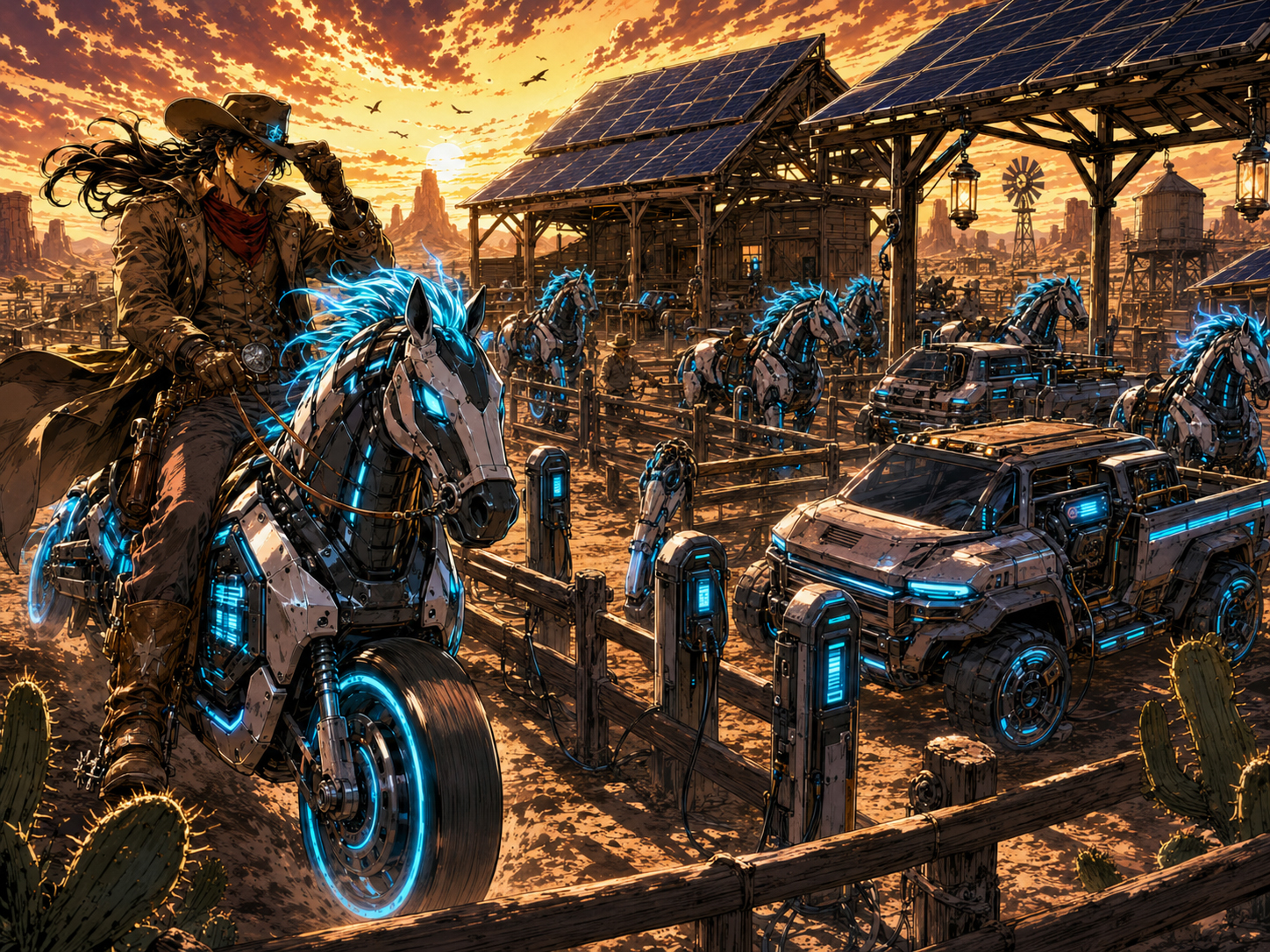
A solar ranch charging corral with electric steeds, EV ranch vehicles, charging posts, and solar canopies
Contact the Ranch

Contact

Questions about EV charging, solar, batteries, backup power, or the electric frontier? Sheriff Kilowatt says the first step is a real conversation.

ABC Solar Incorporated

Plan the Charging Corral Before the Steed Gets Hungry

EV Cowboy is comedy, but EV charging, solar, battery backup, service planning, and real electrical work are not cartoon props.

Contact ABC Solar Incorporated for real-world conversations about solar power, EV charging, battery storage, backup power, electrical service planning, and practical clean-energy design.

Whether the project is a home charger, solar-plus-battery system, business charging area, fleet yard, solar canopy, or backup-power plan, the first step is understanding the site, the loads, the goals, and the rules.

The EV Cowboy rule: the charger is not just a plug. It is a plan.
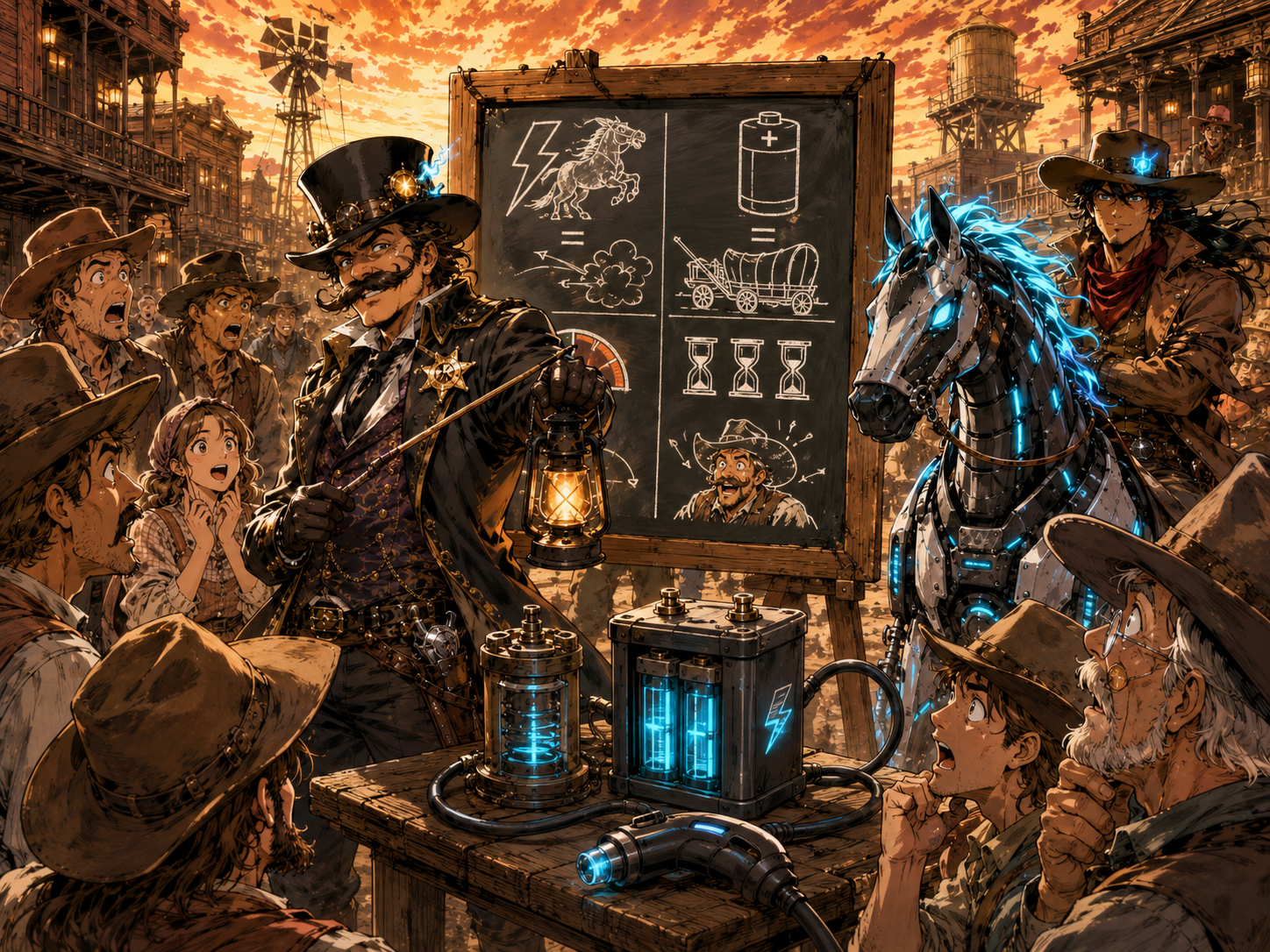
Sheriff Kilowatt explaining EV charging, solar, batteries, and kWh to western townsfolk
Contact Details

ABC Solar Incorporated

Real wires. Real batteries. Real solar. Real planning.

Good Reasons to Contact

Home EV charging, solar system planning, battery backup, service-panel review, peak-rate strategy, solar canopies, business charging, ranch and fleet charging, backup-load planning, and clean-energy project evaluation.

For any project involving wiring, batteries, solar, or utility interconnection, site-specific review matters.

Before You Call

Helpful Project Information

The more complete the starting information, the better the first conversation.

EV Charging

Vehicle and Parking

Vehicle model, daily miles, parking location, desired charging speed, panel location, and whether the charger is for home, business, or fleet use.

Solar

Roof or Canopy Area

Address, roof type, available space, shade concerns, utility bill history, existing solar, and whether EV charging is part of the goal.

Batteries

Backup Goals

Critical loads, outage concerns, medical equipment, refrigeration, internet, garage door, pump loads, EV charging needs, and desired runtime.

Safety First

No Mystery Wires. No Cowboy Guesswork.

EV charging and battery backup are not places for improvisation. A proper project reviews the service, panel, existing loads, wire routes, equipment ratings, utility requirements, permits, inspections, and manufacturer instructions.

The funny manga version has glowing steeds and peak-rate pistols. The real-world version has code-compliant equipment, proper workmanship, and a safe plan.

Cartoon lightning is fun. Real current needs a professional trail boss.
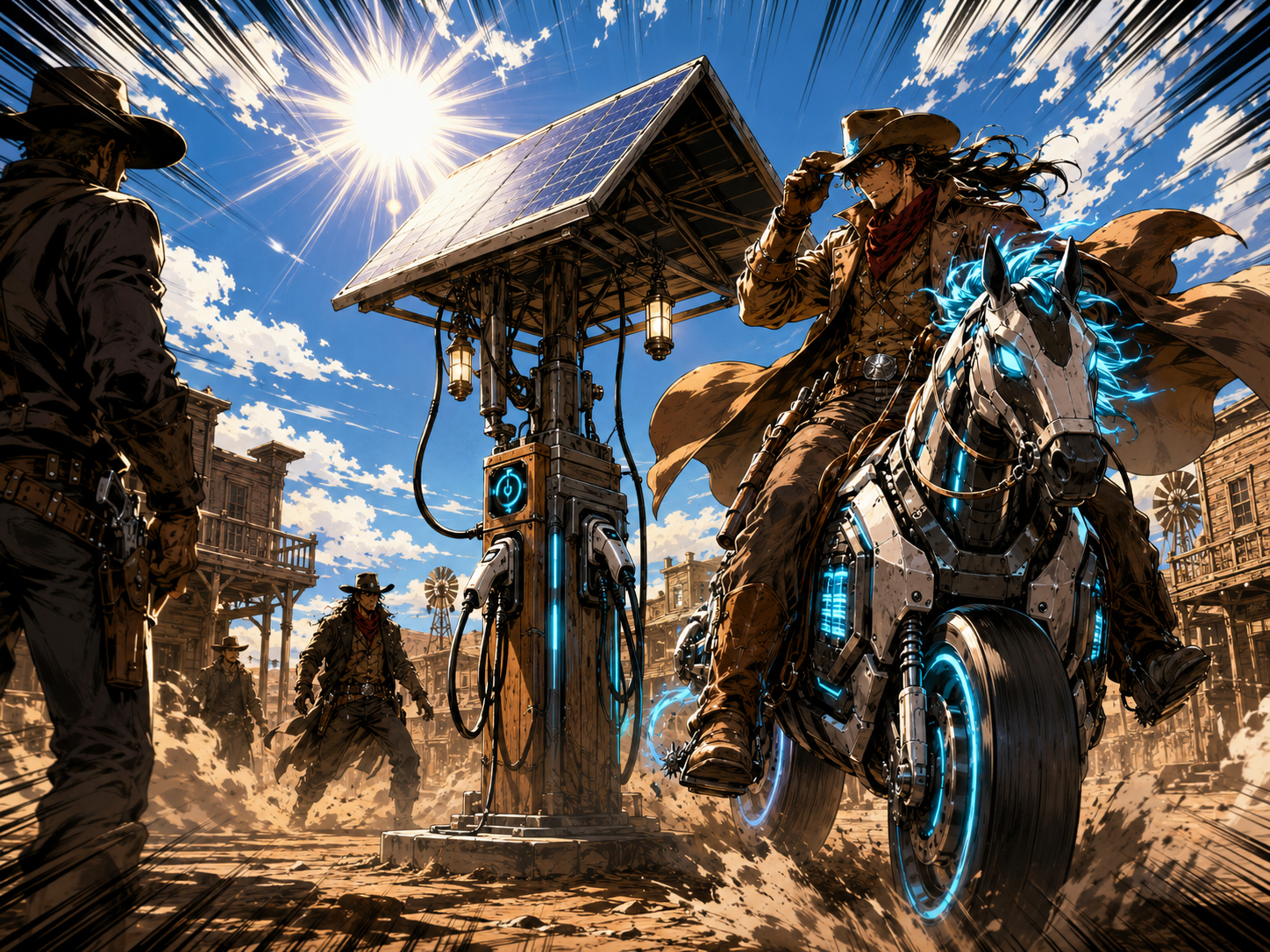
EV Cowboy at a high-noon charging post in a western town
Message Guide

What to Include in Your Email

A clear first email helps the project ride faster.

Include your name, project address, phone number, whether this is for home or business, your main goal, photos of the electrical panel if available, utility bill information if available, and any known EV, solar, battery, or backup-power equipment you are considering.

For EV charging, include the vehicle model, parking location, daily miles, desired charging speed, and whether you want solar or batteries included in the discussion.

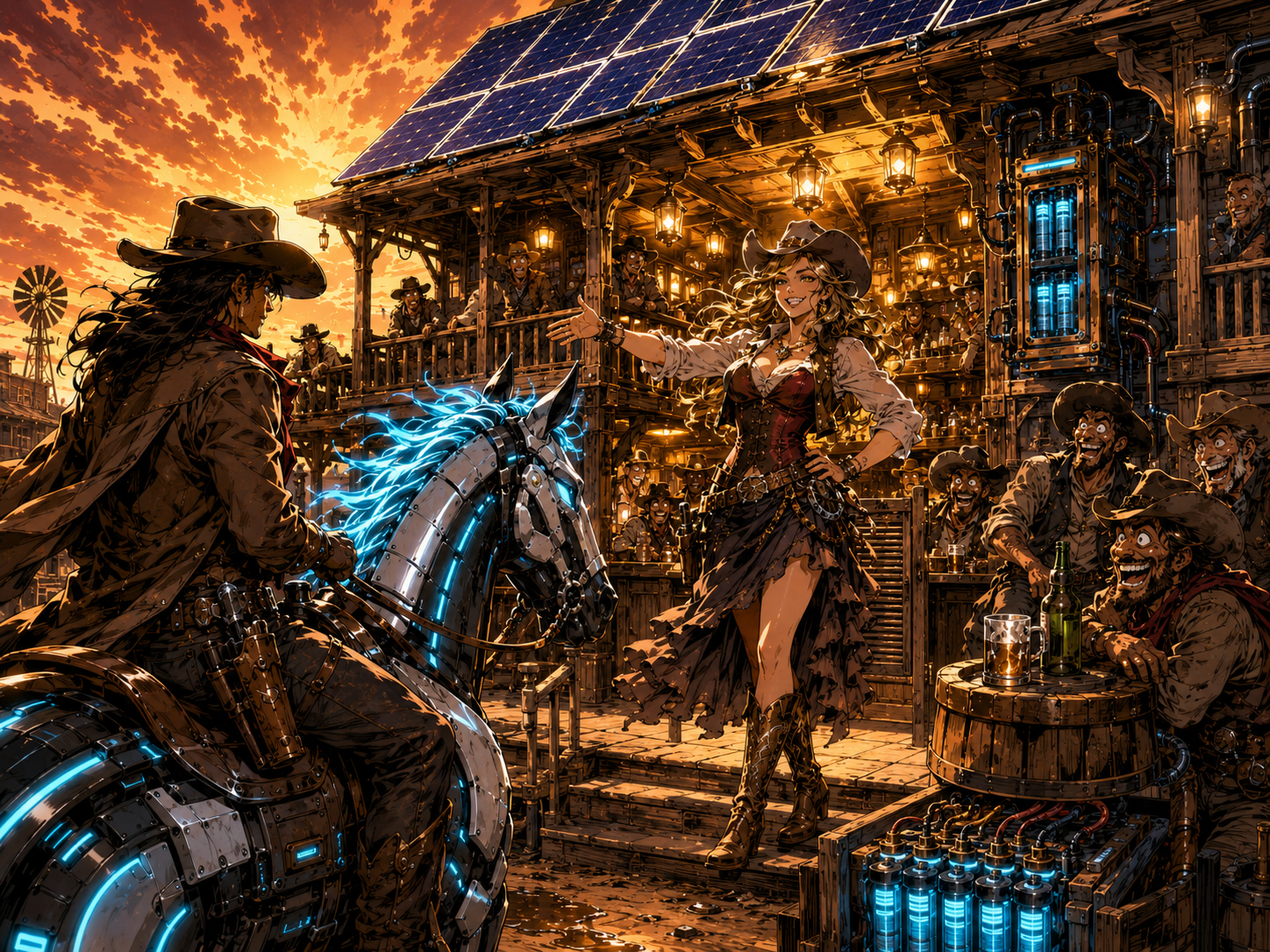
Battery Belle outside her solar powered saloon with battery storage
Project Types

From One Charger to a Whole Sun Corral

Some projects are simple: one home charger in a good location with available capacity. Others are larger: solar plus batteries, EV charging for several vehicles, backup-power goals, commercial charging, solar canopies, or fleet planning.

The right conversation depends on the project goal. Battery Belle cares about backup loads. Sheriff Kilowatt cares about the service and circuit. Solar Sensei cares about sun, shade, structure, and schedule.

Important Note

Educational Comedy, Professional Work

EV Cowboy is a manga comedy and educational site. It is not a substitute for a site visit, engineering review, permit set, utility application, load calculation, or professional installation.

EV chargers, solar arrays, batteries, inverters, service upgrades, backup-power systems, transfer equipment, load-management systems, wiring, conduit, breakers, and connected equipment must be designed, permitted, installed, inspected, operated, and maintained according to applicable electrical codes, fire codes, building codes, manufacturer instructions, utility requirements, rate schedules, and local authority rules.

Ride Back

Explore Before You Email

Read the basics, meet the characters, and learn why EV Cowboy keeps saying the charger is part of a bigger energy plan.