Noise Feels Like Power
Combustion engines create vibration, exhaust, gear changes, heat, and sound. That drama can make power feel visible, even when energy is being wasted.
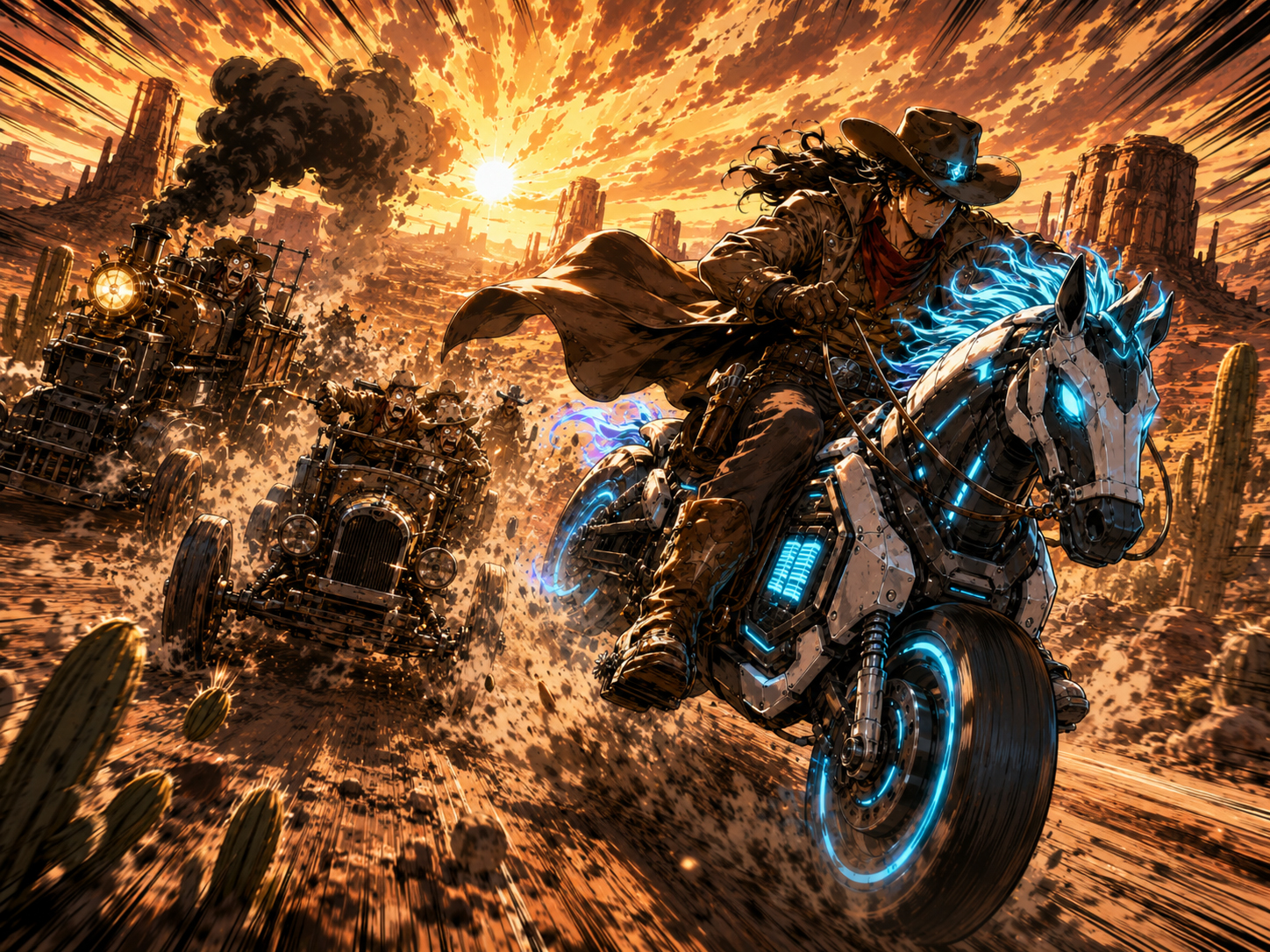
The old machines roar, rattle, smoke, and shake. The electric steed answers with quiet torque and a cloud of frontier dust.
“Horsepower” became the classic way to describe how much work an engine could do. It sounded strong, familiar, and frontier-ready. But in the EV Cowboy world, the word becomes funny again because the cowboy is literally trading a horse for an electric steed.
The old gasoline cowboy thinks power means noise. He hears pistons, exhaust, rattles, smoke, and dramatic mechanical suffering. The EV Cowboy knows the future can be fast without sounding like a boiler explosion.
Electric drive changes the feeling of motion. The vehicle does not need to build drama before it moves. It can deliver strong response quickly, smoothly, and quietly.
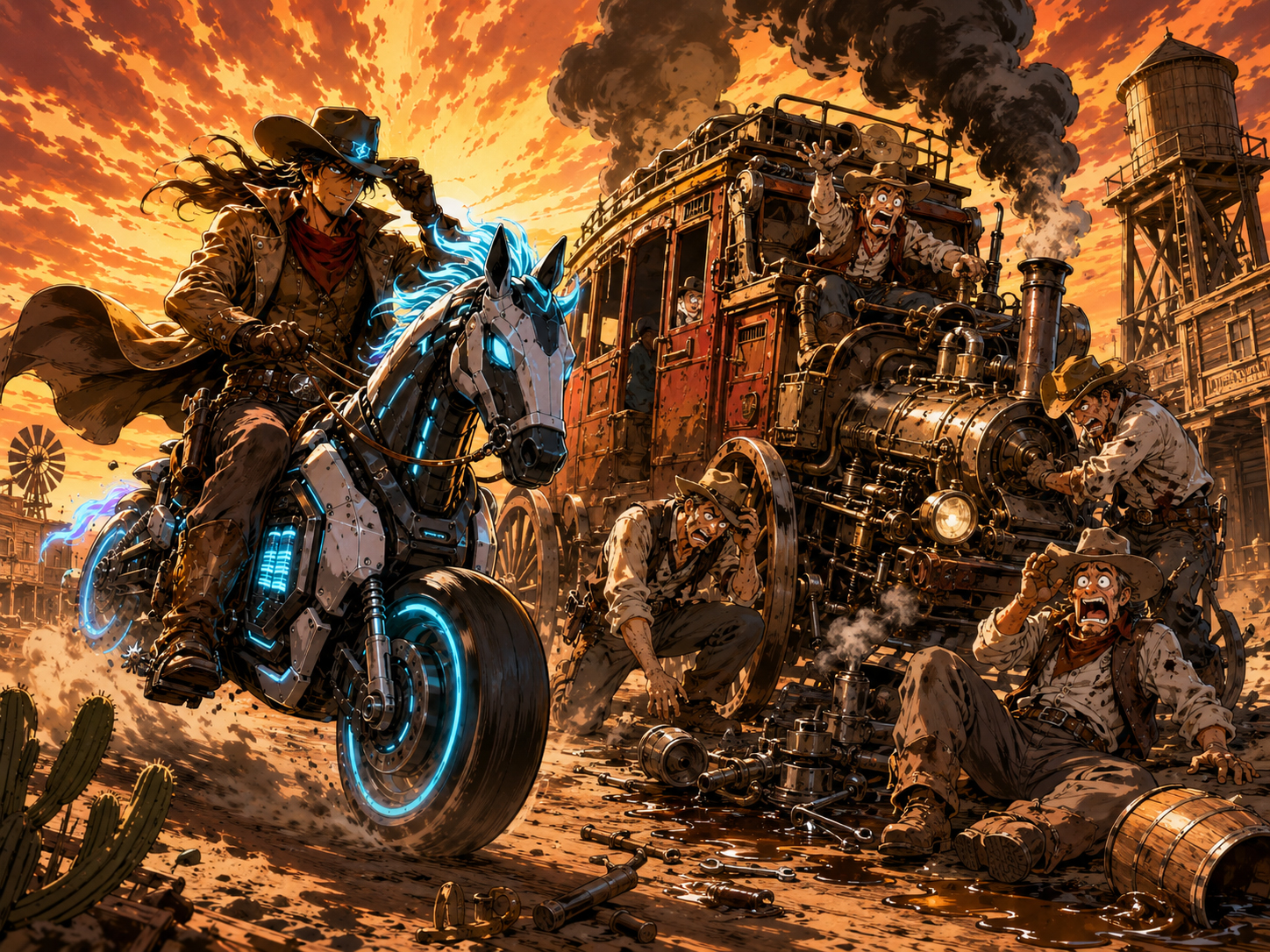
The EV Cowboy lesson is simple: loud does not automatically mean better, and quiet does not mean weak.
Combustion engines create vibration, exhaust, gear changes, heat, and sound. That drama can make power feel visible, even when energy is being wasted.
Electric motors can respond quickly and smoothly. The result can feel strange at first because the vehicle moves hard without the usual old-engine ceremony.
A fast EV still needs a plan: battery capacity, charging speed, route distance, available power, solar production, and the cost of electricity.
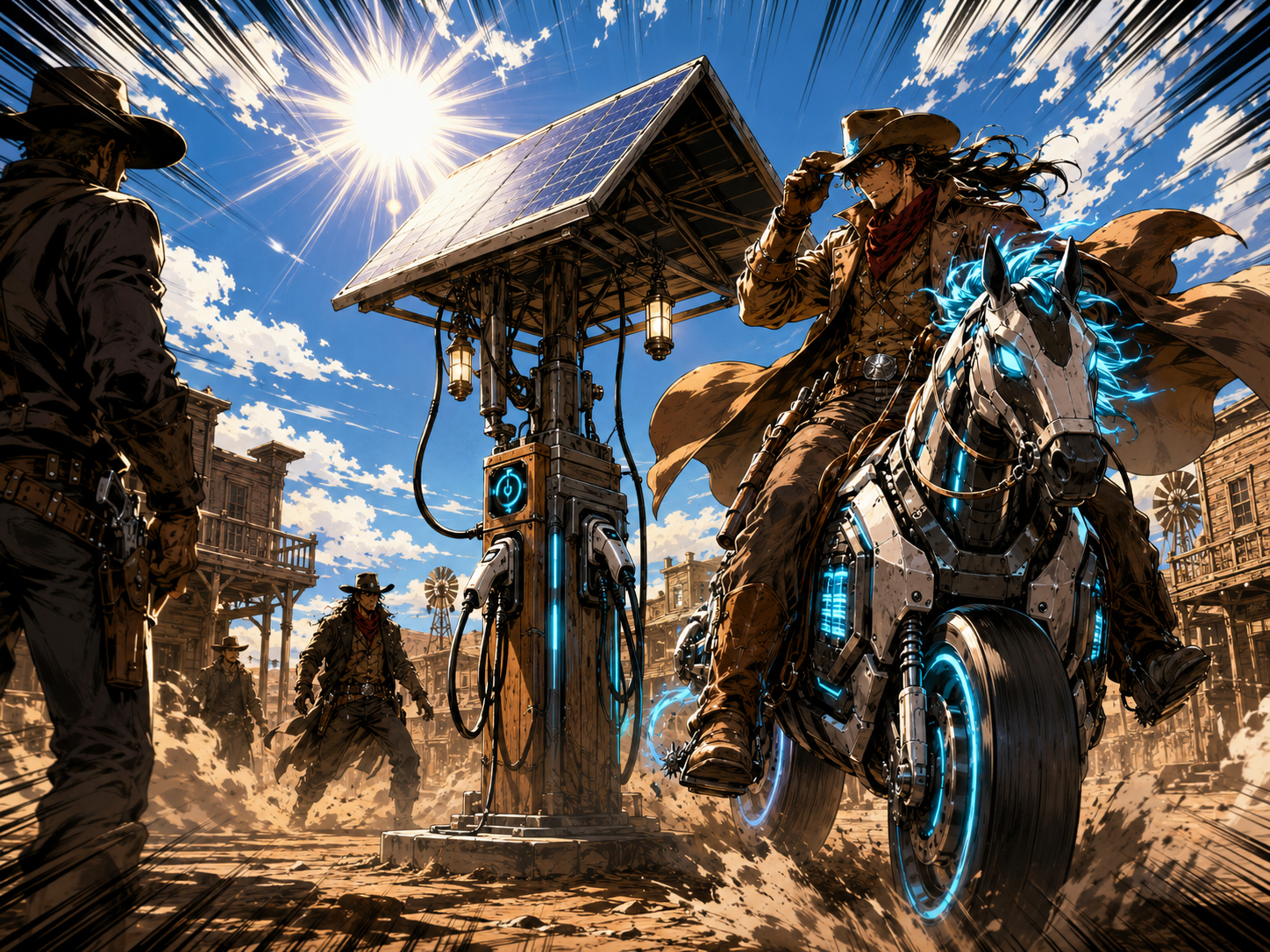
Gasoline vehicles were built around fuel stations. EVs are built around charging opportunities. That can mean home charging, workplace charging, public charging, solar charging, or a fleet charging yard.
The EV Cowboy does not just ask, “How fast is the steed?” He asks, “Where do I charge? How long will it take? What does it cost? Is the circuit ready? Can solar help? Do I need batteries?”
The comedy works because both worlds need planning. The details just changed.
| Frontier Question | Old Horse / Gasoline World | EV Steed World |
|---|---|---|
| What feeds it? | Hay, water, or gasoline. | Electricity measured in kWh. |
| Where does it refuel? | Stable, trough, fuel station, or fuel wagon. | Home charger, solar ranch, public charger, fleet depot, or workplace charger. |
| What limits the trip? | Animal fatigue, fuel tank, mechanical condition, and available stops. | Battery state of charge, route distance, terrain, weather, charger access, and charging time. |
| What does the rider learn? | Feed, tack, shoes, fuel, oil, and repairs. | Charging level, circuit size, range, battery size, kW, kWh, rates, and timing. |
| What does the villain exploit? | Scarce fuel, bad roads, and broken machines. | Peak rates, confusing bills, weak infrastructure, and poor planning. |
The best joke in EV Cowboy is also the best idea: the desert sun that once made the trail brutal can now help power the ride.
Solar can reduce energy costs and help make charging feel more independent. But the timing still matters. A car may be away during the day. A business may charge vehicles in the afternoon. A ranch may need night charging. That is where batteries, rate schedules, and smart charging become part of the story.
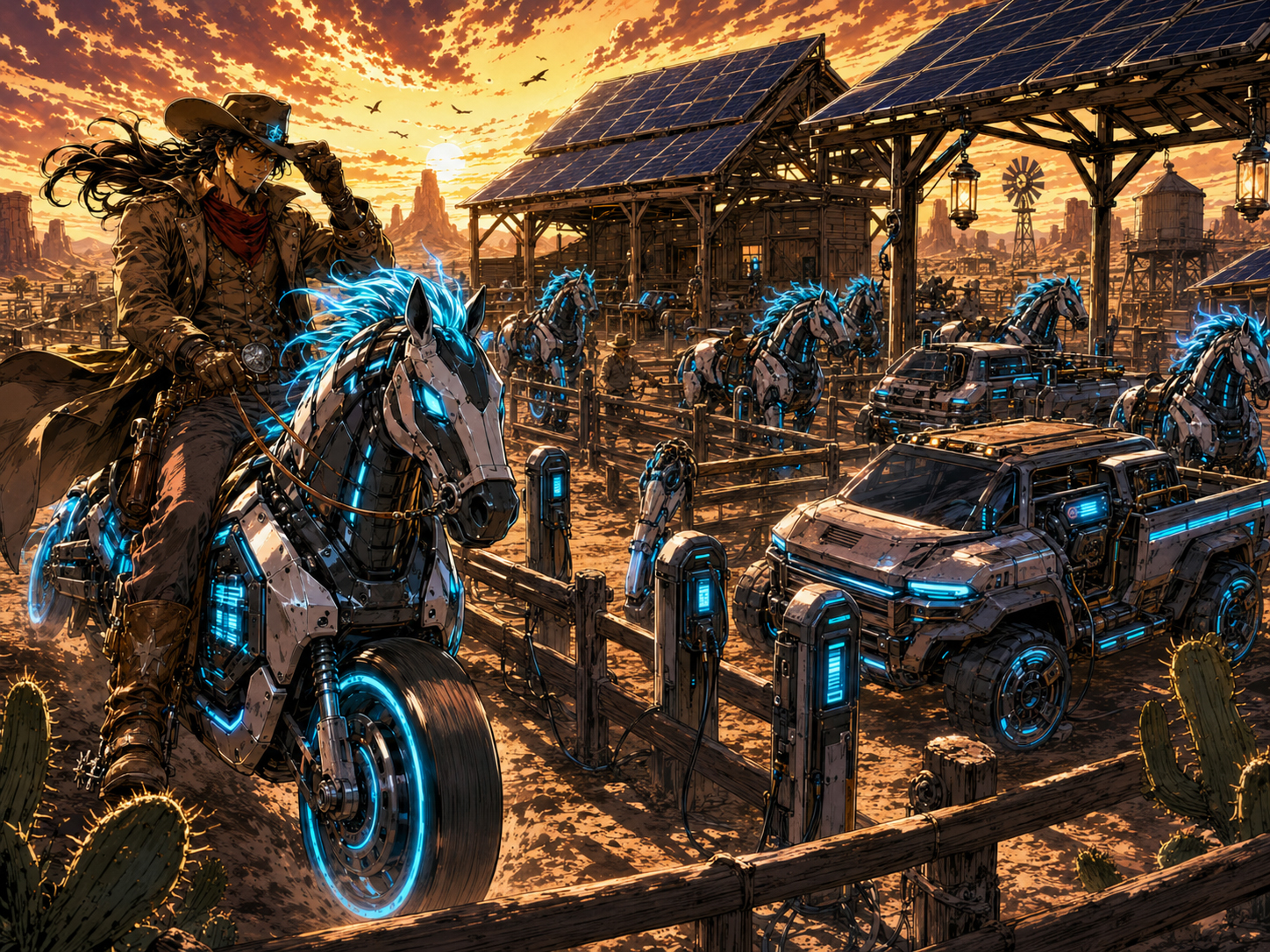
The desert race is the perfect manga episode because it shows the emotional difference between old power and electric power.
The EV steed does not need to cough, shift, idle, or warm up for a dramatic entrance. It can launch smoothly and make the old machines look like they are arguing with themselves.
EV performance can feel almost unnatural to old-school riders because the sound does not match the acceleration. The steed moves before the crowd finishes expecting a roar.
A horseman respected the horse’s limits. An EV driver respects battery range, terrain, speed, climate control, towing load, and charger availability.
The new technology does not eliminate judgment. It rewards better judgment. The rider who knows the route, the charger, and the energy plan has the advantage.
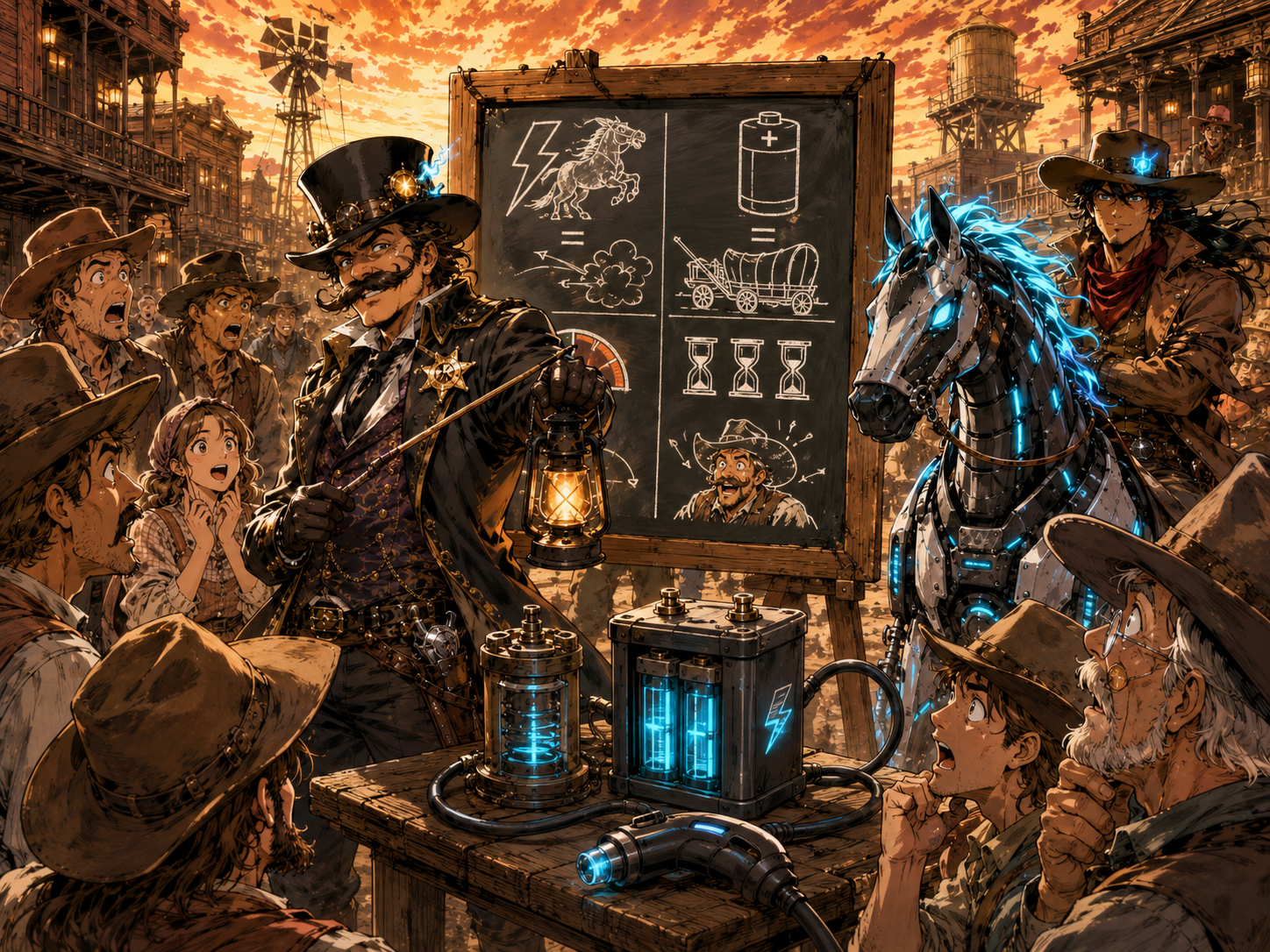
A powerful charger can refill a battery faster, but it also asks more from the electrical system. A big EV battery can carry more energy, but it also takes planning to recharge.
That is why the town needs Sheriff Kilowatt. He keeps the peace between kW, kWh, chargers, panels, batteries, and the cowboys who keep calling every number “horsepower.”
In Episode 6, the old gasoline machines line up with smoke, noise, swagger, and enormous confidence. EV Cowboy rolls in quietly. The town laughs. Then the dust cloud speaks for itself.
This is the heart of the EV Cowboy joke: the future does not need to sound like the past to beat it. But it still needs smart infrastructure, safe wiring, good planning, and honest education.
EV Cowboy is educational comedy. It is not a vehicle recommendation, wiring plan, engineering document, electrical design, permit set, or substitute for professional installation.
EV charging, solar power, batteries, service upgrades, and backup-power systems should be designed, installed, permitted, inspected, and operated according to applicable electrical codes, manufacturer instructions, utility requirements, and local authority rules.
Once the cowboy understands electric horsepower, the next question is infrastructure: where does the steed charge, and who controls the cost?