Strong Low-Speed Pull
Electric motors can deliver strong response quickly. That can feel useful for stop-and-go work, ranch roads, jobsite movement, and heavy starts.
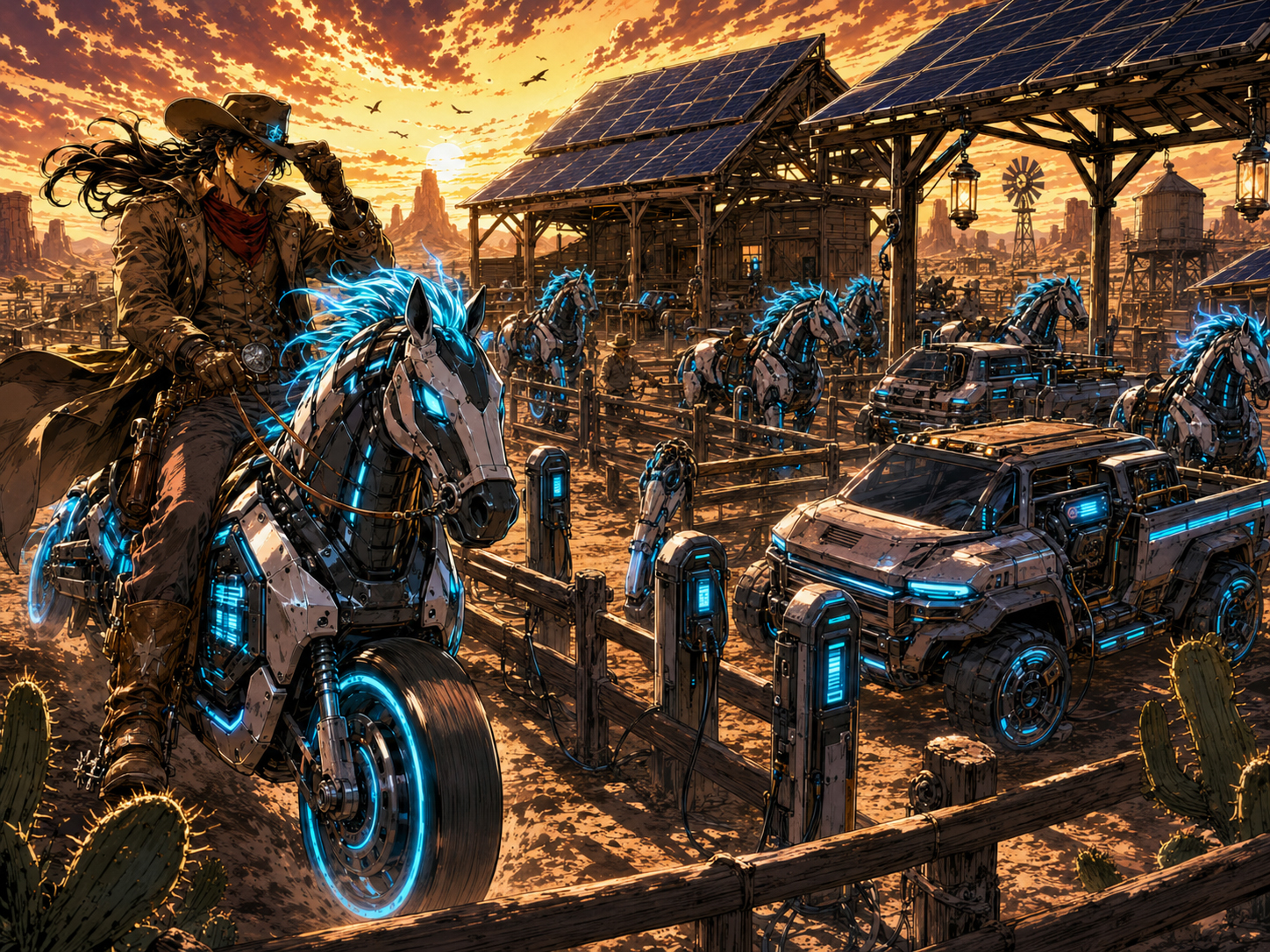
The pickup traded gasoline for electrons. Now the ranch needs torque, range, charging, solar, batteries, and a work plan that does not get stranded at the fence line.
In the EV Cowboy universe, the electric truck is the practical cousin of the electric steed. It may not have a blue lightning mane, but it still changes the ranch conversation. It can haul, carry tools, power equipment, and move silently through the dust.
The big promise is useful: instant torque, quiet operation, less tailpipe smoke at the jobsite, and the possibility of charging from a solar ranch. But ranch work is not a brochure. It has towing, mud, heat, hills, trailers, tools, long days, and unexpected errands.
That means an electric work truck needs a real energy plan. The ranch must understand daily miles, payload, towing, charger location, charging time, panel capacity, battery storage, and whether the truck needs to work as a mobile power source.
Electric trucks can make sense for many work patterns, especially when the vehicle returns to a known base where charging can be planned.
Electric motors can deliver strong response quickly. That can feel useful for stop-and-go work, ranch roads, jobsite movement, and heavy starts.
A quiet truck can be pleasant around animals, workers, neighbors, early mornings, and jobsite conversations that do not need engine noise.
Some electric trucks can support tool power or jobsite power features. The exact capability depends on the vehicle and equipment.

Ranch work often means trailers, tools, feed, materials, equipment, and rough routes. An electric truck can be strong, but towing and heavy loads can reduce range.
That does not make the truck useless. It means the ranch must plan honestly. How far is the job? How heavy is the trailer? Is there charging at the destination? Does the truck return to base every night? Is there time to recharge before morning?
The best electric ranch truck is not the flashiest. It is the one whose workday matches the charging plan.
| Ranch Job | EV Truck Question | Charging Strategy |
|---|---|---|
| Short daily routes | Does the truck return to the same base each night? | Home, shop, or ranch-yard Level 2 charging may be practical. |
| Feed and supply runs | How far is the round trip with payload? | Plan range with load, terrain, weather, and reserve energy. |
| Trailer towing | How much does towing reduce expected range? | Use conservative planning and know charging options before departure. |
| Jobsite tool use | Will the truck power tools or equipment? | Confirm vehicle output capability and energy impact on the return trip. |
| Multiple trucks | Will several vehicles charge at once? | Use managed charging, staggered schedules, and proper electrical design. |
| Remote work | Is there backup charging or enough margin? | Build redundancy into the route and avoid relying on one fragile stop. |
The old ranch depended on fuel deliveries or trips to town. The electric ranch can make some of its own energy on-site. A shop roof, barn roof, carport, or solar canopy can help charge vehicles where they already park.
For a work truck, the best solar plan depends on when the truck is home. If it parks during the day, solar can help directly. If it works all day and returns at night, batteries or scheduled charging may become more important.
The moment a ranch, contractor, farm, shop, or business adds multiple electric vehicles, charging becomes a fleet-planning problem.
Not every truck may need to charge at full power at the same time. Staggering can reduce stress on the service and improve cost control.
The goal is not always 100 percent charge. The goal is enough range for the next workday with an appropriate reserve.
A few chargers can become a major load. Service capacity, transformers, panels, conduit, and utility coordination may matter.
Midday parked vehicles may be excellent solar-charging candidates. Night-return fleets may need a different plan.
Emergency trips, long detours, heavy trailers, weather, and road conditions can all affect energy use.
Once the fleet is operating, real kWh use, charge times, route lengths, and driver habits should guide adjustments.
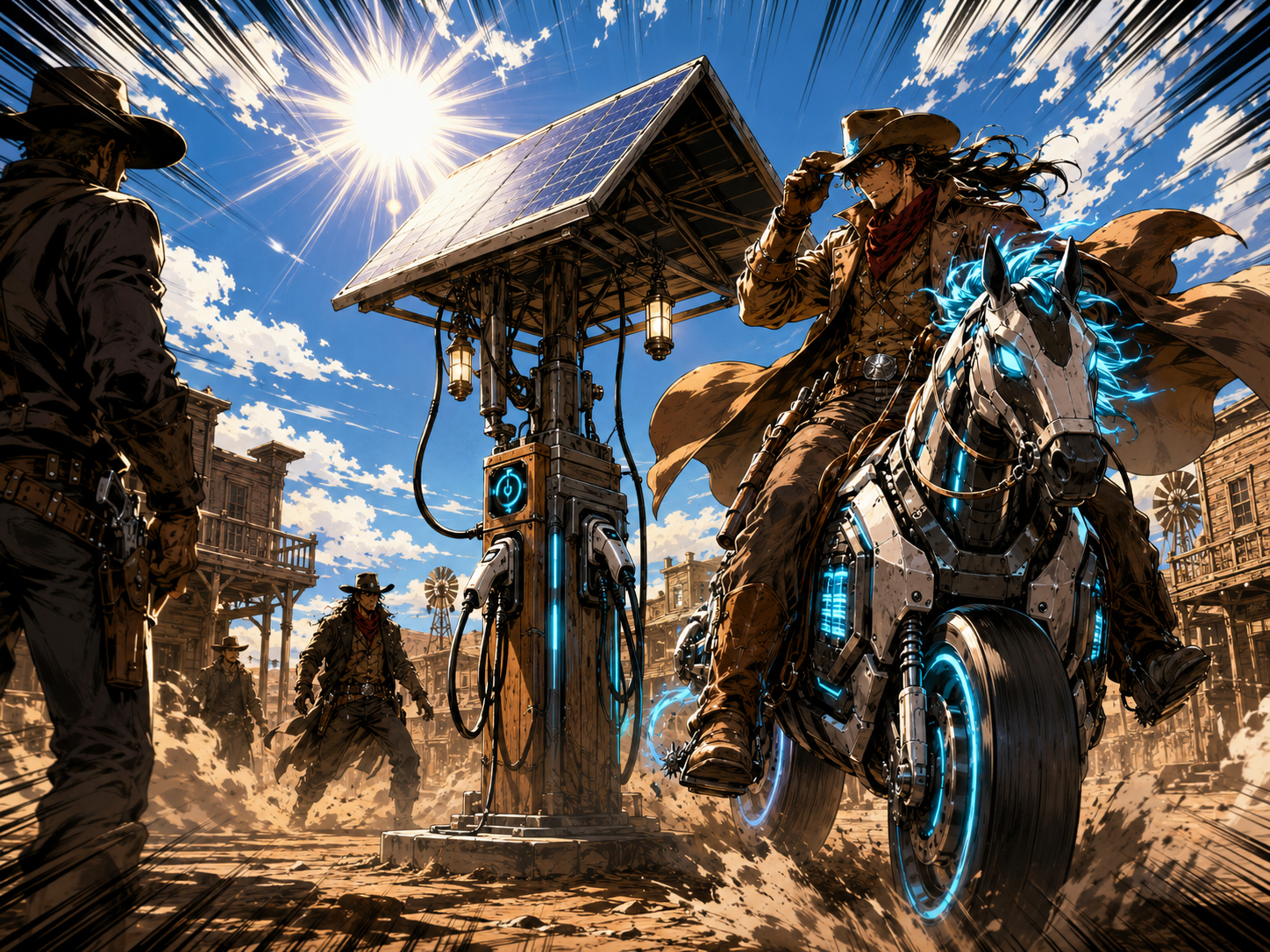
Some electric trucks can provide power for tools, lights, small equipment, or jobsite support. In the manga, this is when the old cowboys stop laughing because Battery Belle plugs in the coffee pot.
In real life, vehicle power output must be used according to the manufacturer’s instructions and equipment ratings. The ranch should understand output limits, outlet type, grounding requirements, weather exposure, load size, and the energy needed to drive home afterward.
One truck charging at the wrong time can be expensive. A whole row of trucks charging at the wrong time can become the Utility Baron’s favorite parade.
Rate-aware charging, managed charging, solar production, batteries, and staggered schedules can help reduce the sunset ambush. The ranch should plan the charging window before the trucks start arriving.

The electric truck is neither a miracle nor a joke. It is a tool. Tools work best when matched to the job.
Heavy trailers can change the energy story. The truck may still do the job, but the route and charging plan must reflect reality.
One residential charger and a multi-truck work yard are different electrical projects.
Tool power, towing, detours, weather, and terrain can consume energy before the truck heads home.
The charging infrastructure should be planned before the ranch has a row of hungry electric workhorses.
Charging schedule matters. The Utility Baron loves unmanaged evening loads.
Solar can be stronger when it is planned with parking, charger location, battery storage, and vehicle schedule in mind.

Electric trucks can be exciting. Chargers can be powerful. Solar can be beautiful. But Sheriff Kilowatt still wants the numbers before anyone starts drilling holes in the barn wall.
The ranch should review vehicle energy use, charger output, panel capacity, service capacity, wire runs, load management options, and whether batteries or solar make sense for the actual work schedule.
A silent pickup rolls into town pulling a trailer. The old cowboys laugh because they cannot hear the engine. Then it climbs the hill, powers the tools, and returns to the solar corral before sunset.
Madame Gasoline calls it suspicious. The Utility Baron calls it “a new load opportunity.” Battery Belle calls it “another reason to store the sunshine.” Sheriff Kilowatt calls a town meeting and writes kW is not kWh on the chalkboard so hard the chalk breaks.
EV Cowboy is a manga comedy and educational site. It is not vehicle advice, towing advice, electrical design, permit instruction, engineering documentation, fleet design, or a substitute for licensed professionals.
EV chargers, solar arrays, batteries, service upgrades, load-management equipment, jobsite power connections, and backup-power systems must be designed, permitted, installed, inspected, and operated according to applicable electrical codes, fire codes, manufacturer instructions, vehicle instructions, utility requirements, rate schedules, and local authority rules. Vehicle range, towing ability, payload, and power-export capability must be verified with the vehicle manufacturer and tested under real use conditions.
Ranch work is one thing. Desert travel is another. The electric cowboy needs route planning, charging stops, range margin, and a backup plan before riding past the last water tower.