Panel 1: The Morning After the Rate Ambush
The town wakes up to a bill nailed to the saloon door. Everyone points at everyone else.
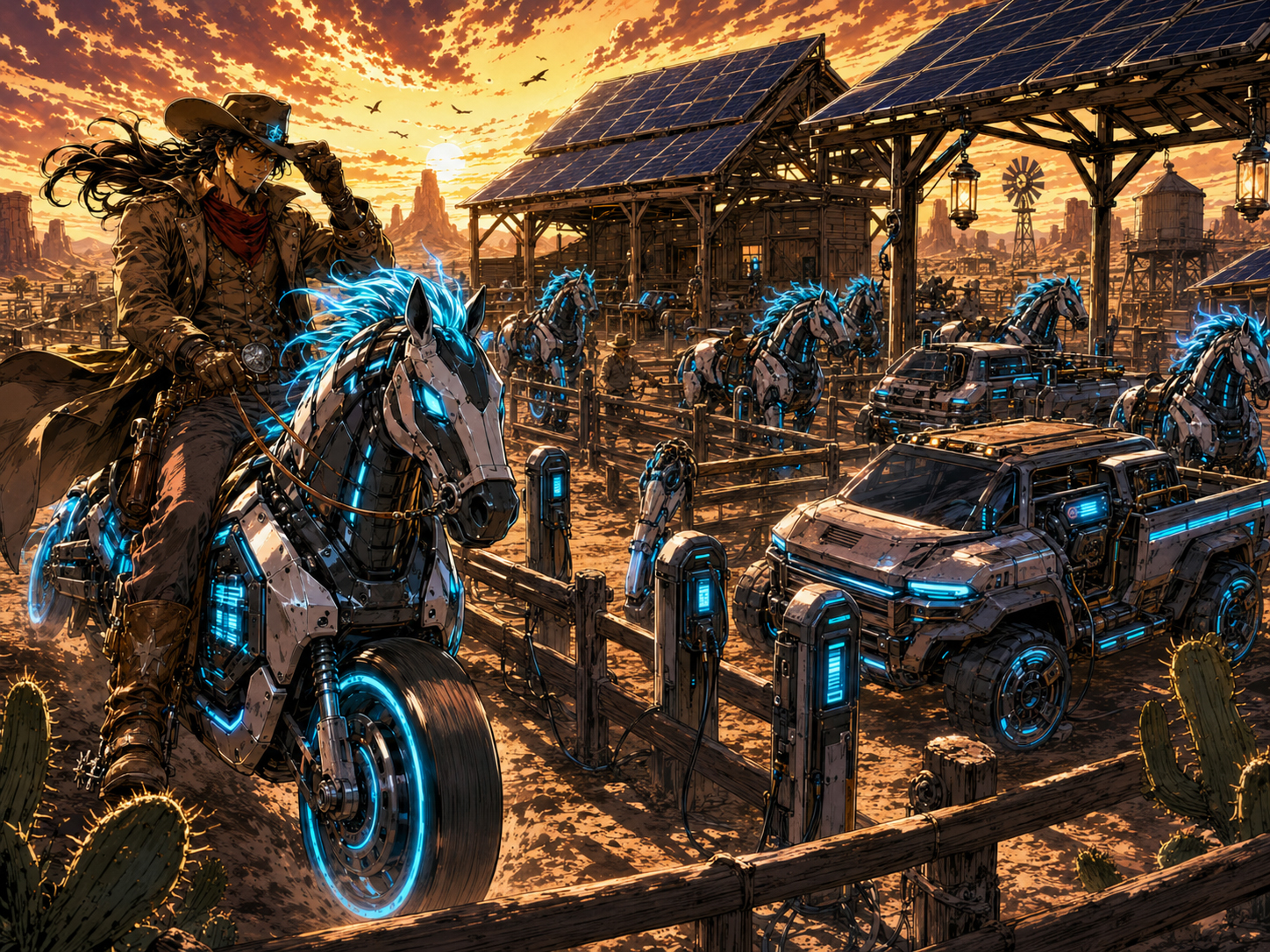
The town argues about chargers, rates, and noisy old machines. Solar Sensei quietly points to the rooftops and says, “Build the corral around the sun.”
The gasoline stagecoach has failed. The charging post works. The Utility Baron has revealed the sunset ambush. By morning, the whole town is standing in the street with opinions, invoices, and absolutely no system.
Madame Gasoline says the old ways only need more polish. The Utility Baron says every plug should come with a complicated fee. The old cowboys want one giant charger shaped like a horseshoe. Sheriff Kilowatt wants everyone to stop touching things.
Then Solar Sensei walks into the dust, looks at the barn roof, the empty corral, the saloon porch, and the blazing western sky. He says nothing for three panels. Then he draws a rectangle in the dirt.
Episode 5 should feel like the town finally sees the whole system instead of one shiny gadget.
The town wakes up to a bill nailed to the saloon door. Everyone points at everyone else.
Solar Sensei steps calmly into the street with a rolled plan, a straw hat, and the confidence of someone who has already measured the roof.
He draws the barn, the saloon, the corral, the charging post, and the path of the sun.
A dramatic cutaway shows a wooden frontier canopy covered with solar panels, shading electric steeds below.
Battery Belle rolls in a battery bank and says, “Sunshine is better when you can save some for later.”
Sheriff Kilowatt nods once, then immediately adds permits, inspections, load calculations, and code notes to the plan.
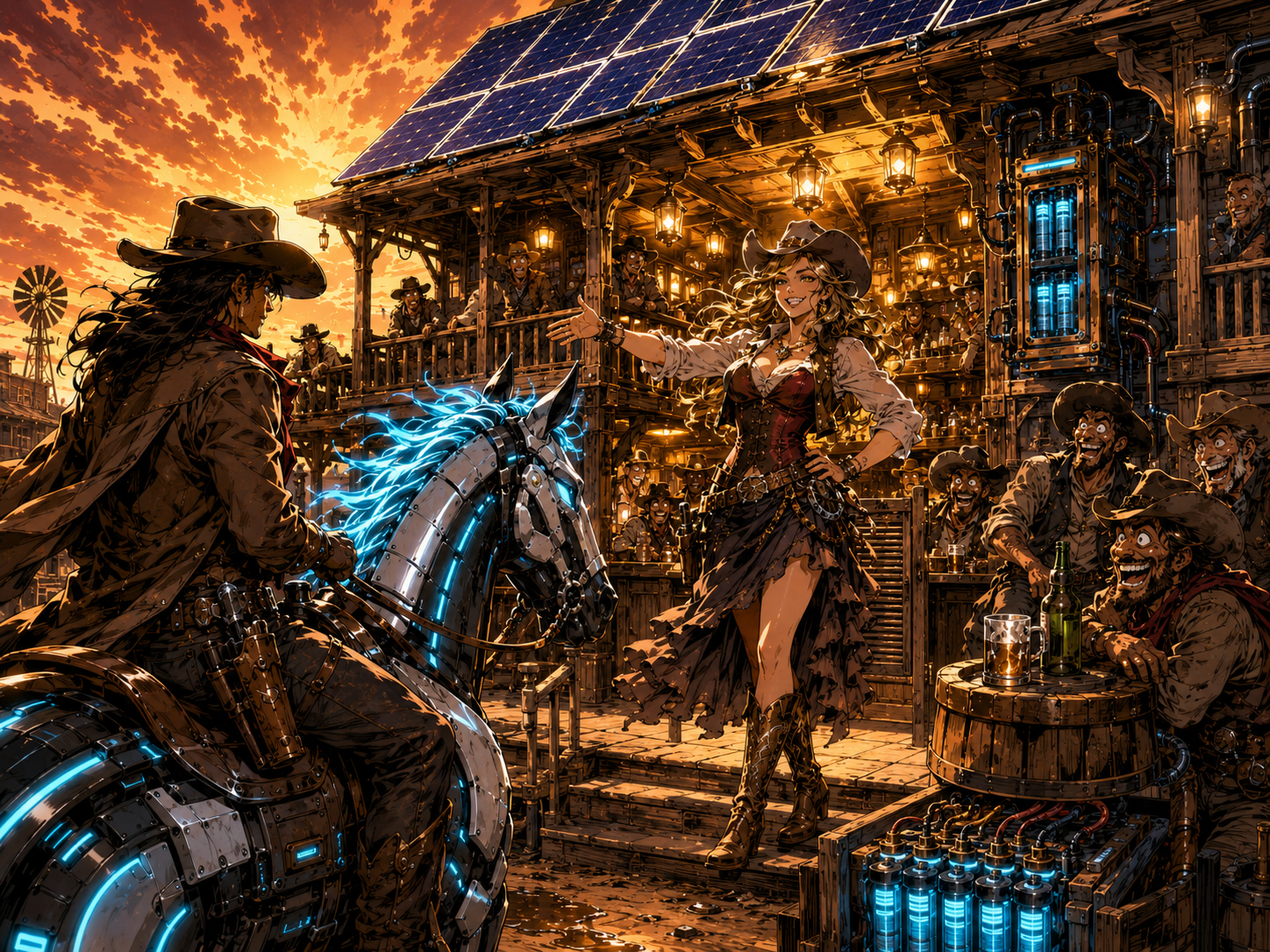
Solar Sensei knows panels make power when the sun is strong. Battery Belle knows the town needs power when the sun is gone. Together, they turn one charging post into a real strategy.
The saloon becomes the first demonstration. Solar on the roof. Batteries behind the wall. Lights that stay on. A charger outside for travelers. A meter that no longer feels like a villain’s trap door.
Episode 5 is where everyone stops arguing about parts and starts understanding the whole ranch.
He does not chase arguments. He maps sunlight, loads, parking, charging windows, and the best place to build.
She understands that power is more useful when the town can decide when to use it.
He realizes the steed is only as good as the charging life built around it.
He fears customers who understand solar, batteries, timing, and their own loads.
The town learns that EV success is not just one charger. It is a planned place where vehicles, sunlight, storage, and usage patterns meet.
| Manga Moment | Town Misunderstanding | Real Energy Lesson |
|---|---|---|
| Solar Sensei draws the sun path. | The town thinks he is making art. | Solar design depends on sun exposure, shade, orientation, structure, and usable space. |
| The canopy shades the steeds. | The cowboys think shade is the whole point. | Solar canopies can provide both shade and power when engineered correctly. |
| Battery Belle adds storage. | The crowd thinks batteries are endless barrels. | Batteries have power and energy limits and must be designed around specific goals. |
| Multiple chargers appear. | Everyone assumes all can run full power at once. | Multiple EV loads may require managed charging, service review, and utility coordination. |
| Sheriff Kilowatt adds permit notes. | The town groans. | Solar, batteries, and EV charging require code-compliant design, permits, and inspections. |
Keep Solar Sensei calm, almost too calm. The comedy comes from everyone else trying to make a simple plan dramatic.
Old Cowboy: “We need a bigger charger!”
Madame Gasoline: “We need a louder charger.”
Utility Baron: “You need a more complicated bill.”
Solar Sensei: “You need shade, sun, storage, and schedule.”
EV Cowboy: “That sounds less dramatic.”
Battery Belle: “It sounds cheaper than panic.”
Sheriff Kilowatt: “And safer than whatever he was about to build.”
Old Cowboy: “Can the corral still have swinging doors?”
Solar Sensei: “One decorative door.”
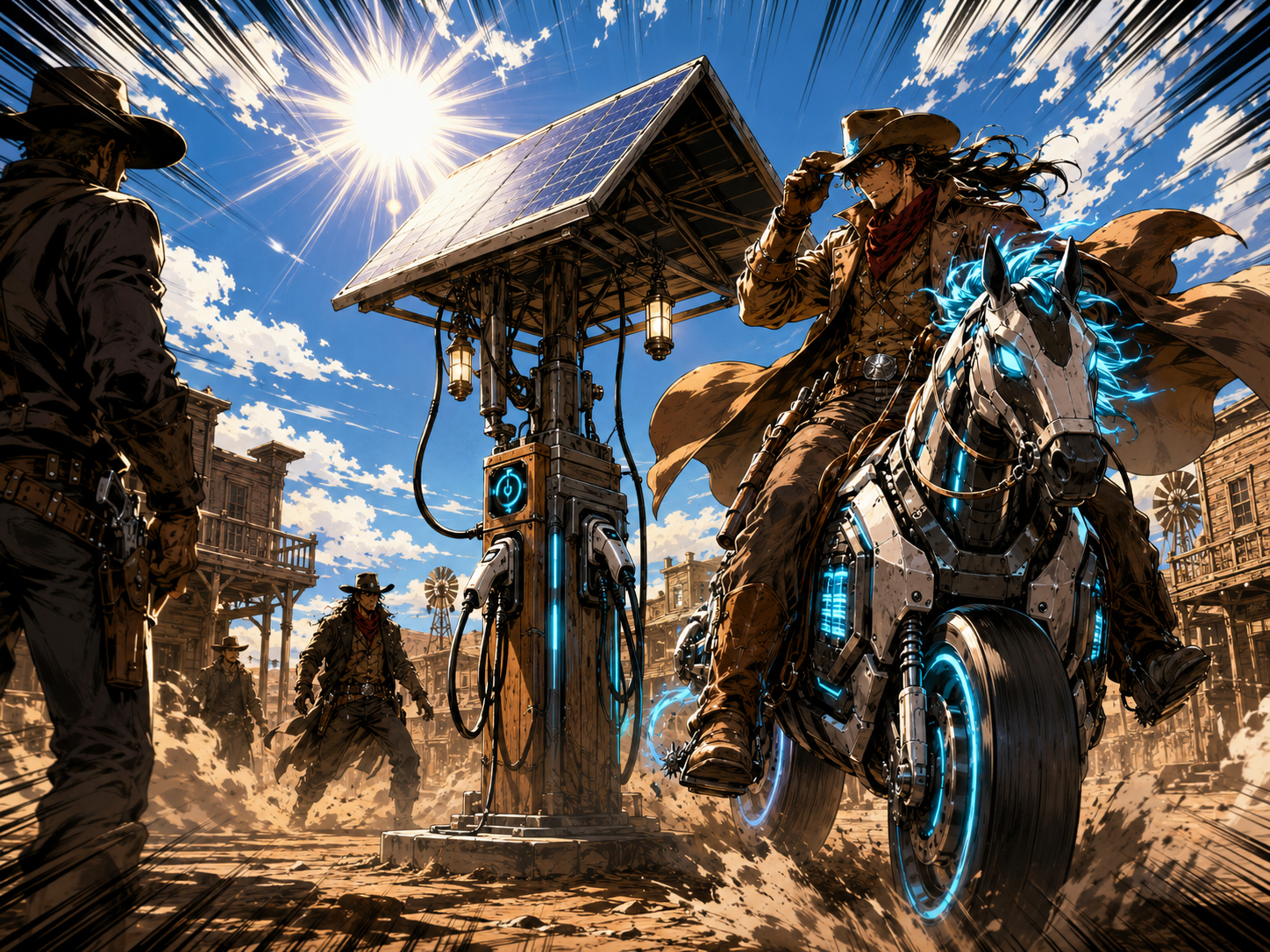
The Sun Corral does not just add more plugs. It gives the town choices. Some steeds can charge during the day from solar. Some can wait until lower-cost hours. Some loads can be shifted. Some backup power can be reserved for essentials.
That is the shift in thinking: the corral is not a pile of equipment. It is a system that lets the town manage energy instead of reacting to it.
This episode should look hopeful, busy, and constructive: a frontier town becoming a clean-energy ranch.
Use a wide shot of wooden frontier beams supporting modern solar panels, with EV steeds charging beneath them.
Show panels, batteries, chargers, meters, conduit, and buildings connected visually so readers see the whole system.
Add old cowboys labeling everything wrong, one horse eating the blueprint, and Sheriff Kilowatt calmly re-labeling the parts.
Shift from villain sunset oranges to hopeful gold, clean blue energy lines, warm saloon light, and bright solar highlights.
Once the Sun Corral works for Sparky, the town gets ambitious. A ranch hand asks about an electric pickup. A shop owner asks about delivery carts. Battery Belle asks about customer charging outside the saloon.
Solar Sensei smiles, because this is the real lesson: one EV is a vehicle. Many EVs are infrastructure. Fleet charging needs planning, schedules, service capacity, load management, and honest expectations.
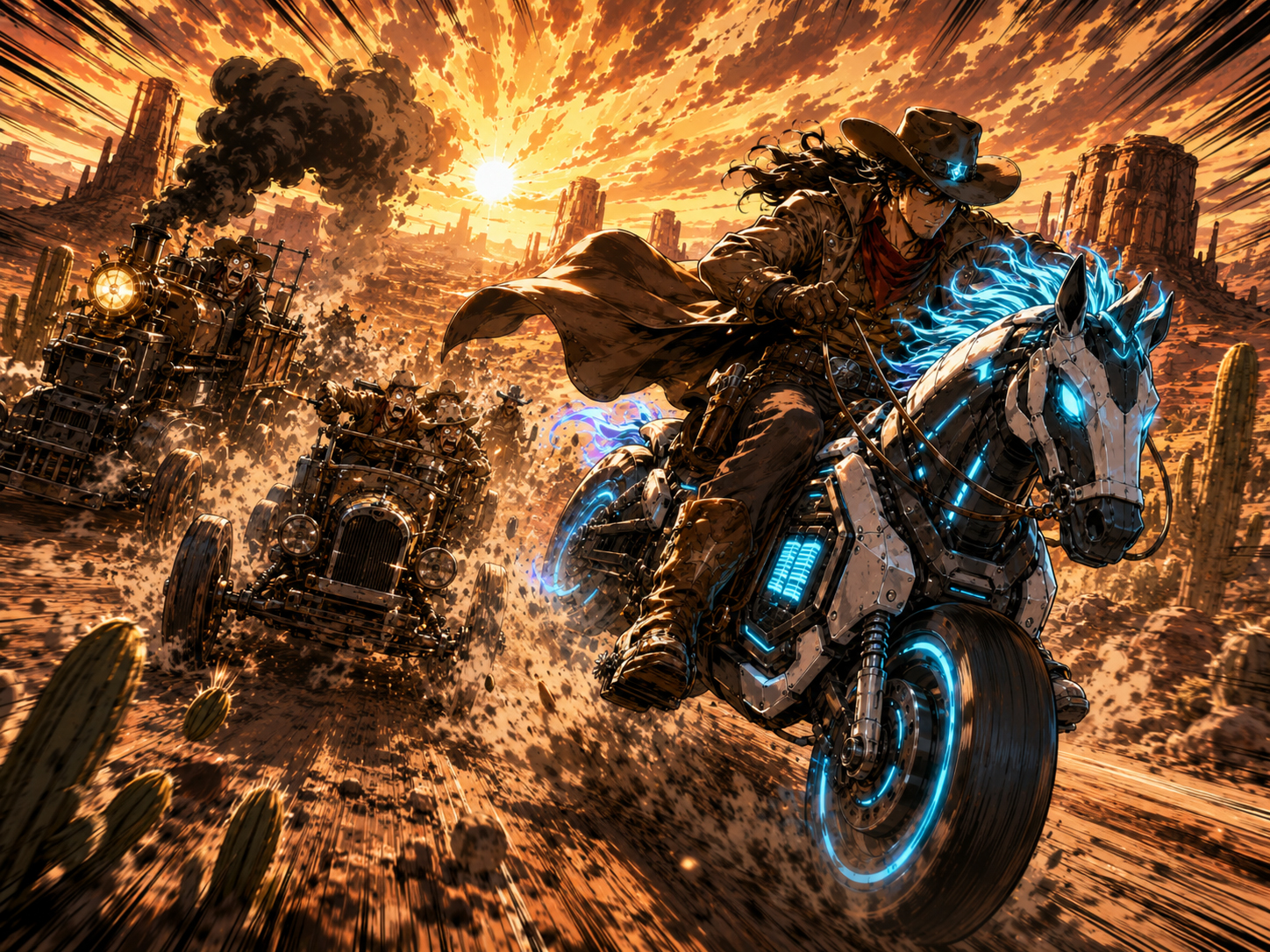
By the end of Episode 5, the town has a working Sun Corral. Sparky is charged. The old machines are repaired enough to be overconfident again. Madame Gasoline wants a rematch.
The canyon road waits. The stagecoach crew brings smoke, noise, and swagger. EV Cowboy brings a full battery, a planned route, and the quietest confidence in town.
The serious lesson of Episode 5 is that EV charging, solar, and batteries work best when they are planned as a complete energy system.
A good solar charging plan looks at vehicle use, charging location, service capacity, solar production, battery goals, utility rate timing, critical loads, backup needs, permitting, code requirements, and long-term growth. The best corral is not the biggest pile of equipment. It is the system that matches the real job.
EV Cowboy is educational comedy. Solar arrays, EV chargers, batteries, service panels, load-management systems, and backup-power equipment are real systems that require professional design and installation.
This episode is not electrical advice, engineering guidance, permit instruction, fire-code guidance, utility-rate advice, vehicle advice, or installation instruction. EV charging equipment, solar arrays, battery systems, inverters, service upgrades, breakers, wiring, conduit, transfer equipment, and connected systems must be designed, installed, permitted, inspected, operated, and maintained according to applicable electrical codes, fire codes, building codes, manufacturer instructions, utility requirements, rate schedules, and local authority rules.
The Sun Corral is built. Sparky is charged. The old machines are loud again. Now the canyon race will decide whether noise is the same thing as power.