Fuel Is Centralized
The old model depends on fuel stations, tank trucks, underground storage, and a vehicle that is empty until the next fill-up.
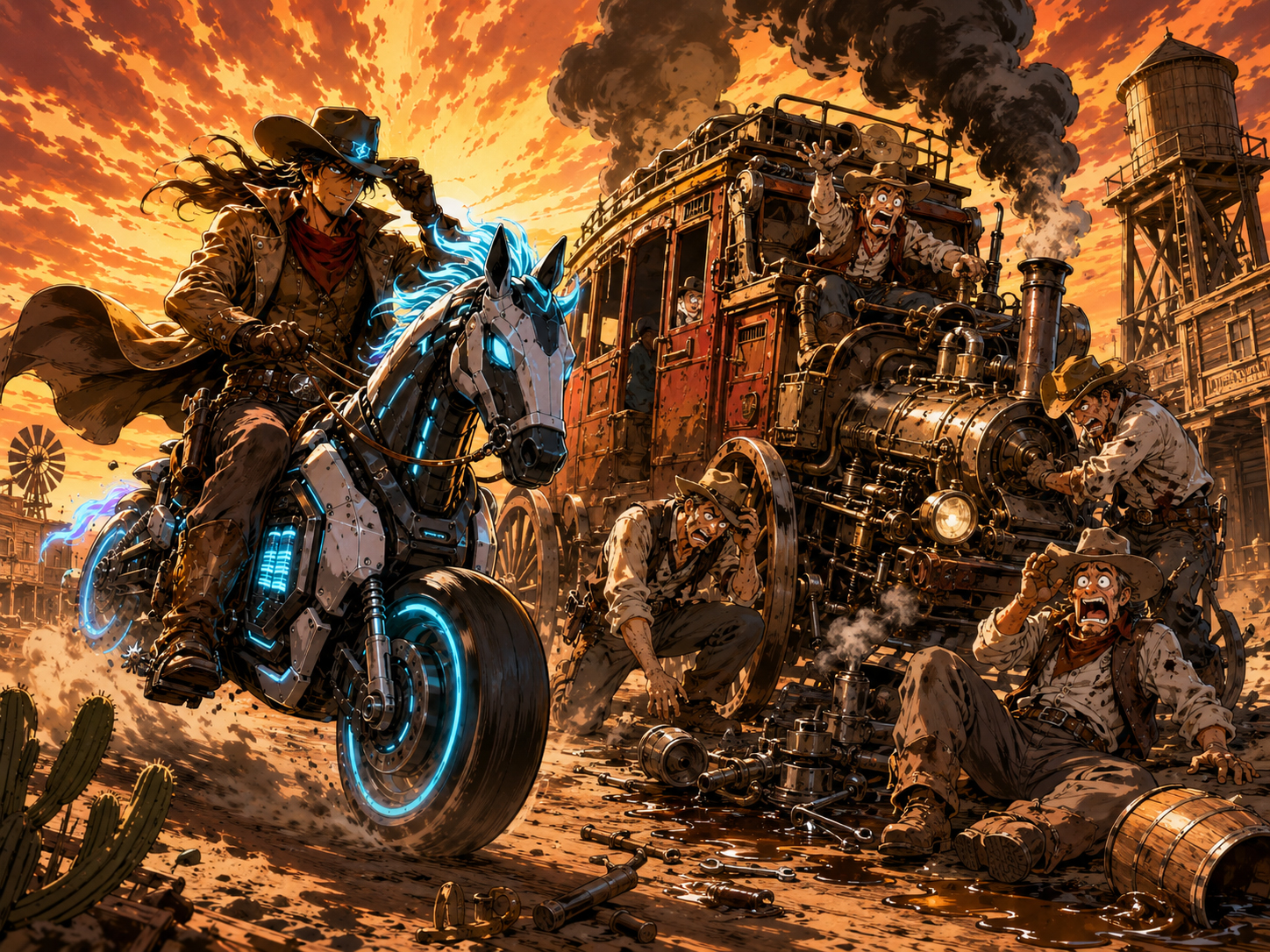
Once, the whole trail depended on gasoline stops. Now the wind whistles through the pumps while the electric steed looks for a charger, a solar canopy, and a better plan.
In the EV Cowboy universe, the gas station ghost town is a dusty reminder of the old transportation world. The pumps lean sideways. The fuel signs creak. Madame Gasoline’s saloon has one flickering lantern and three unpaid repair bills.
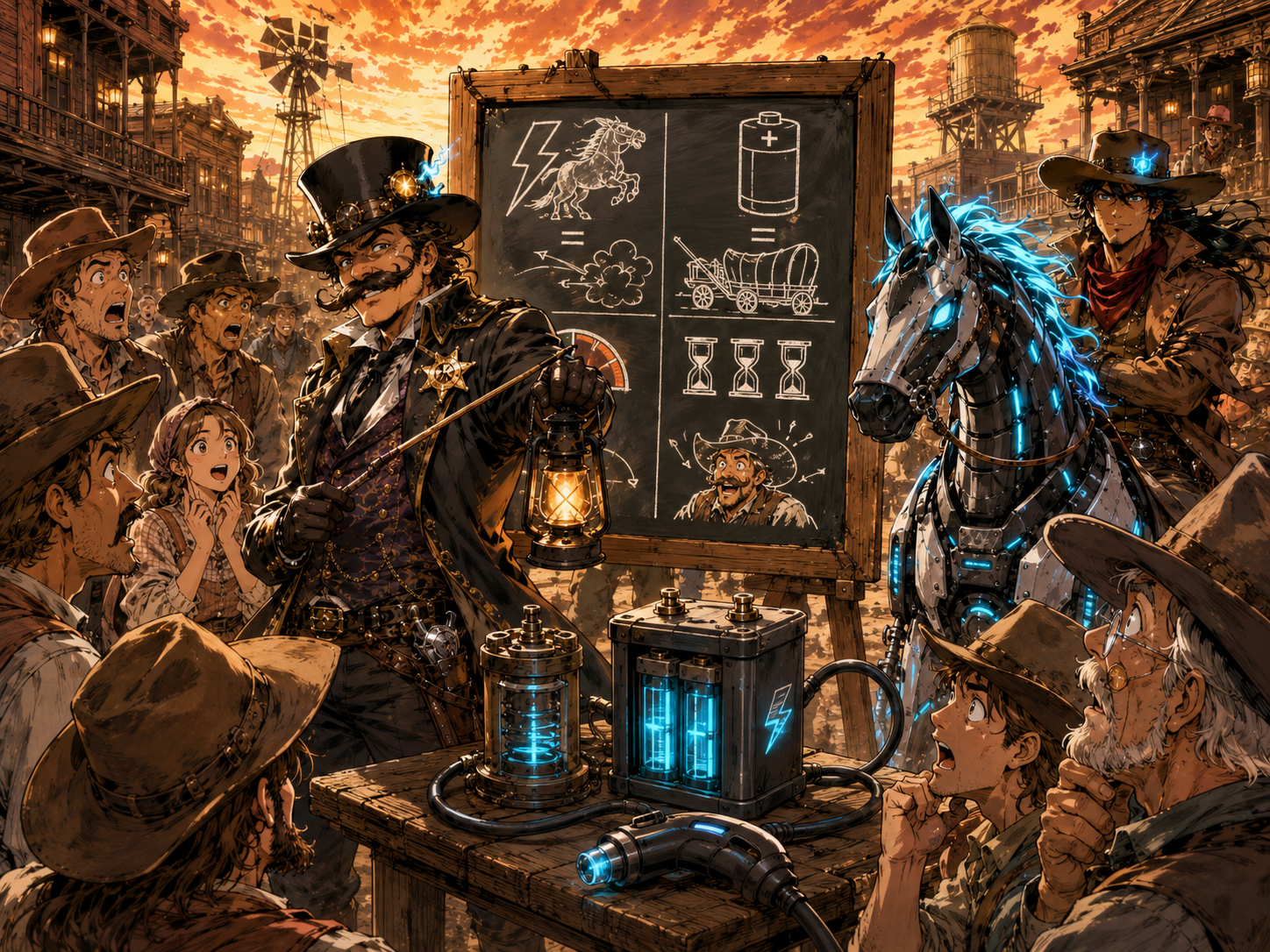
Then EV Cowboy rides through on a silent steed with blue lightning in its mane. He is not looking for gasoline. He is looking for electricity, shade, a charging post, and enough kWh to cross the next stretch of desert.
The joke is not that every gas station disappears overnight. The joke is that the old fuel-stop map is no longer the only map. EV drivers think differently. They charge at home, at work, at public stations, at fleet yards, under solar canopies, and sometimes from batteries.
Gasoline travel and EV travel both need planning. They just use different assumptions.
The old model depends on fuel stations, tank trucks, underground storage, and a vehicle that is empty until the next fill-up.
An EV may charge at home, at work, in a parking lot, at a public station, at a ranch, or under a solar canopy.
EV charging is not only about location. It is also about how long the vehicle is parked, charger power, rate timing, and battery state of charge.
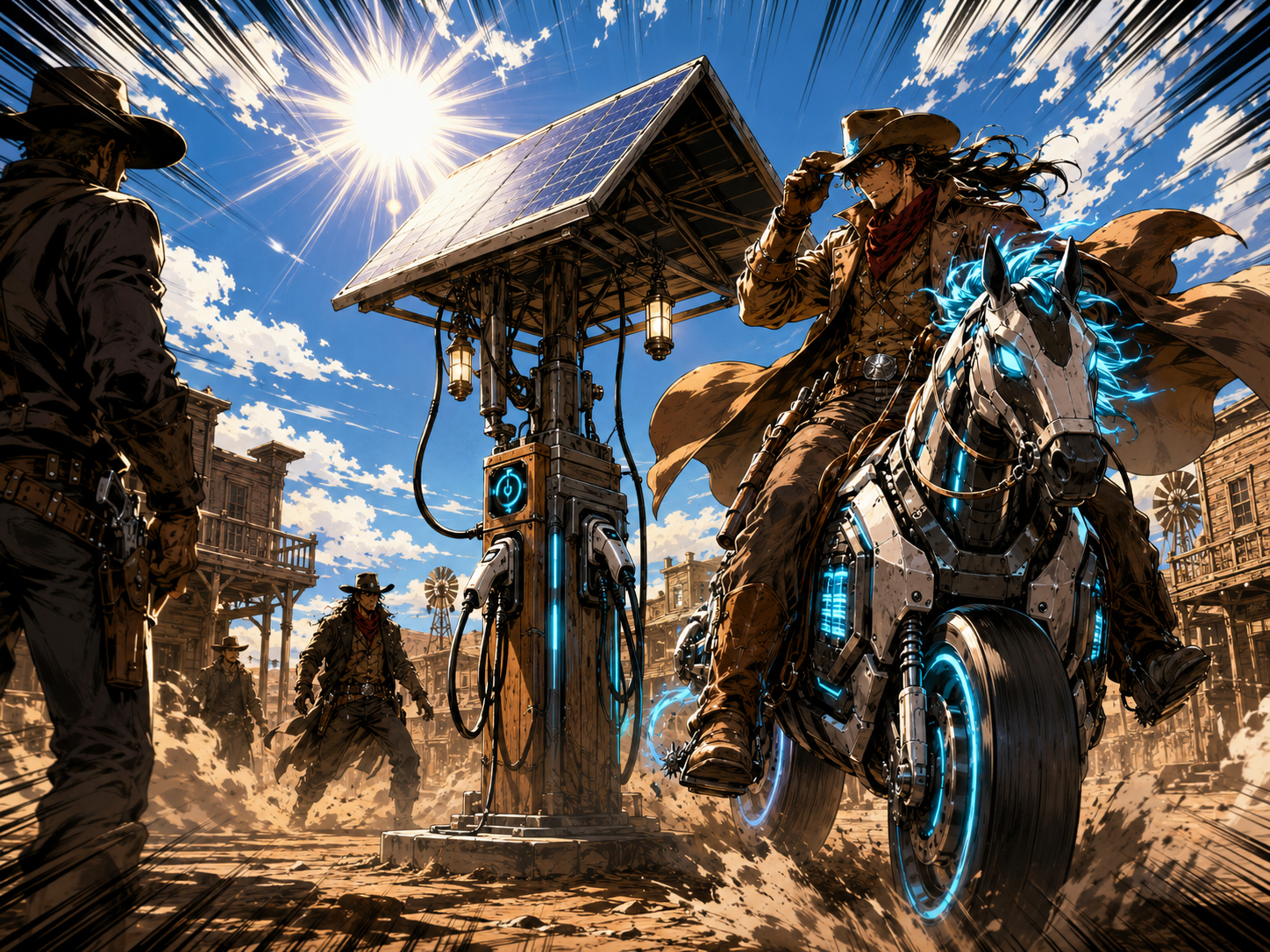
The old West had watering holes. The gasoline age had fuel stations. The EV frontier has charging posts. But the best charging post is not just a plug on a wall. It is part of an electrical plan.
Charger size, circuit capacity, location, weather exposure, utility rates, solar production, and parking habits all affect whether a charging stop works well. A rider who understands the system rides smarter.
The gas station ghost town is funny because it exaggerates a real change: energy is moving closer to the customer.
| Old Fuel Habit | EV Frontier Habit | Why It Matters |
|---|---|---|
| Wait until the tank is low. | Charge where the vehicle already parks. | Charging can be routine instead of a special fuel errand. |
| Think in gallons. | Think in kWh. | Energy planning becomes the new fuel math. |
| Refuel quickly at a station. | Charge over parked time or use faster public charging when needed. | Time parked can become useful energy time. |
| Depend on fuel delivery infrastructure. | Use grid power, solar, batteries, or managed charging. | The energy source can be more flexible and local. |
| Ignore electricity rates. | Schedule charging around rate windows. | Charging cost can depend strongly on timing. |
The best EV Cowboy lesson is not “gas station bad, charger good.” That is too simple. The better lesson is that EV charging lets homes, businesses, ranches, schools, churches, and fleet yards become part of the energy map.
A solar canopy can shade vehicles and make electricity. A battery can store energy for later. A charger can feed a vehicle while it is already parked. A smart schedule can avoid expensive hours. The whole ranch becomes smarter than the old pump.
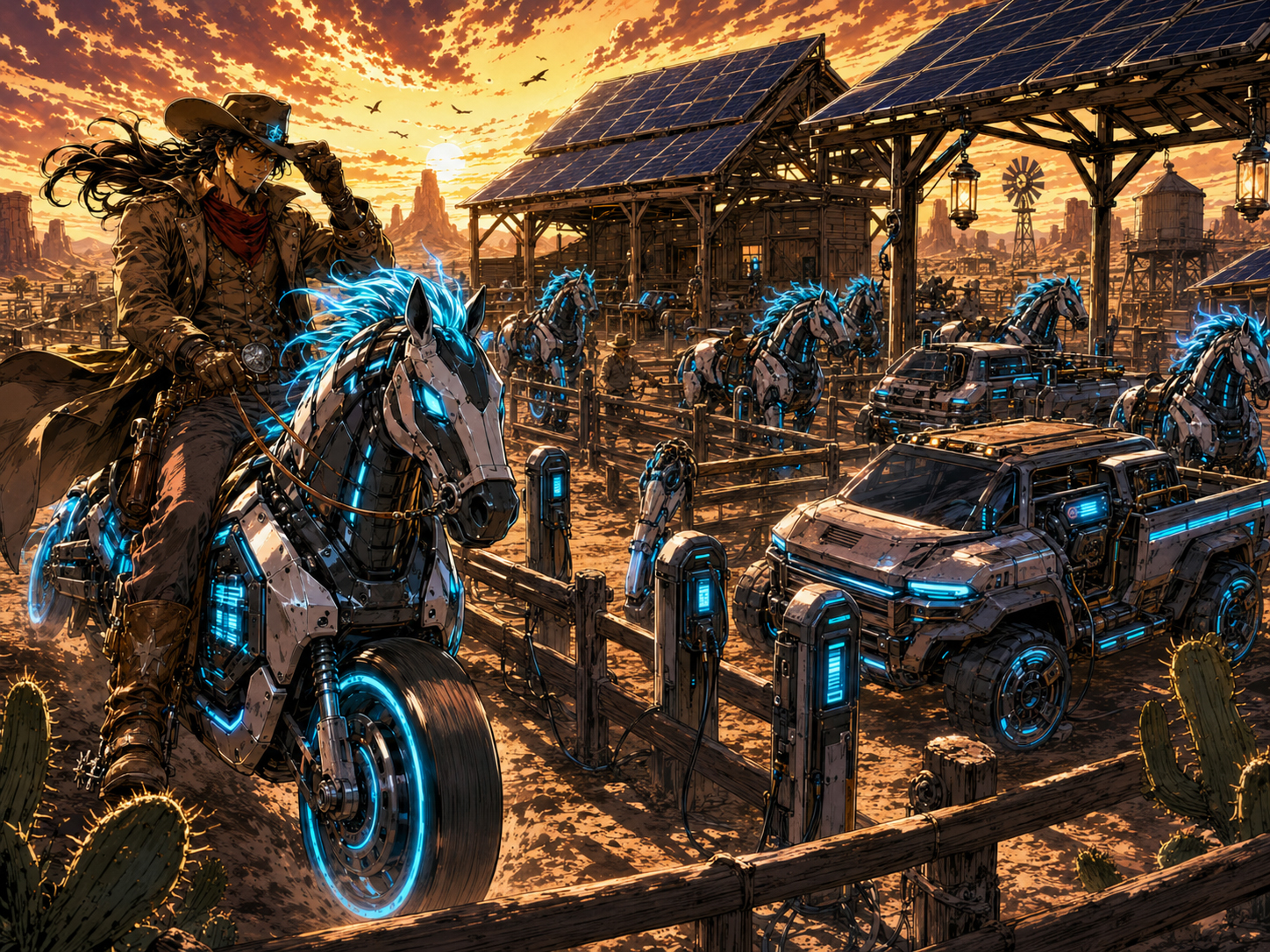
EV Cowboy does not pretend the desert is easy. The silent steed still needs range, route planning, charging stops, and common sense.
Battery state of charge, speed, elevation, weather, towing, cargo, and climate control can all affect how far the EV steed travels.
Charger location, connector type, station status, charging speed, parking access, and payment method can all affect a road-trip stop.
A smart rider has alternate charging options, especially on remote trails where one broken charger can become a dusty comedy episode.
Many daily trips may be handled by routine home or workplace charging, making public fuel-style stops less important for normal life.
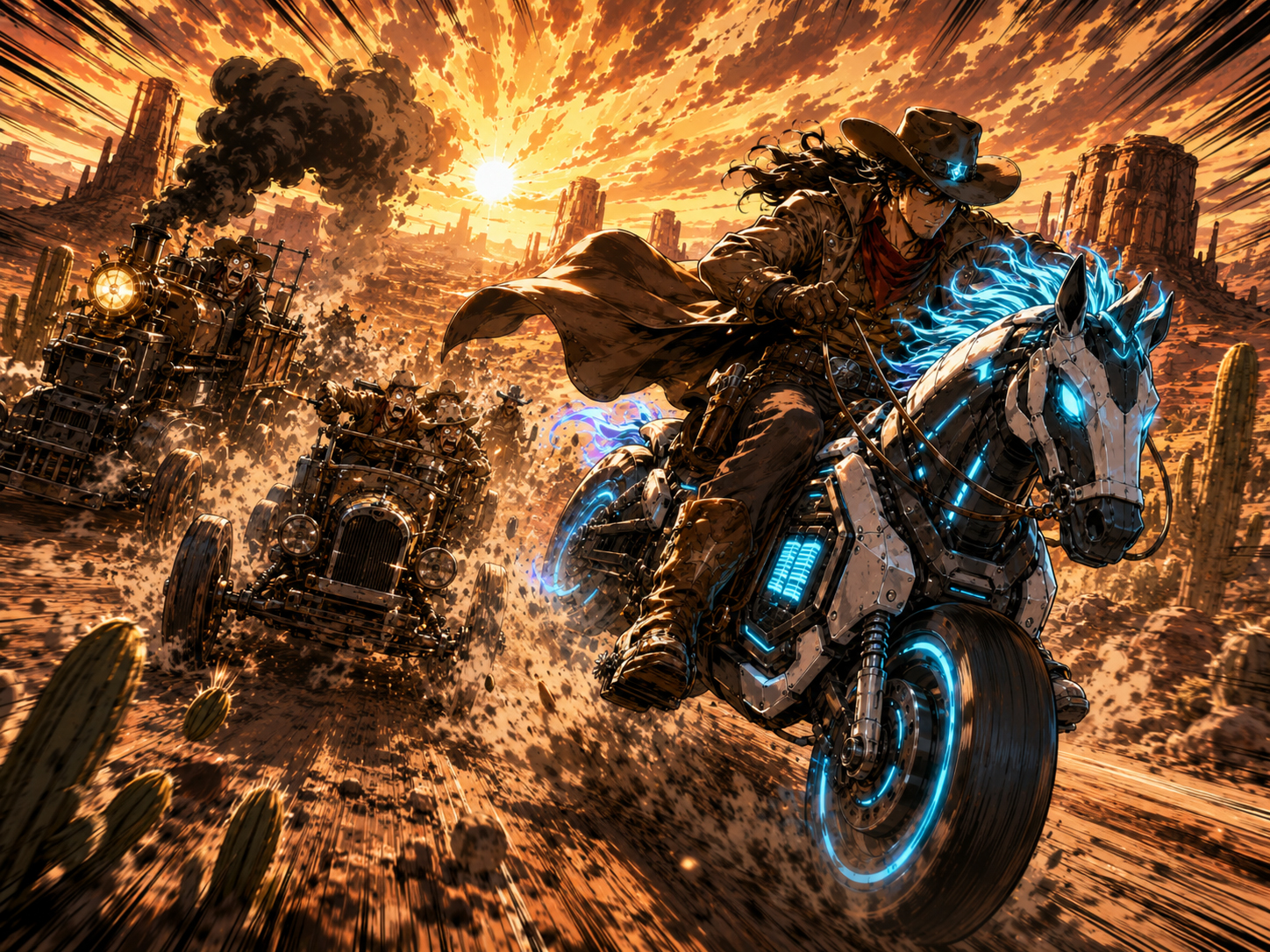
In the manga race, the old machines start with smoke, shouting, and mechanical confidence. The EV steed launches quietly. The crowd waits for a roar that never comes.
By the time the old engines finish arguing with their own belts and boilers, the silent steed is already a blue streak across the canyon. The lesson is not just performance. It is independence from the old fuel ritual.
The gas station ghost town begins with a cough, a bang, a cloud of smoke, and a stagecoach driver insisting everything is fine.
Madame Gasoline waves from the old pump. The Utility Baron sells “emergency convenience energy” at a suspicious price. EV Cowboy tips his hat, checks the steed’s charge, and rides toward the solar corral instead.
The gas station ghost town is a joke, not an instruction to ignore reality. Drivers still need reliable charging networks, practical route planning, safe home charging, and honest expectations.
The real opportunity is bigger: when vehicles become electric, energy planning can move closer to the building, the roof, the parking lot, the battery, and the customer.
EV Cowboy is a manga comedy and educational site. It is not a vehicle recommendation, route guarantee, electrical design, permit set, engineering document, or substitute for licensed professionals.
EV charging equipment, solar systems, batteries, service upgrades, load-management systems, and backup-power systems must be designed, permitted, installed, inspected, and operated according to applicable electrical codes, fire codes, manufacturer instructions, utility requirements, rate schedules, and local authority rules. For travel, always verify charger availability, compatibility, access, and backup options before relying on a stop.
The old pump is quiet. The electric steed is ready. Now the cowboy must learn route planning, range, public charging, and how to cross the desert without drama.